
See key decisions taken by match officials including VAR that the KMI Panel provided independent assessment on
The Key Match Incidents (KMI) Panel provides an independent assessment of key decisions in every Premier League match.
During the 2026/27 season, the Premier League is publishing the results of its KMI Panel weekly on our website and app, providing full transparency around the evaluation of decisions made by Match Officials.
Across Match Round 3, there were 18 Referee KMIs, with the panel deeming 94 per cent of on-field decisions to be correct. Following VAR intervention, 100% of decisions were deemed correct.
There were five VAR reviews, and the panel concluded that all five were correct VAR overturns. The panel also deemed that there were no missed VAR interventions.
Over the 2026/27 season, there have been 60 KMIs, with the panel deeming that 87 pre cent of on-field decisions have been correct. Following VAR intervention, 97 per cent of decisions were deemed correct.
Selected topics, incidents and outcomes from the KMI Panel are highlighted below, with the full document containing all KMIs from Match Round 3 linked at the bottom of this article.
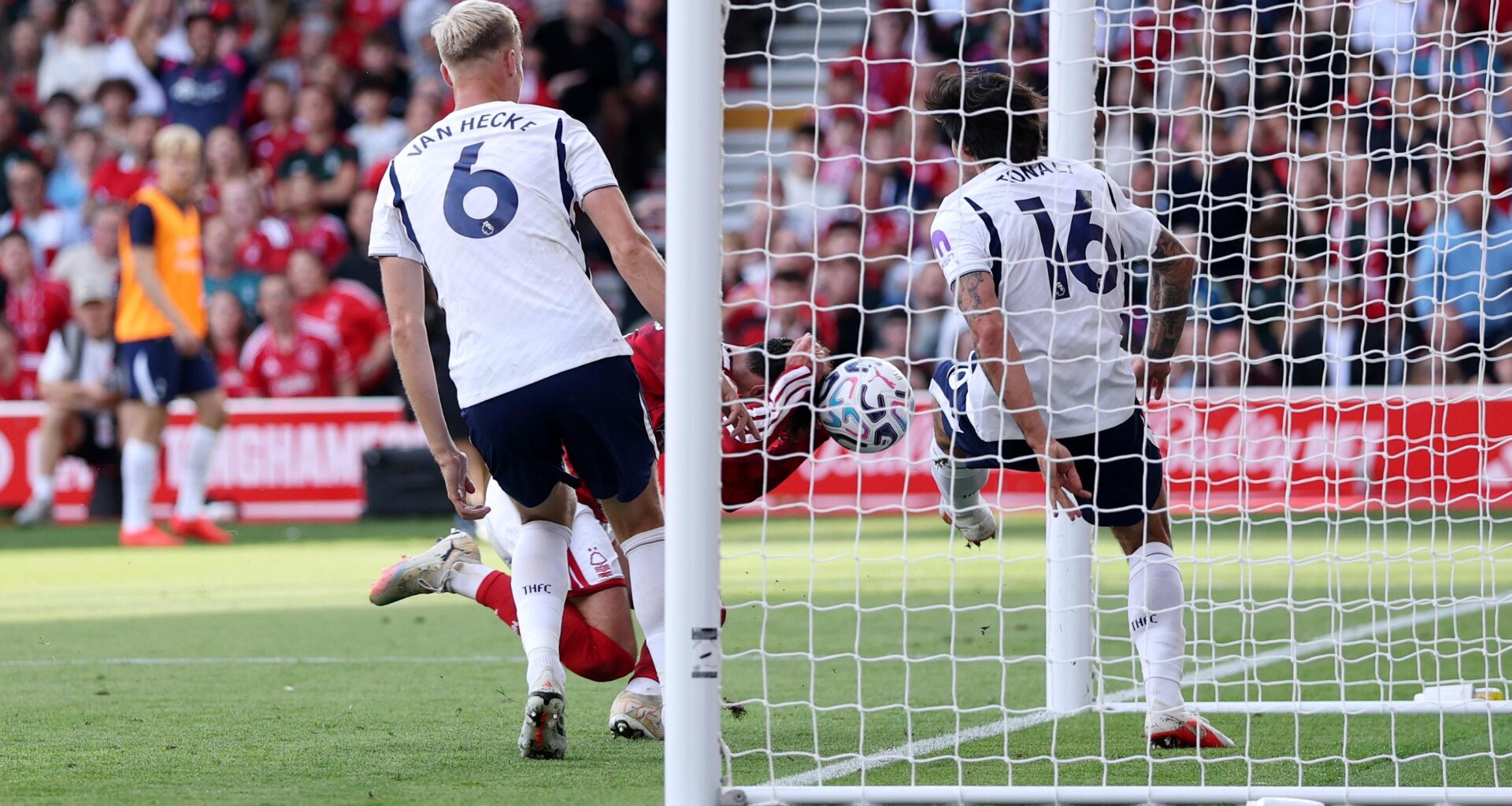
Incident: KMI Goal awarded. Handball appeal against Neco Williams (66 min)
On-field decision outcome: Incorrect – factual handball (0 votes for; 5 votes against)
KMI Panel: The VAR intervention to disallow the goal for an accidental handball offence by Williams was unanimously supported. The ball factually makes contact with Williams on the arm before going directly into the goal.
VAR intervention outcome: Correct (5:0)
Why was the goal ruled out?
The Laws of the Game state that a goal cannot be scored directly from a player’s hand or arm, even if the contact is accidental. It is also an offence if a player scores immediately after the ball has touched their hand or arm, even if accidental.
Why didn’t the VAR recommend an on-field review for a clear and obvious error?
VAR is used to identify clear and obvious errors or serious missed incidents in four match-changing situations: goals, penalties, red cards (including second yellow cards awarded) and mistaken identity.
The pitchside monitor is used to confirm VAR interventions on subjective decisions, such as serious foul play or violent conduct.
The pitchside monitor is not used to confirm VAR interventions for factual decisions, such as offside offences or accidental handball by the goalscorer. As these are factual, they are not subject to the clear and obvious threshold and therefore an on-field review by the Referee is not required.
Decision-making process
More information on VAR protocol be found in the Premier League and Pro Ref Competition Guidance Handbook.
Incident: KMI Goal awarded. Kevin Danso in an offside position – line of vision (7 min)
On-field decision outcome: Incorrect – Danso offside and impacting (0:5)
KMI Panel: The VAR intervention to disallow the goal for a line of vision offence was fully supported. Danso was in a clear offside position, directly in the line of vision of the goalkeeper and impacted his ability to make a save.
VAR intervention outcome: Correct (5:0)
What is a line of vision offside offence?
The Laws of the Game state that it is an offence for a player in an offside position to prevent an opponent from playing or being able to play the ball by clearly obstructing the opponent’s line of vision.
As this was a subjective offside decision, an on-field review from the Referee at the pitchside monitor was required.
Incident: Penalty awarded. Challenge by Keane Lewis-Potter on Wilson Isidor (80 min)
On-field decision outcome: Correct (4:1)
KMI Panel: Lewis-Potter was not looking at the ball and makes a clear and sustained holding action that impacts Isidor’s ability to progress towards the ball. The panel supported the Referee’s call of penalty for a holding offence.
What are the considerations for a holding offence?
One of the Refereeing Points of Emphasis for Season 2026/27 is to enhance the on-field recognition of holding offences.
When assessing a potential holding offence, Referees will consider whether the defending player is solely focused on the opponent rather the ball, whether they are making an attempt to play or challenge for the ball, whether they are holding an opponent with both arms, and whether the holding of the opponent or their clothing is sustained and/or impactful.
Holding offences explained
More information on holding offences can be found on page 34 of the Premier League and Pro Ref Competition Guidance Handbook.
As a reminder, you can read our FAQ on the KMI Panel, which explains what the panel is, how it operates and what the results mean.