
 Play Brightcove video
What exactly is in store for next month’s ‘challenging’ budget? It could mean anything from tax increases to welfare cuts or something entirely unexpected, ITV News Political Correspondent Romilly Weeks reports
The prime minister has warned of a “challenging” Budget ahead as new figures show inflation increasing to 3.1%
Andy Burnham said the rise was concerning as his government wants to reduce the pressure of the cost of living, and he acknowledged the ongoing conflict in the Middle East as an economic challenge.
Speaking to broadcasters on Tuesday he said: “With inflation where it is, it is a concern. It’s more important that I do what I can to take the pressure off people from a cost of living point of view.”
When asked if the Budget would be difficult, Burnham said: “It is going to be challenging because the picture around the world is challenging and particularly the situation in the Middle East, and we will look carefully at all of those things.
“We won’t take risks with people’s living standards or with the economy as a whole.”
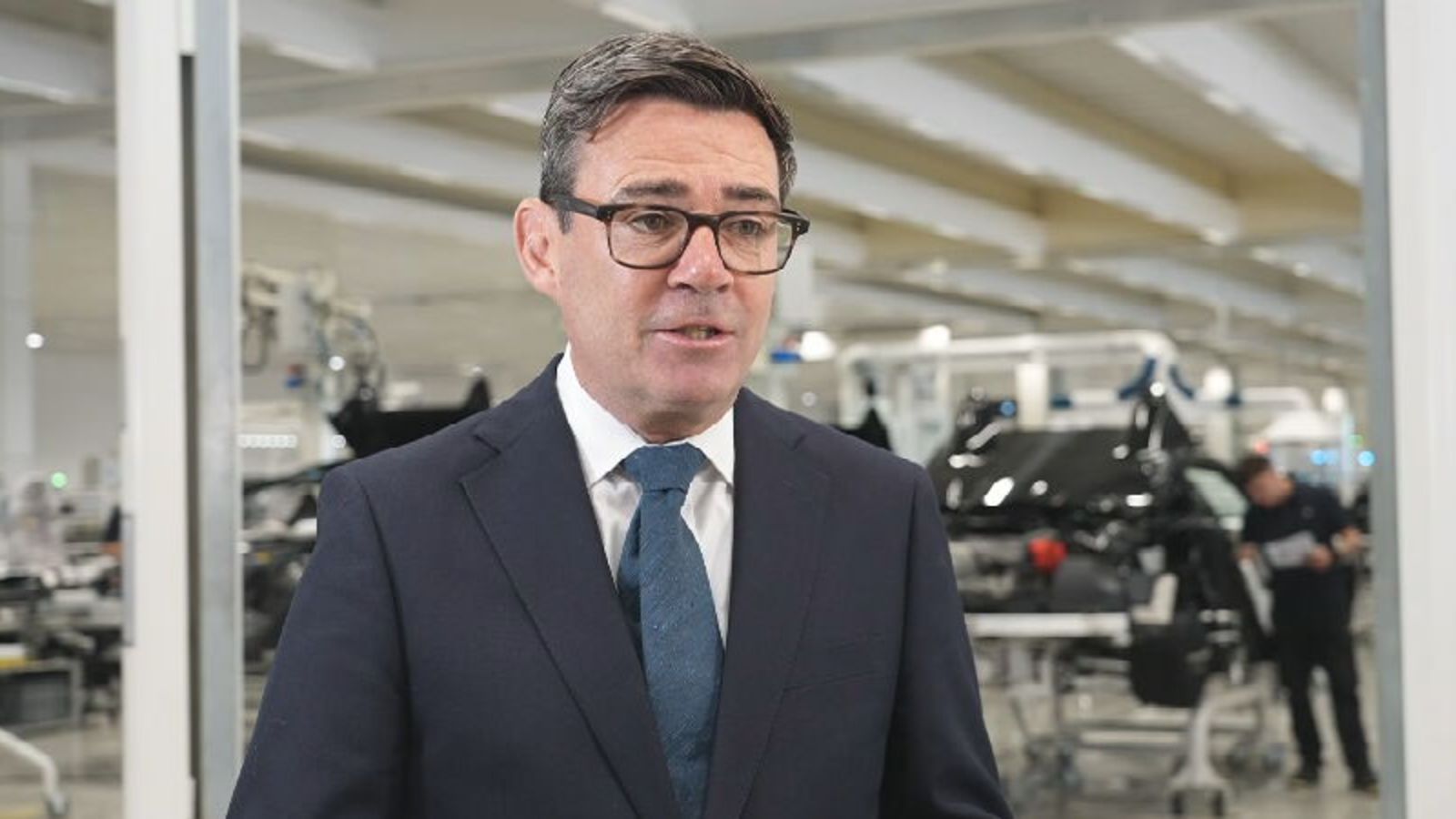
The PM was visiting a McLaren factory in Milton Keynes Credit: PA
Consumer Prices Index (CPI) inflation increased to 3.1% in August, compared with 2.9% in July, The Office for National Statistics (ONS) said on Wednesday.
This was in line with economists’ predictions that inflation would continue to rise in an upward trajectory, peaking above 3% by the end of the year, since striking a 15-month-low of 2.6% in June.
Motor fuels contributed significantly to the increase, after the average price of petrol rose by 9.1 pence per litre between July and August, to an average of 161.3 pence per litre.
The price of diesel rose by 14.2 pence per litre to an average of 181.8 pence per litre for the month.
The ongoing conflict between the US and Iran has put continuous pressure on the market price of oil and gas.
The prime minister promised to “take difficult decisions to make sure the economy remains on track” when it comes to the Budget on October 28.
Subscribe for free to our weekly newsletter for exclusive and original coverage from ITV Wales, sent direct to your inbox every Saturday morning.
The jump in fuel costs highlights the early impact of the breakdown of the ceasefire in July, which led to a fresh uptick in oil and gas prices.
In the transport sector, airfares increased by 6.2% for the month after the cost of long-haul flights became more expensive.
Responding to the inflation figures, Chancellor John Healey said: “The war in the Middle East is impacting on inflation worldwide, not just here at home, in our bills, our weekly shop and at the petrol pumps.
“We have taken early action to help give families and businesses breathing space, by cutting tax on electricity bills, capping bus fares at £2 and lowering rates for pubs, social clubs and live music venues.”
Healey added despite “serious global uncertainty” the UK economy is “proving resilient” and he is determined to deliver growth.
ONS chief economist Grant Fitzner said: “Sharp price rises for petrol and diesel pushed inflation up again in August. Higher airfares, particularly for long-haul journeys, also contributed to the increase.”
Data released last week showed annual food and drink inflation has fallen, to just 1.3% in July.
This figure remained the same for August despite concerns it could be pushed higher by rising energy costs.
Earlier in September the Food and Drink Federation (FDF) warned food inflation would likely hit 3.9% in December, before peaking at 6.4% next July.
Food and drink inflation remained steady at 1.3% despite warnings that it could be pushed higher by rising energy costs. Credit: iStock
Thomas Pugh, chief economist at RSM UK, said the inflation rise is “just the start of a new upward trend” thanks to increased prices of energy, food and memory chips.
“We now see inflation peaking at almost 4% in early 2027, before gradually dropping back to 2% in 2028,” he predicted.
Martin Sartorius, lead economist at the Confederation of British Industry said: “Given the limited signs of a pick-up in domestic price pressures, the Bank of England’s Monetary Policy Committee is likely to keep interest rates unchanged at its next meeting.
“However, the renewed rise in energy prices means that the committee will be increasingly alert to the risk of these costs feeding through to persistently elevated inflation.”
The data also showed that Consumer Price Index including Housing (CPIH), the ONS’s preferred measure of inflation, rose to 3.3% for August from 3.1% last month.
Meanwhile, Retail Prices Index (RPI) inflation rose to 3.4% from 3.2% in July.
The unit price of gas and electricity has become more expensive, but the true extent of this will not be felt until people turn their central heating back on during winter months, as ITV News Business and Economics Editor Joel Hills explained.
Want a quick and expert briefing on the biggest news stories? Listen to our latest podcasts to find out What You Need To Know