
The play sees one of Oxton’s most historic women brought back to life
Danny Gutmann
19:00, 16 Sep 2026
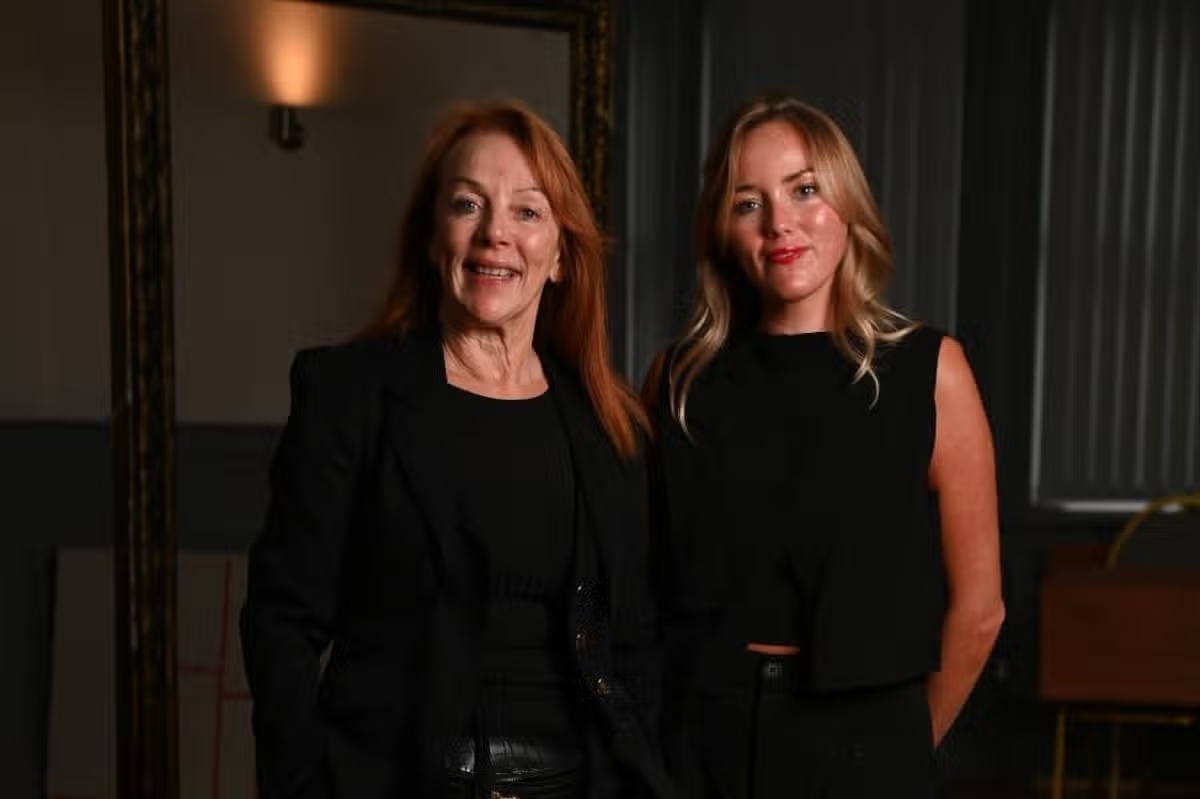
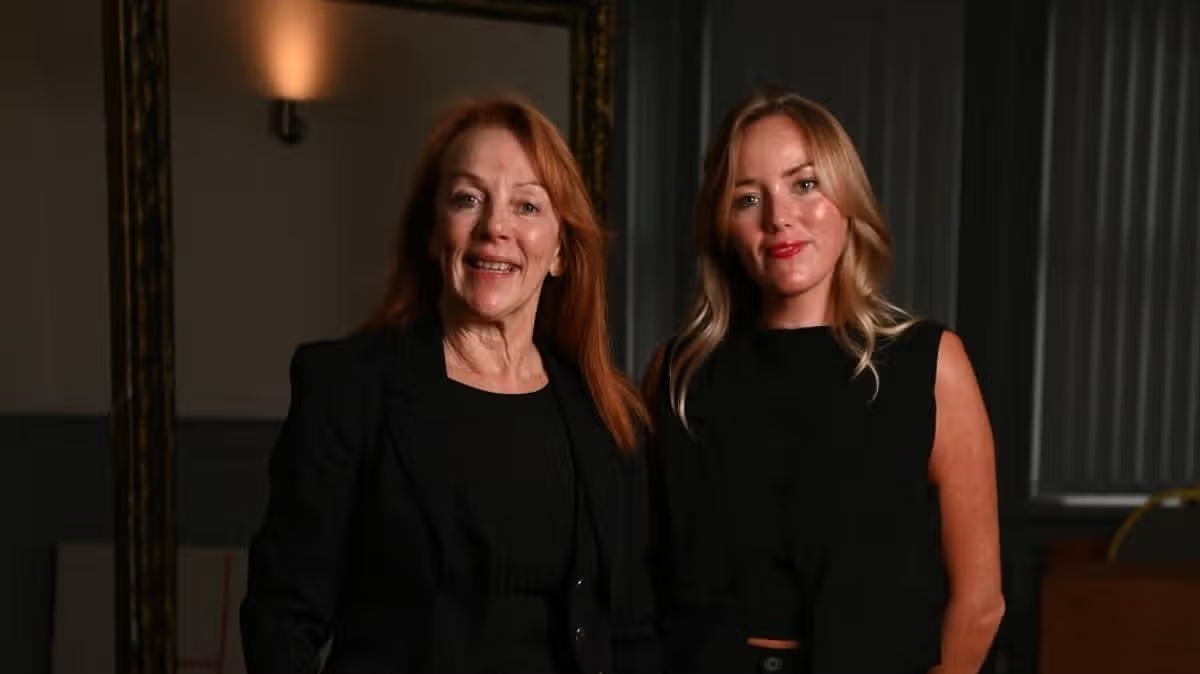
Director Pauline Fleming and her co-producer daughter, Cornelia Cannell(Image: Supplied/Cornelia Cannell)
Having been an actress for years appearing in the likes of Brookside, Coronation Street and Doctors, Pauline Fleming has taken a step back from the screen in recent years and rekindled her love of theatre. Her latest play sees her bring one of Oxton’s most famous women back to life in a story which has similarities to her own.
Previously retelling the life of Oxton’s first “Gentleman Jack” last year, director Pauline and her co-producer daughter Cornelia Cannell came across another hugely influential Oxton native, Edith Smith, who became Britain’s first female police constable to be given the powers of arrest, in the late 1920s.
However, that isn’t the only remarkable part of Edith’s life. During their research Pauline and Cornelia found many more fascinating aspects to her life. Cornelia, 36, told the ECHO: “Edith’s husband, William Smith, died quite suddenly. And she was running the Post Office with him as a sub-postmistress. In those days you weren’t allowed to run a business on your own as a woman, so she had to close the Post Office.
“What the series of events were, we’re not entirely sure, but we know that she had to put her daughters into boarding school where they were under the care of her sisters, and her son was put in an orphanage in Blackburn.”
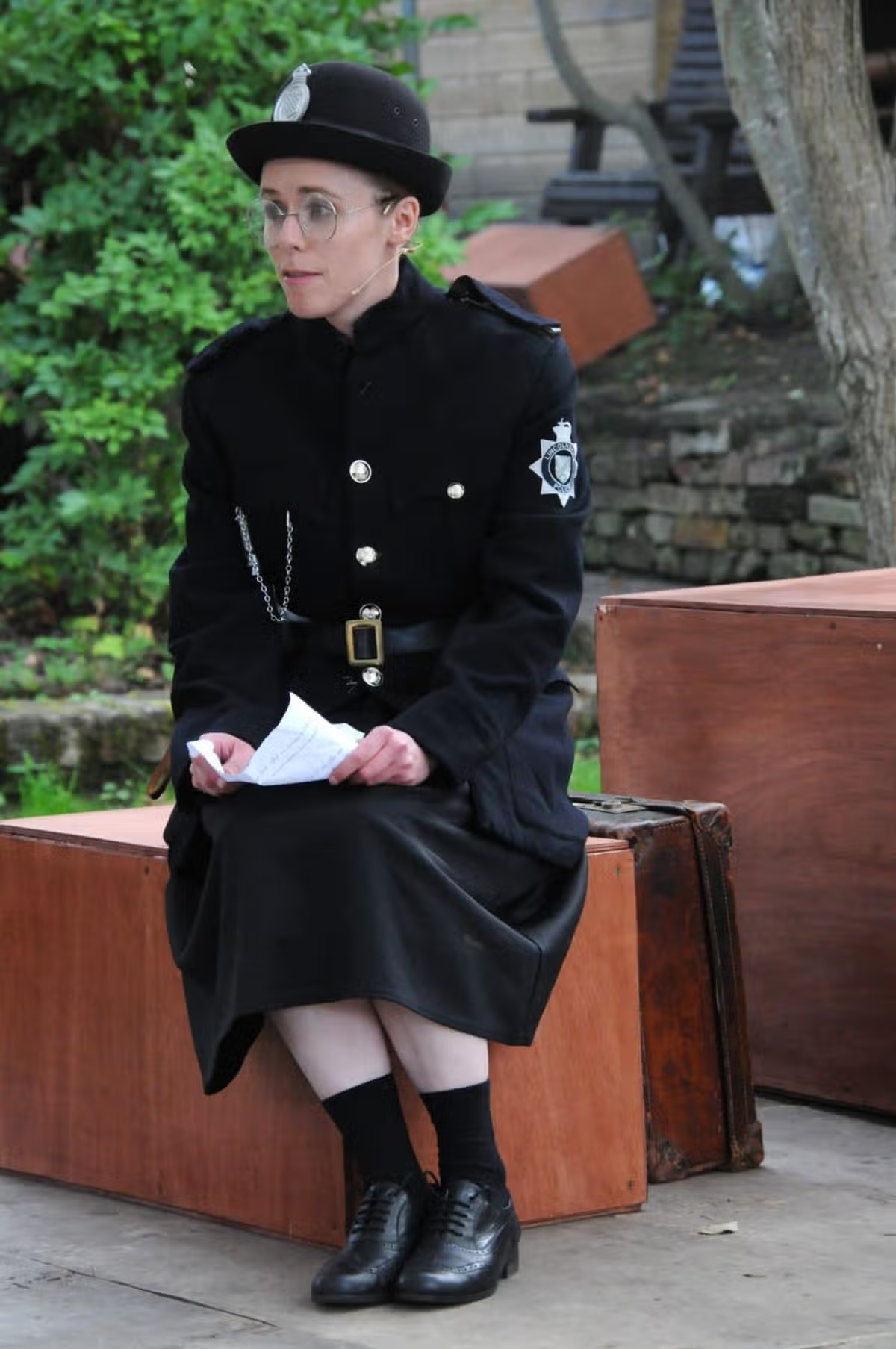
Pauline Fleming and her daughter Cornelia Cannell have brought Edith Smith’s story back to life with a new play about her life(Image: Supplied/Cornelia Cannell)
Pauline, 66, said: “Because there’s lots of grey areas with Edith’s life, lots of spaces in it where we haven’t got any real evidence of how she kept in communication with her children and her siblings and so on, I decided, as the writer, to do a thread of letters [in the performance].
“In some ways, some people could judge her, for the fact that she did put her children into care. We can’t find any evidence at all of how she kept communicating with them.”
While Edith becoming Britain’s first female police constable is the thing that she is most well known for, Pauline said that she could particularly relate to Edith’s role as a mother.
She said: “I speak as a single parent myself, because I was a single parent with Cornelia, and I was doing stage work then, and I had to take jobs that took me away, and Cornelia stayed with family members or a friend. And that was difficult, but I had to earn a living myself. In some ways, I relate to Edith, and I think psychologically I struggled with that, because I had to kind of own up to my own, not abandonment, because I never abandoned my daughter, but she was left.”
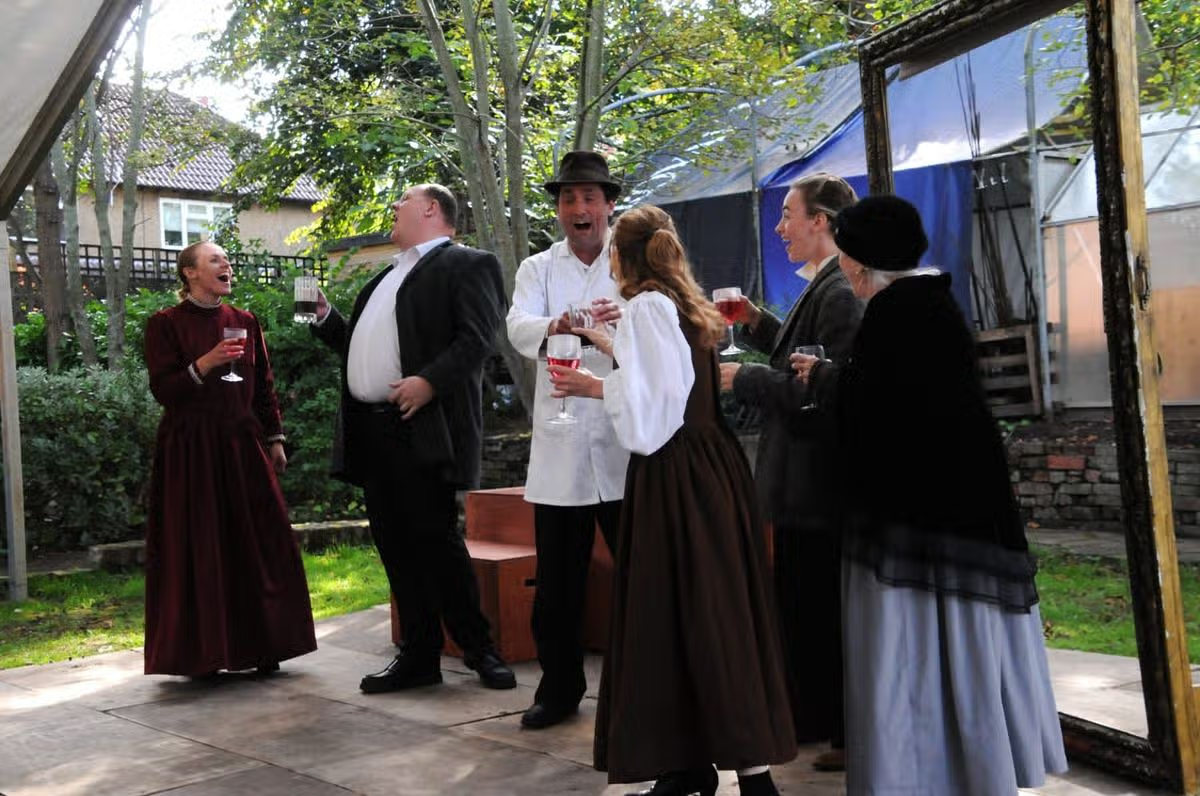
A play of Edith’s life will be shown across the Unity Theatre, Shakespeare North Playhouse and Church Hall in Port Sunlight(Image: Supplied/Cornelia Cannell)
Pauline admitted that looking back at Edith’s life taught her things about her own. She said: “I did [learn things about my life]. And I’ve gone into therapy since. Cornelia and I have a very, very, very close relationship, but there are bits of our life that we won’t get back. We’ll never get back.”
After her husband’s sudden death meant that she had to close their Post Office, Edith moved to London and trained as a midwife. It was while doing so that she was recruited into the Voluntary Women’s Police Service where she trained as a police officer. During WWI she was stationed at Grantham where she worked as a police officer and had full powers of arrest, which made her the first police woman in the country to do so. Due to her enhanced powers it saw her earn more than many of her male colleagues.
Edith committed suicide on June 26, 1923 at the age of 46 in Halton, Runcorn. As she looked back at the process of bringing Edith’s story to life, Pauline said : “I think Edith would be absolutely delighted to see herself portrayed in such a strong way, and having to make the compromises she made displayed in a very sensitive way. I’d like to think she would be really happy with what we have done.”
The Story of Edith Smith will be showing at the Unity Theatre this evening, Wednesday (September 16) with further performances on Shakespeare North Playhouse in Prescot on Friday, September 18 and in the Church Hall in Port Sunlight on Saturday, September 19.
Mental health support
Helplines and support groups
The following are helplines and support networks for people to talk to, mostly listed on the NHS Choices website
Samaritans (116 123) operates a 24-hour service available every day of the year. If you prefer to write down how you’re feeling, or if you’re worried about being overheard on the phone, you can email Samaritans at jo@samaritans.org.CALM Campaign Against Living Miserably (0800 58 58 58) is a leading movement against suicide. It runs a UK helpline and webchat from 5pm to midnight 365 days a year for anyone who has hit a wall for any reason, who need to talk or find information and support.PANDAS (0808 1961 776) runs a free helpline and offers a support service for people who may be suffering with perinatal mental illness, including prenatal (antenatal) and postnatal depression plus support for their family or network.Childline (0800 1111) runs a helpline for children and young people in the UK. Calls are free and the number won’t show up on your phone bill.Mind (0300 123 3393) is a charity providing advice and support to empower anyone experiencing a mental health problem. They campaign to improve services, raise awareness and promote understanding.Students Against Depression is a website for students who are depressed, have a low mood or are having suicidal thoughts.Bullying UK is a website for both children and adults affected by bullying.Amparo provides emotional and practical support for anyone who has been affected by a suicide. This includes dealing with police and coroners; helping with media enquiries; preparing for and attending an inquest and helping to access other, appropriate, local support services. Call 0330 088 9255 or visit www.amparo.org.uk for more details.Hub of Hope is the UK’s most comprehensive national mental health support database. Download the free app, visit hubofhope.co.uk or text SHOUT to 85258 to find relevant services near you.Young Persons Advisory Service – Providing mental health and emotional wellbeing services for Liverpool’s children, young people and families. tel: 0151 707 1025 email: support@ypas.org.ukPaul’s Place – providing free counselling and group sessions to anyone living in Merseyside who has lost a family member or friend to suicide. Tel: 0151 226 0696 or email: paulsplace@beaconcounsellingtrust.co.ukThe Martin Gallier Project – offering face to face support for individuals considering suicide and their families. Opening hours 9.30-16.30, 7 days a week. Tel: 0151 644 0294 email: triage@gallierhouse.co.ukJames’ Place – supports men over 18 who are experiencing a suicidal crisis by providing quick access to therapy and support. Call 0151 303 5757 from Monday to Friday between 9.30am and 5.30pm or visit https://www.jamesplace.org.uk/