
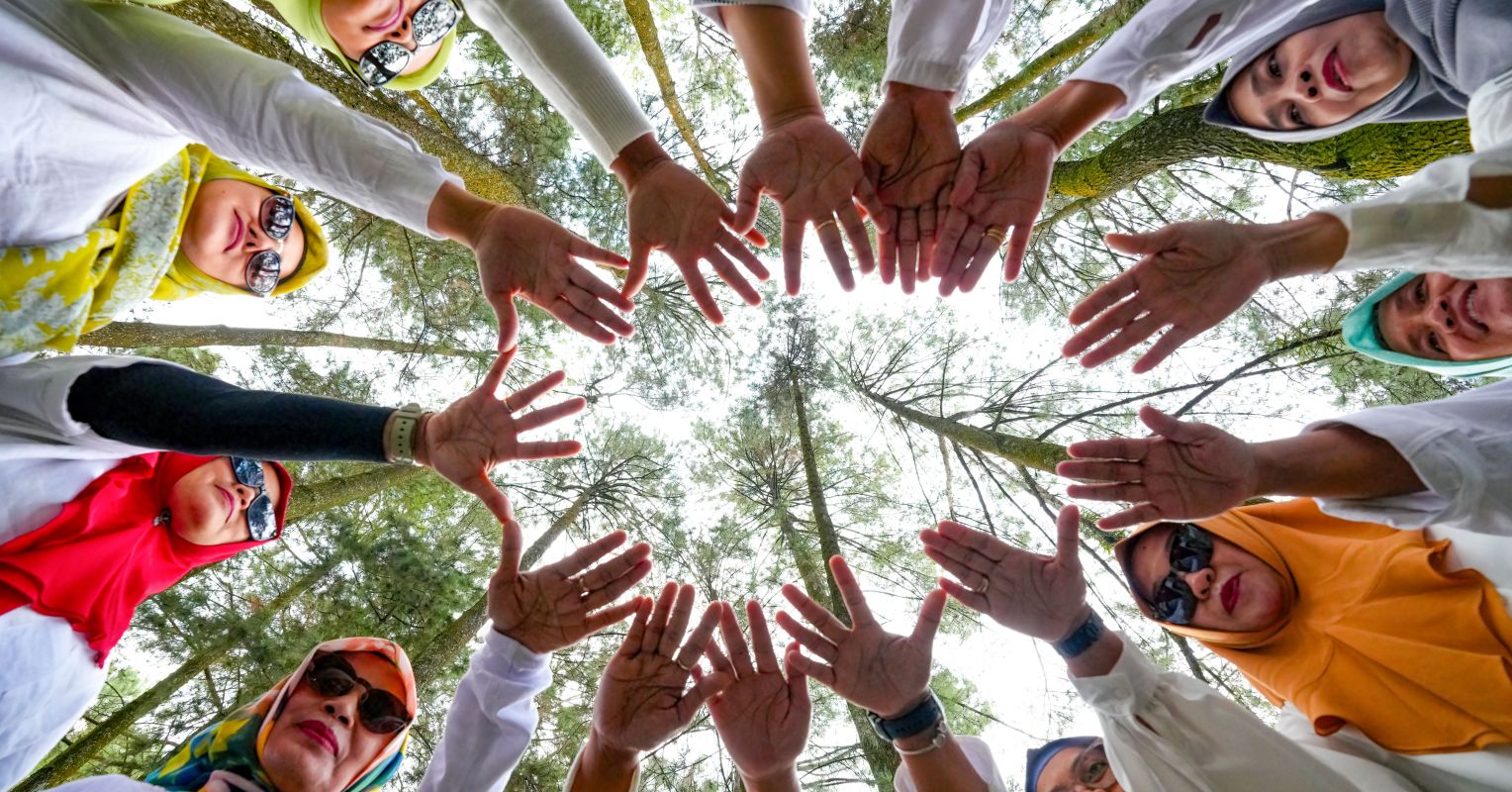
Statisticians calculate the odds of duplicating an exact “copy” of any one of us are one in 77 trillion. Even in the case of homozygous or identical twins—where two separate individuals share the same genome—epigenetic and environmental influences still sculpt a divergence of distinguishing characteristics.
In all other cases, 23 chromosomes from each parent get thrown into the “nature-nurture blender” to ensure exceptionality, which contributes to diversity and thus species survival. For eons of time, devoid of conscious intent, “mother nature” doggedly continues her expansion of the gene pool, safeguarding the continued existence of all living things.
Succinctly, diversity ensures survival.
Imperfect DNA
Ironically, biology’s life-preserving penchant for diversity is born in “imperfection”; normal cell division isn’t always normal. On a minuscule number of occasions, during mitosis or cell division, DNA fails to duplicate itself perfectly. This translates into mutated genes—mutations that can sparkle with new adaptive life when the opportunity arises in novel environments or environments that have undergone change of some kind. Thus, evolution’s primary criterion of success is met: The gene pool expands, and with it, newly adapted traits assure ongoing reproduction and species survival.
What many consider a classic example of imperfect-but-adaptive gene recombination took place at McGill University in the early 1950s. Experimenters found that exposure to the antibiotic streptomycin killed the vast majority of the bacteria Escherichia coli, except for a few, tail-of-the-distribution mutants that survived the administration of the drug. These few rare, mutant survivors quickly reproduced—new generations of bacteria were spawned every 20 minutes. This newly evolved strain was found to be streptomycin-resistant or immune to the antibiotic. Subsequent generations of this mutant strain actually evolved a dependence on the drug, so that when experimenters withdrew the drug, the preponderance of the now streptomycin-dependent bacteria perished.
Oddly perhaps, biology’s “blunders,” or its fondness for diversity, subtly entwines with the environment to select for traits fit for survival.
Cultural Identity and Multiculturalism
Of course, cultures are also diverse. Each culture has a distinct, self-delineating identity that sets it apart from all others. Without these distinctive identities, culture itself would not exist; we’d all be part of a non-differentiated, over-homogenized and outsized melting pot. But cultures are diverse, as reflected in our “cultural membership dues” that are paid in the currency of our customary thinking, feeling, and behaving, which reflects the particular norms, values, and mores of our unique cultural heritage.
Cultural Dividends
Psychologically, culture’s standout advantage is that it reduces the existential uncertainties and anxieties about who we are and what is deemed worthwhile or of value. It bestows upon us a crown of time-tested, well-worn, venerable traditions and customs that take their form in knowable, predictable, purpose-filled ideals, principles, morals, ethics, and mores, all of which grant personal meaning, purpose, and direction to our lives. Because of this, culture tilts us decidedly toward conformity.
Culture’s “Shadowy Side”
Tragically, however, burrowed within culture’s broad basket of advantages lurk some shadowy, bristling disadvantages. With vile muscularity, some individuals and groups cling too tightly, too ethnocentrically, to a narrow mélange of cherry-picked “customs and values” which contorts their subcultures into cults. They “superiorize“ themselves and “inferiorize“ those not of their ethnic, religious, or political persuasion.
Bigoted, crudely dichotomized, “us vs. them” mentalities become the ugly handmaid of exclusion, degradation, and discrimination against people perceived to be outliers, undesirables, or simply those unlike themselves. In its most malignant manifestation, an “us vs. them” mentality is the engine driving and/or justifying actions and sociopolitical movements that often metastasize in violence and warfare—humanity’s disgraced underbelly.
Cultural Diversity
Conversely, as with biology, diversity enriches culture. Indeed, any culture is “on task” when its unique grouping of people adapts to its environmental niche, allowing them to flourish biologically, socially, and emotionally. And, in turn, adaptability nourishes diversity.
For example, social psychologists have long observed a higher quality of outcomes and solutions among heterogeneous groups of decision-makers and problem-solvers, groups comprised of an enriched admixture of gender, race, ethnicity, and ideology. Such diverse groups bring varied perspectives and a broader base of information, which does initially render decision-making a slower, more arduous process. But this initial hurdle is offset by a significant upgrade in the complexity of thinking and evaluating that gets applied to decision-making and problem-solving. The results are better outcomes, higher quality solutions, and adaptive decision-making, as contrasted with the lesser quality of outcomes that tend to characterize homogeneous, “inbred” groups.
Clearly, diversity gifts both biology and culture with life-enhancing quality.