
When you buy through links on our articles, Future and its syndication partners may earn a commission.

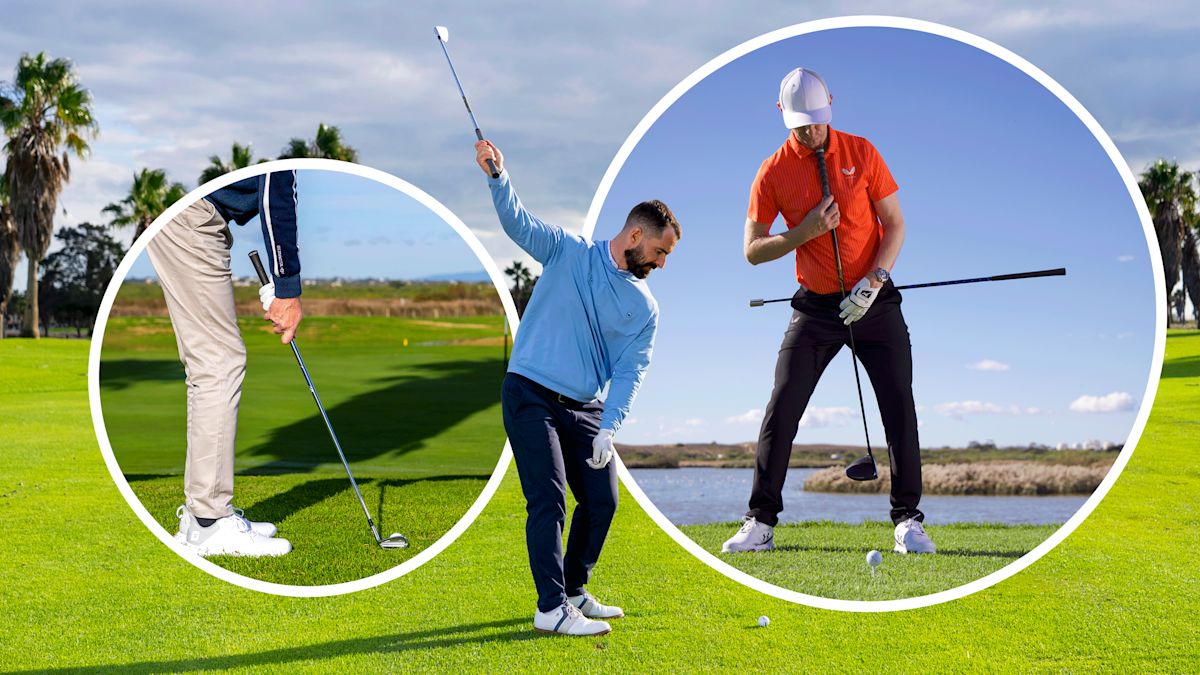
Sharpen up your game this weekend with three quick fixes from top PGA pros. | Credit: Kevin Murray/Howard Boylan
Every golfer with a tee time this weekend is hoping for two things: to consistently find the middle of the face and shoot lower scores as a result.
Some of the best ball striking lessons are quick fixes, helping you to make the minor adjustments needed to help you achieve a centred strike more often.
In this article, I utilise the skills and expertise of three top PGA pros, who combine with more 60 years of coaching experience between them, to help you sharpen up your game from tee to green this weekend…
1. ‘Unconventional’ Single Arm Ball Striking Drill
It sounds unconventional, but this is one of the most effective drills.
Without the lead hand on the club, your body should be forced to help as the arm cannot simply lift independently.
It must move with your torso’s rotation, creating the synchronisation that all good ball-strikers really rely on.

This drill also reinforces the element of natural arm lift in the backswing.
To support the weight of the club at the top with one hand, your trail arm must fold into a sound, structured position, eliminating the dreaded flying right elbow.
From here, create the feeling of swinging the arm in front of the body and releasing it fully past. The body must wait to turn, keeping the arm swing in sync.
Try it at the driving range before your next round and you may notice a boost in your ball striking consistency.
Working in harmony
Think of it as the trail arm providing the power, with the lead hand then providing the stability and control when you put it back on. Two distinct roles, working as one.
2. Why (And When) You Should Grip Down The Club
When you don’t need height and loft on a greenside shot, there will be less wrist action.
Gripping down to the bottom of the handle automatically gets you closer to the clubhead and ball and gives you far more control.
Standing more upright also allows a straighter club path and shallower action to minimise mistakes.

This is a very effective way to chip with clubs of various lofts, but it does require some practice to gauge exactly what each club and swing length will deliver. | Credit: Howard Boylan
You don’t need to hinge your wrists to grip down to the narrowest part of the handle, so you naturally hold the club a bit tighter, shortening the forearm muscles, which also reduces wrist and hand action.
The main movement then comes via a simple rocking of the shoulders and torso, fairly similar to a putting stroke.
3. Driver Set Up
The biggest issues I see with the driver among club golfers come at set-up.
They are mainly poor weight distribution between the lead and trail sides and a very straight trail arm, which will push the alignment of the shoulders way out.

Now you’re in a better set-up position to deliver the driver on a more upward angle of attack, which will help to reduce the amount of curve you impart on the ball. | Credit: Kevin Murray
Apply more pressure – say 60/40 – onto the trail foot than the lead foot (remember this is not a physical lean, but rather a push into the ground).
Move your hips ever so slightly in a lateral motion, so your belt buckle is slightly to the left of your shirt buttons, will encourage a more upward angle of attack.
Then, finally, soften your trail elbow so it almost feels like it’s tucking in towards your ribcage.
If you do all of this correctly you give yourself the best chance of adding distance to your game and even boosting your clubhead speed.