
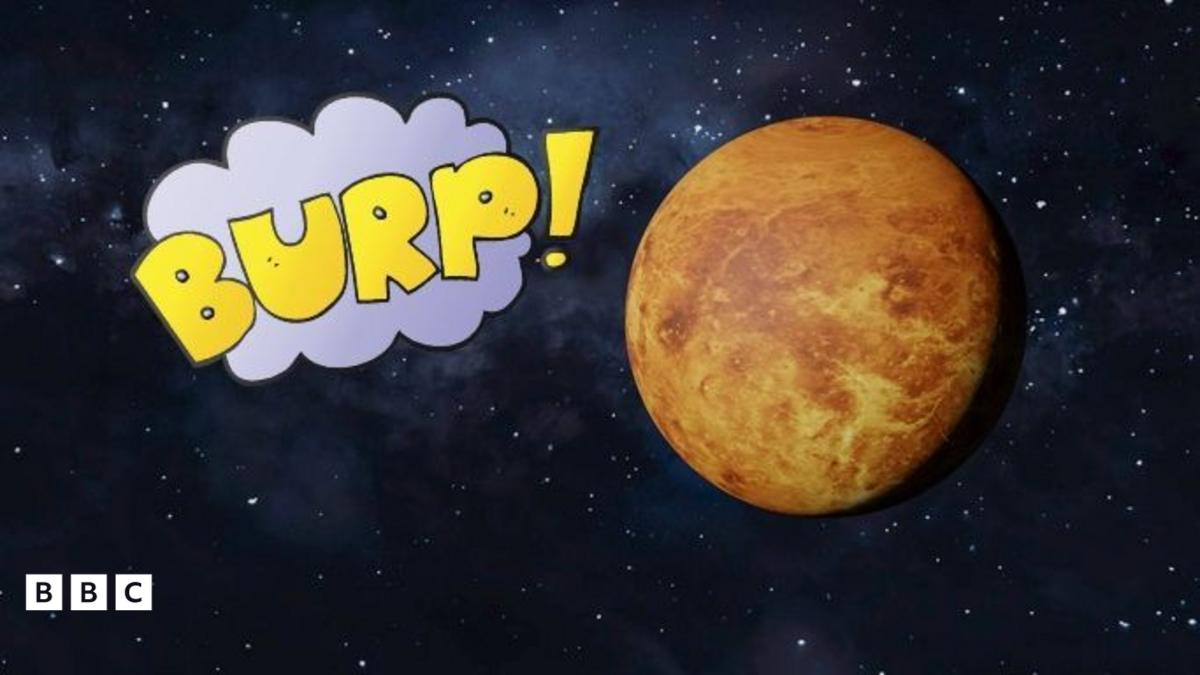
The research was carried out by scientists at the University of California, Riverside, in the US.
They decided to take a closer look at why Venus – the planet most like Earth in size – doesn’t have a moon of its own.
They wanted to see whether the planet’s very slow spin could be the reason why.
Using computer models, they explored what would happen to moons of different sizes as they orbited the planet.
The team found that, sooner or later, regardless of their size, the moons would likely move closer to Venus before eventually colliding with it.
Lead author of the study, Stephen Krane, explained: “If [Venus] had a moon, and it likely did at some point, it could not have kept it.
“That moon would have crashed down on the planet in a relatively short time scale.”