
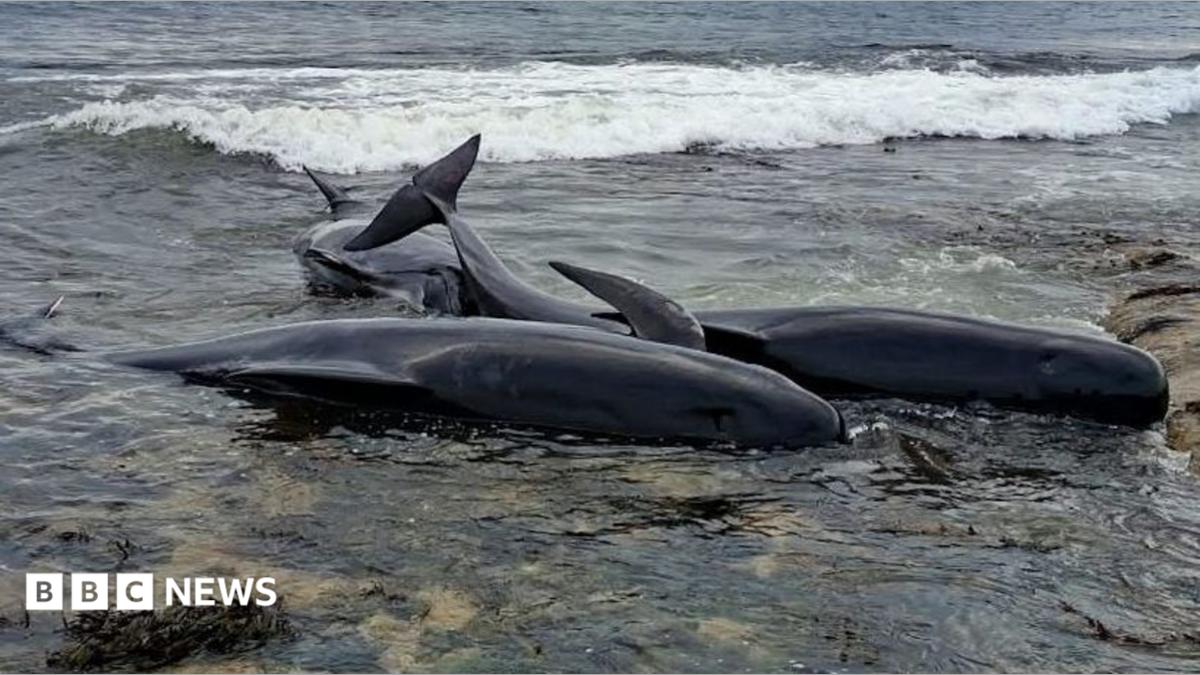
The death of two stranded pilot whales has been described as “devastating” by a marine researcher.
British Divers Marine Life Rescue (BDMLR) was alerted to a pod of about 40 distressed whales near to the shore at Amble, Northumberland, at 15:00 BST on Sunday. Two of five stranded whales were confirmed to have died.
The BDMLR said it was not the same pod of whales herded out of the River Thames at the weekend as the distance between locations was further than the species could swim in 24 hours.
Researcher Lavinia Mitchell said it “really stood out how unusual it was to have these pilot whales turning up in shallow waters at the same time” when they were normally found in deeper offshore waters.
Whales are highly social mammals and are well known for stranding in groups because they travel in large, close-knit communities which rely on constant communication.
There are a range of theories for why beachings occur. Some experts say the animals can become disorientated after following fish they hunt to the shore.
Mitchell, who is an independent marine mammal researcher, said there could “be lots of possibilities” including “following prey, responding to changing conditions at sea, or there may be other factors involved”.
“Pilot whales are also incredibly social animals. Their instinct is to stay together, and that can unfortunately work against them when something goes wrong.