
I’m always looking to identify and learn from people who, in their own fields, were comparable to Peter Drucker, the father of modern management, who died at 95 in 2005. My criteria are for people who have operated at the highest and most accomplished levels in their field, lived to an advanced age, and contributed intellectually well past traditional retirement age.
Three psychologists who fit this Drucker-like criteria passed away in recent years: Mihaly Csikszentmihalyi, at 87 in 2021; Albert Bandura, at 95 that same year; and Edgar H. Schein, at 94 in 2023. What they researched, taught, and wrote about during their lengthy careers is congruent with and complementary to Drucker’s work.
Peter Drucker’s Achievements
First, to briefly recap an extraordinary life and career: Drucker wrote nearly 40 books on management and other subjects, and was the first, in the late 1950s, to identify a class of knowledge workers. He was awarded the Presidential Medal of Freedom, the nation’s highest honor for civilians, at age 92, and taught at an institution that was eventually named for him, the Drucker School of Management, at Claremont Graduate University, in Claremont, California. His work is further carried on at a related organization based at the university, The Drucker Institute, as well as the Global Peter Drucker Forum, in his native Vienna, Austria.
Mihaly Csikszentmihalyi: Flow
Mihaly Csikszentmihalyi, after a long career at the University of Chicago, began teaching in Claremont in 1999, initially at the Drucker School, where I interviewed him in 2005. I was impressed by his affable and generous nature.
Csikszentmihalyi was a co-founder of the field of positive psychology. His best-known book, Flow: The Psychology of Optimal Experience, was published in 1990. In 2003, I reviewed his book Good Business: Leadership, Flow and the Making of Meaning for USA TODAY. In the context of that book, I described the concept of flow as: “being so absorbed in an activity that we shut out distractions and worries to devote all our energy to the task at hand. It can occur in work or play, but the focus here is how people can find flow when they work, and how leaders can encourage flow in employees.”
Albert Bandura: Self-Efficacy
Albert Bandura was a renowned psychology professor at Stanford University whose influence extended to other domains, including the business world. As knowledge workers face mounting anxiety about the current and future effects of generative artificial intelligence (AI) on their work and livelihoods, calling on Bandura’s seminal concept of self-efficacy can be helpful.
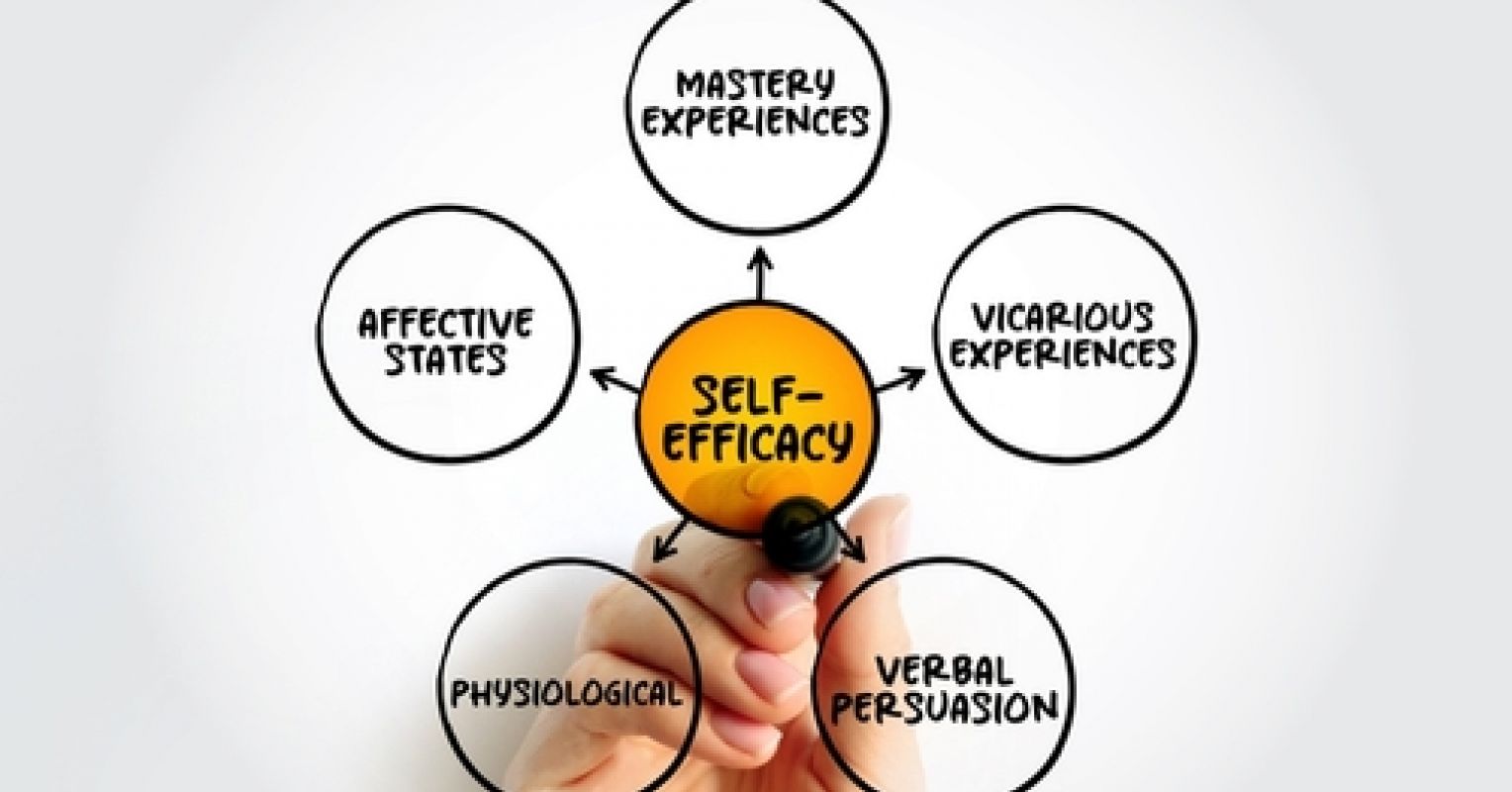
Self-efficacy, which I wrote about in Create Your Future the Peter Drucker Way, goes beyond confidence, though it is related to it. It falls within Bandura’s social cognitive theory. If we have self-efficacy, we believe that we can take on a task and be successful. Bandura explained that this concept builds on a series of successes, “personal mastery,” which we can apply or use as motivation elsewhere. It won’t just happen out of nowhere; it requires perseverance, grit, and resilience.
Edgar H. Schein: Psychological Safety
As he was a psychologist, teacher, consultant, and author, the work of Edgar H. Schein is a common factor among several of the most important topics within organizations today: psychological safety, organizational culture, and humility. He was a longtime MIT Sloan School of Management professor whose books, such as Organizational Culture and Leadership and Humble Inquiry, reached wide audiences, particularly in the business world.
Psychological safety, in particular, has become one of the most referenced concepts in organizations—business and otherwise. One of the best-known experts in the field is Harvard Business School professor Amy C. Edmondson. Schein wrote the foreword for her book Teaming, in which she writes of the concept’s long roots: “In 1965, MIT professors Edgar Schein and Warren Bennis (later a professor at the University of Southern California), discussed the need to create psychological safety to make people feel secure and capable of changing.”
Becoming American
In an age of worldwide anxiety about immigration, it’s worth pointing out that Drucker, Csikszentmihalyi, Schein, and Bandura were all born outside the United States, came here as young adults, and built their careers at universities in this country. Schein even wrote a memoir about his immigrant experience, Becoming American: My First Learning Journey.
Human Achievement
Drucker, Csikszentmihalyi, Bandura, and Schein are great examples of what is possible in human achievement, including the rewards of long, fruitful careers; professional experimentation; and reaching out beyond disciplines to different audiences. They exemplify the value of teaching and connecting with students while remaining lifelong learners. And their work transcended their own disciplines to have effects in other domains. They personified productive longevity—in their cases, teaching, researching, writing, consulting, and creating for the benefit of the greater good until shortly before their deaths.
Each slowly and deliberately built careers based on hard work, ingenuity, creativity, and curiosity. At this inflection point in history, even if we do not reach the heights they achieved, there is nothing stopping us from building our careers in similar ways