
Your support helps us to tell the story
From reproductive rights to climate change to Big Tech, The Independent is on the ground when the story is developing. Whether it’s investigating the financials of Elon Musk’s pro-Trump PAC or producing our latest documentary, ‘The A Word’, which shines a light on the American women fighting for reproductive rights, we know how important it is to parse out the facts from the messaging.
At such a critical moment in US history, we need reporters on the ground. Your donation allows us to keep sending journalists to speak to both sides of the story.
The Independent is trusted by Americans across the entire political spectrum. And unlike many other quality news outlets, we choose not to lock Americans out of our reporting and analysis with paywalls. We believe quality journalism should be available to everyone, paid for by those who can afford it.
Your support makes all the difference.Read more
With dietary trends for both protein intake and “fibremaxxing” everywhere at the moment, it can be difficult to understand which nutrient is more important.
Should your focus be on hitting protein goals each day, or should you prioritise fibre to support gut health and overall wellbeing?
To answer these questions, two dietitians share their expert advice, outlining the key differences between the two, explaining their individual health benefits, and illustrating how protein and fibre can effectively complement each other.
“Both are important,” explains Dr Linia Patel, a women’s health dietitian, performance nutritionist and author. “It comes back to this idea that nutrition is never about nutrients in isolation. We see from evidence when we look at whether it’s longevity data or just weight management data – it’s about dietary pattern and it’s about the balance.”
What is protein?
“When I think about protein, I’m going to talk about the biochemistry first,” Patel says. “Protein is a bit like Lego. You basically have these Lego pieces which are amino acids that are put together to form a beautiful design. Within those amino acids, some are non-essential and some are essential.
“This brings me back to the idea that protein is important because there’s essential amino acids that we can’t make from our body and we must get from our diet – protein is one of these multitasking nutrients.”
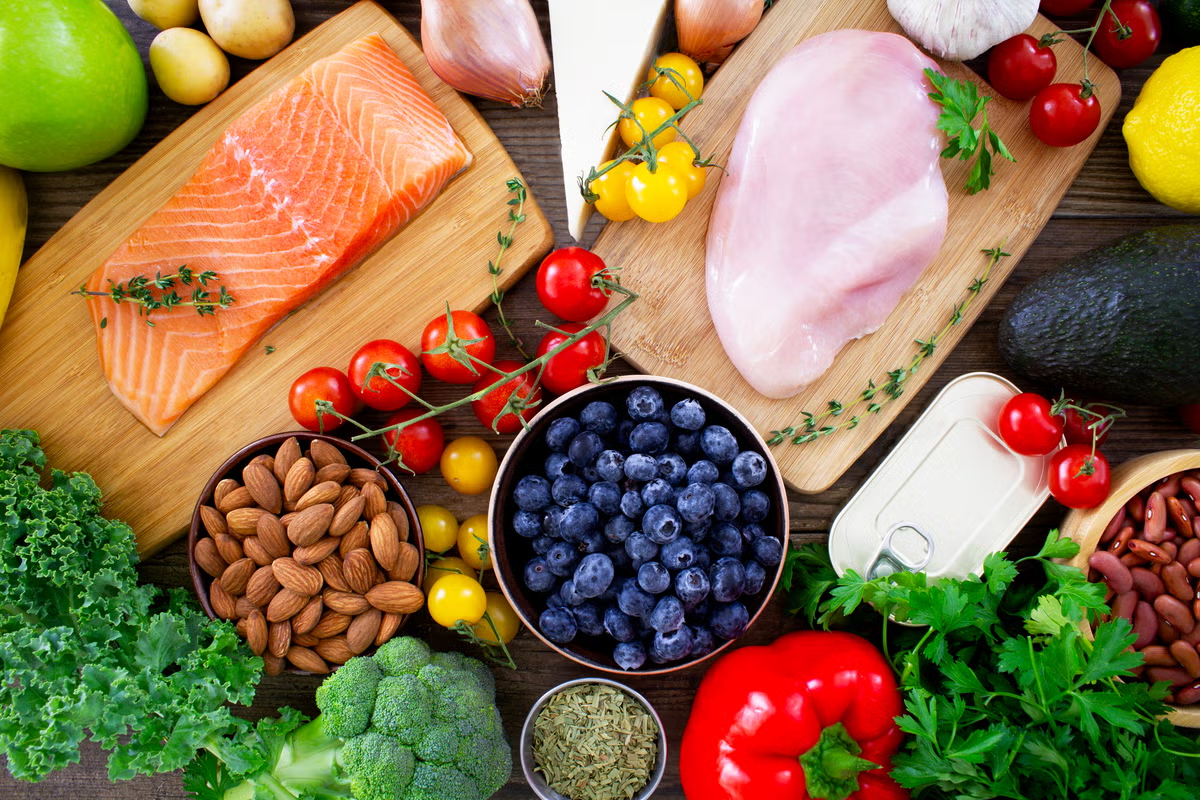
.jpeg) High protein foods include salmon, beef fillet, chicken breast chickpeas and soybeans, among others. (Getty/iStock)
High protein foods include salmon, beef fillet, chicken breast chickpeas and soybeans, among others. (Getty/iStock)
She explains how it’s involved in everything from protecting muscle mass – including during weight management – to providing building blocks for immune cells and neurotransmitters, which carry messages between nerve cells.
How much protein should be consumed in a day?
Laura Tilt, registered dietitian and head of science at Field Doctor, explains that in the UK the recommended amount of protein intake is around 0.75g per kilogram of body weight per day.
“Most people are eating over that amount – around 1.5 grams per kilo of body weight – but it will differ from person to person.”
With varying information and figures about protein consumption often found online, Patel says it is understandable that people may feel confused.
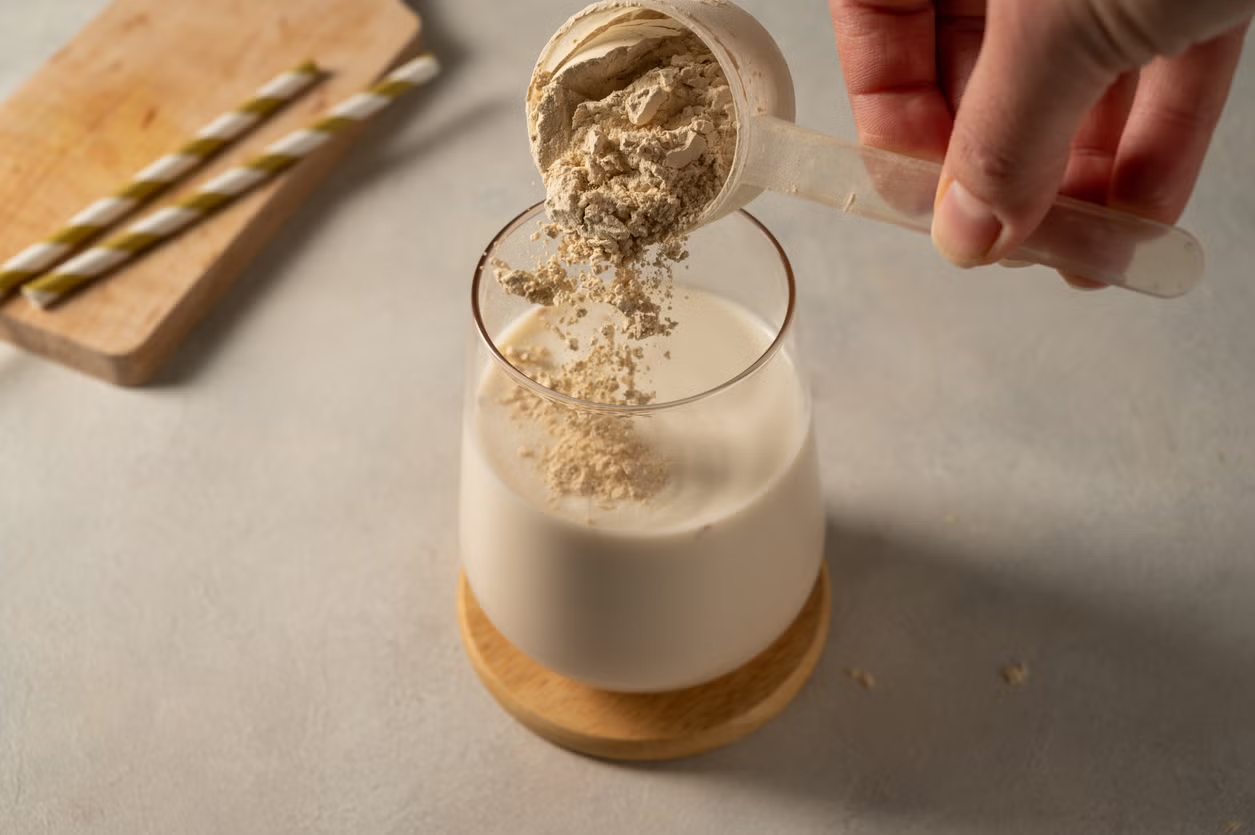 Many people are eating more protein than they need, say experts. (Getty/iStock)
“There are various conversations happening in the media that can get confusing and the amount is not black and white,” she says.
Patel also adds that it’s not just about eating one big portion of protein, but amount spreading the intake throughout the day. “It’s about finding that sweet spot – and that sweet spot exists even for protein intake.
“It’s not about overdoing it – you want to find the balance so that you are still able to bring in other key nutrients,” she says.
What is fibre?
Patel explains: “Fibre is a type of carbohydrate.”
“It sits in the overall macronutrient of carbohydrate and it’s found in plant-based foods. It’s basically a nutrient that us as humans cannot fully digest.
“When we eat fibre, we don’t really just eat fibre for ourselves – we eat it for our gut microbiome and in our gut microbiome is bacteria, viruses and fungi. Particularly the bacteria in our microbiome love fibres – it’s like giving them their favourite thing.”
She compares the body to a hotel containing numerous guests.
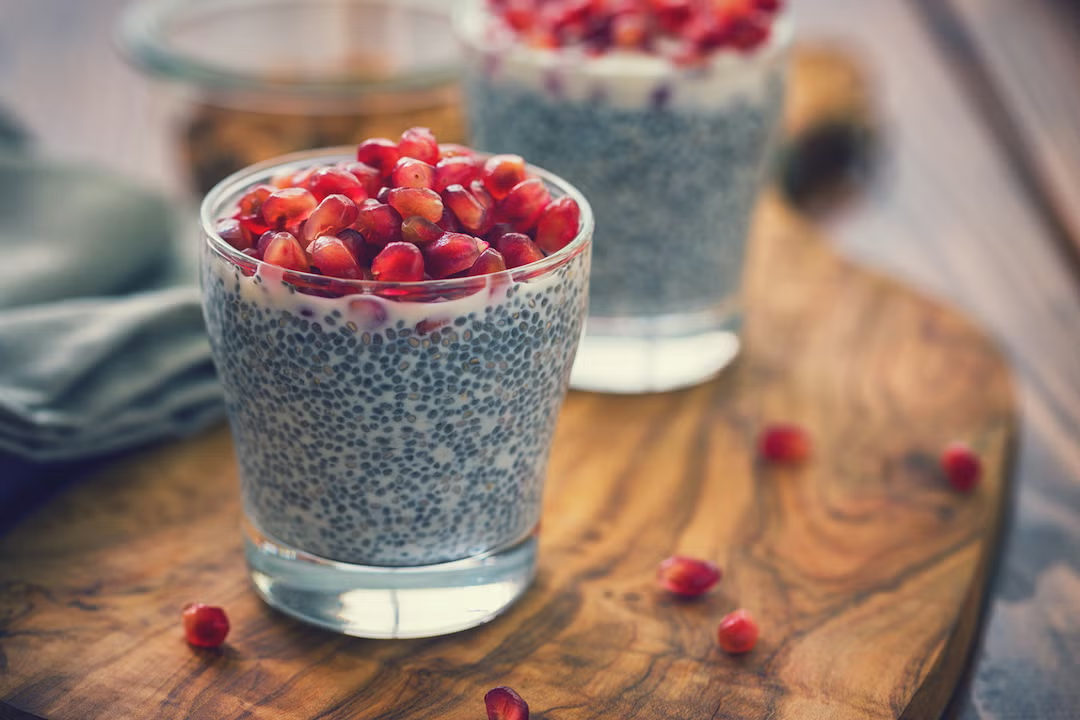 Experts say chia seeds are an excellent source of fibre and are great for gut health too. (Getty/iStock)
“It’s this relationship between us and our guests. If we give them the food they really like, they will use to fibre to digest it, produce what we call short-chain fatty acids. These then do a whole host of things for our hotel such as keep it clean, reduce inflammation and help our mood.
“Fibre is really powerful because it indirectly helps us be healthier in the long run.”
Tilt adds: “It helps to feed the gut bacteria in our large intestine. It plays a role in satiety so it helps us feel full after eating and it’s a short term day to day thing to help prevent constipation because it helps bulk out and soften our stools.
“Longer term it can help to reduce our risk of type two diabetes, heart disease and bowel cancer.”
How much fibre do we need?
“The recommendations for fibre intake is 30g a day,” Patel says. “Again splitting that fibre up is recommended, otherwise it will impact your digestive health.”
She also explains that the figures from the National Diet and Nutrition Survey indicate that the average UK intake is well below 30g, with the overwhelming majority of adults failing to meet the recommendation.
“There’s a massive gap we need to fill; however you also need to remember that with fibre, it’s slow and steady. It’s not about sprinting.
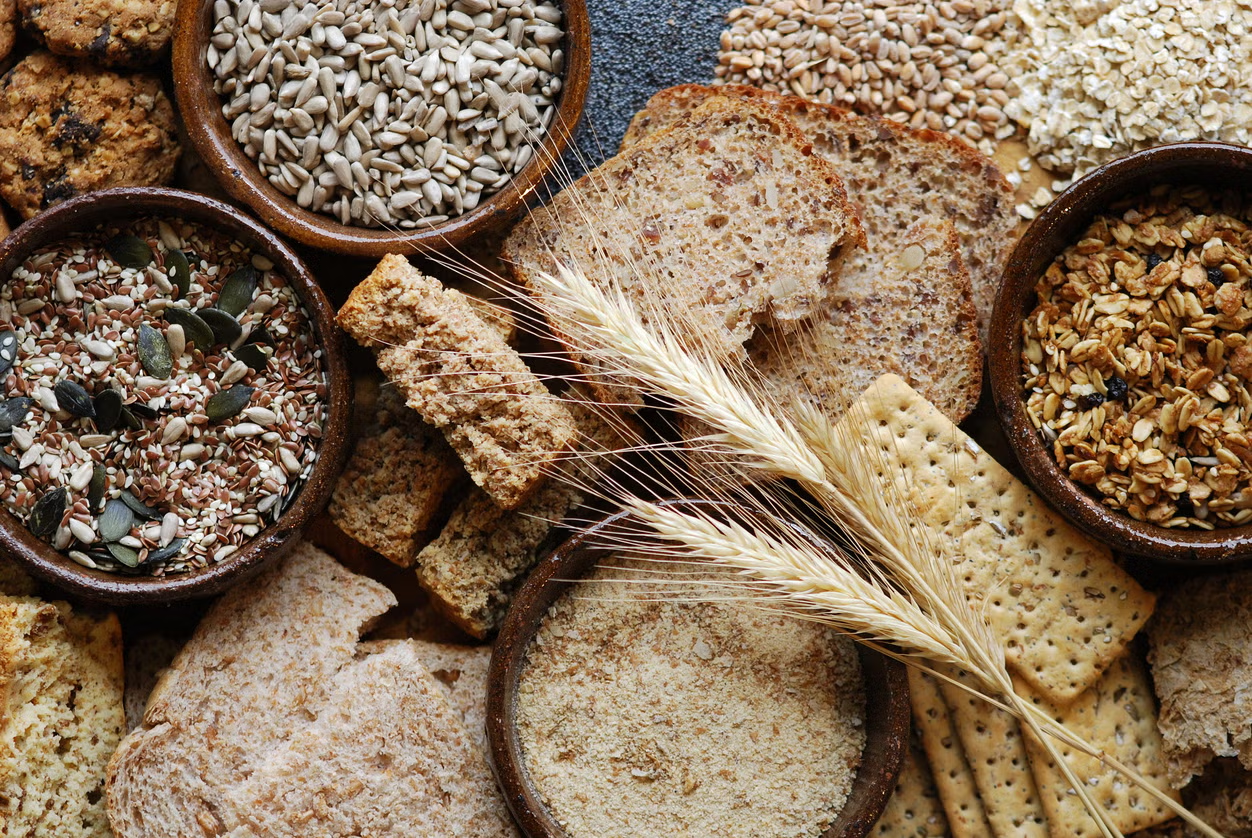 The recommended fibre intake is 30g a day, but many UK adults are consuming well below that. (Getty/iStock)
“If you’ve not been eating a lot of fibre, you need to make sure that you’re increasing it slowly so that your digestive system and gut bacteria can adjust.”
“Make sure you’re hydrated too.”
What foods contain fibre?
Patel lists out some foods that contain fibre.
“It is primarily in pulses and legumes, whole grains, nuts, seeds and fruit and vegetables,” she says.
“The big dent is in your whole grains and your lentils and pulses. If you want to bridge the gap and get foods with both protein and fibres then the big thing is beans and legumes. They’re inexpensive, they contain per 100 grams about eight or nine grams of protein and about seven to eight grams of fibre.
“Blending some white beans into a pasta sauce or adding some lentils into a curry or bolognese – those small changes actually help bridge the gap between protein and fibre.”