
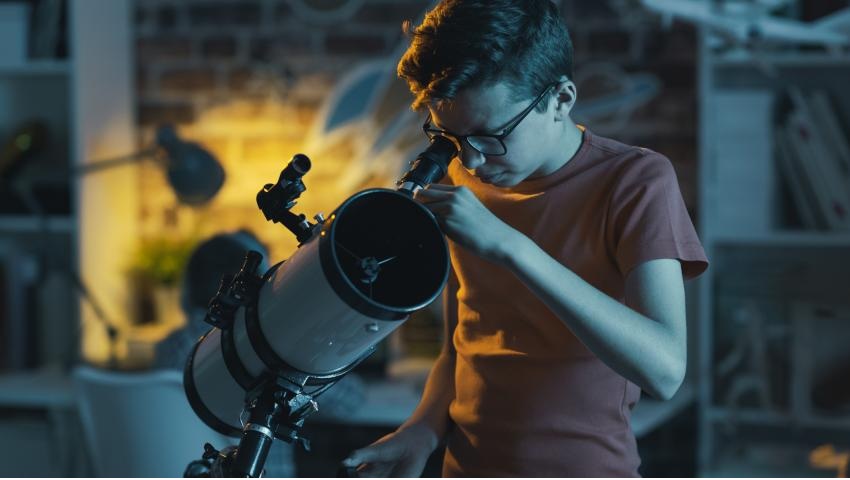
Eleven activities are planned across the UK on 25 and 26th September to mark European Researchers’ Night. This is the first time the UK is celebrating European Researchers’ Night since it returned to the EU’s research and innovation programme, Horizon Europe, on 1 January 2024. Have a look at the interactive map to find more information about activities planned on 25 and 26 September in Bristol, Bath, Cornwall, Manchester, Plymouth, Aberdeen, Edinburgh and Glasgow.
The European Researchers’ Night aims to bring science and research closer to citizens across 40 countries, offering people of all ages the opportunity to meet researchers and discover science in an engaging and accessible way. More than 1 million visitors are expected to take part in activities organised in museums, universities, research institutions, and other venues.
At these events, taking place every year since 2005, citizens can explore research and innovation through hands-on experiments, interactive activities, exhibitions, science shows, games, discussions, and competitions.
The European Researchers’ Night includes projects that run throughout the year, such as the Researchers at Schools activities, bringing scientists and researchers into primary and secondary schools.
The European Researchers’ Night and Researchers at Schools are initiatives funded by the Marie Skłodowska-Curie Actions, part of Horizon Europe, the EU’s programme for research and innovation.
Horizon Europe is the biggest international research and innovation programme in the world with more than €95.5 billion of funding available over seven years (2021 to 2027) from the EU budget, to which all associated countries are adding further contributions.
In 2026 and 2027, the European Commission is supporting 49 projects with €16.3 million to organise two successive editions of the European Researchers’ Night and Researchers at Schools activities.
With Researchers at Schools, scientists also welcome pupils into laboratories and other research settings, helping them understand the role of research in today’s challenges and encouraging their interest in science, technology, engineering, arts, and mathematics.