
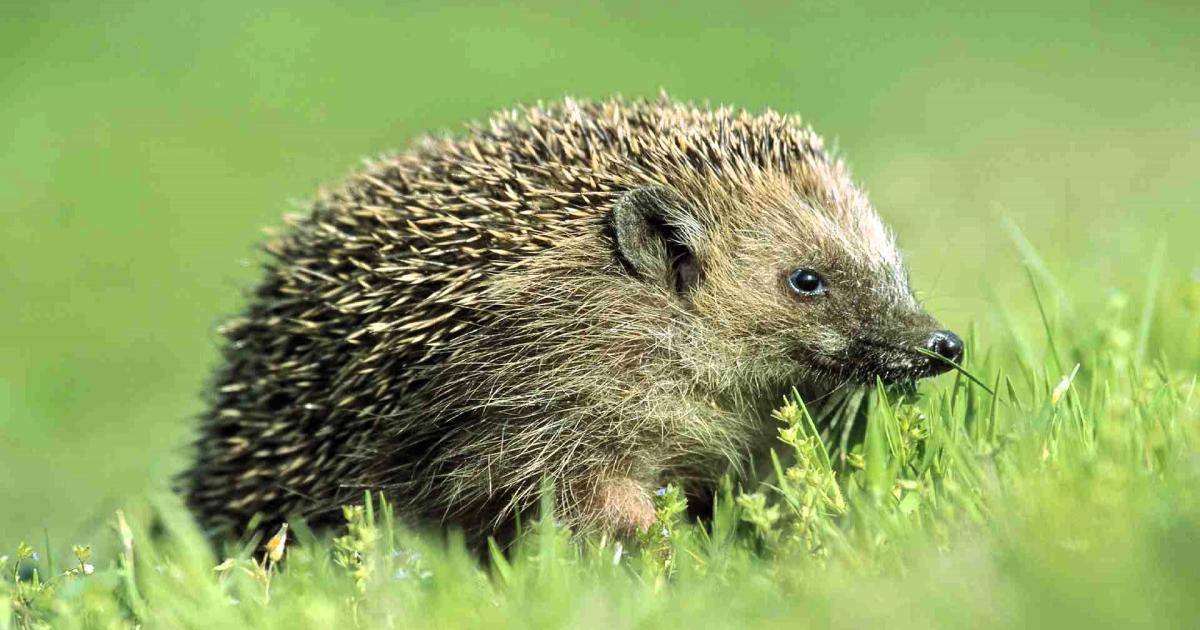
I’ve always had a fascination for hedgehogs.
When no more than seven or eight, I tried to nurse an injured hedgehog back to health.
But my inadequate ministrations failed to save the patient, who was placed inside my broken wooden toy lorry for a coffin, and buried in the back garden with much ceremony.
Hedgehog preparing to attack a grass snake. (Image: Supplied)
Nowadays roadkill accounts for the majority of hedgehog deaths, though this scorching summer has probably not helped either.
In June we spotted a sorry-looking specimen scurrying across our lawn in the full heat of the day.
Even though we always provide food and water for hedgehogs, this particular creature appeared decidedly undernourished and possibly dehydrated too.
Hedgehog (Image: Supplied)
It may also be due to the excessive heat I have noticed a marked decrease in the slugs and snails and other insects that usually treat our garden as an eat-all-you-like snack bar, so I presume this may also have had an adverse effect on hedgehog numbers.
For years, one hedgehog or another has been living under our shed claiming squatters’ rights, where they make a nest of leaves and moss known as a hibernacula.
After building up layers of fat throughout the summer months, they hibernate from October to April, though they frequently emerge in milder spells to replenish their fat reserves.
The average lifespan for a hedgehog is three years, though they have been known to live for eight to ten years in captivity.
Making tracks (Image: Supplied)
The male hedgehog is known as a boar, while the female is called a sow, a further attempt to align it with the porcine breed.
The mating season usually extends from April to July, when three to five young are born.
Late broods born in September rarely survive and may be eaten by the parent.
I believe it is usually a female that takes up residence in our pocket-handkerchief garden, where a male usually announces his arrival with a series of grunts and growls as he follows the female in and out of a geranium bed that is one of her favourite haunts.
After mating, the male leaves the female to rear the brood herself, which are born blind and do not gain their eyesight until about 14 days old.
They are quite pink when first born, but soon begin to sprout bristly spines within a short time of birth.
I have never seen a female with more than three or four young in our garden, and within six weeks the young are usually mature enough to become independent.
Being nocturnal by habit, the hedgehog has poor eyesight but a keen sense of smell and is a very capable swimmer and climber.
Our only prickly mammal has few predators, with foxes and badgers, and large birds of prey accounting for most fatalities.
While stoats and weasels and other mustelids (including pine martens and ferrets) may also attack them from time to time, the hedgehog has a fighting chance with their spiny armour of 6,000 spines to offer protection when it curls up into a defensive ball.
Old Mr Pricklepin (Image: Supplied)
They also possess an aggressive streak and are fearless enough to attack and kill grass snakes and adders, and rats twice their size and eat them.
I have often found a hedgehog beside our pond, presumably foraging for frogs and newts to which they are particularly partial, and they are certainly not averse to entering the water in their quest for newts or water molluscs.
Numerous species of insects and earthworms normally form part of their regular diet which also consists of young birds, young rabbits, and birds’ eggs, the latter having made them the sworn enemy of many a gamekeeper who displays their carcasses on his grisly gibbet.
Romanies have always considered eating hedgehogs a delicacy.
Gutted and stuffed with sage and onion, it was rolled in stiff blue clay and baked over a wood-ash fire until the hardened clay cracked and broke apart, removing the spines and skin, and exposing the meat, which supposedly tastes similar to chicken, though it has sometimes been likened to venison.
Once known as the hedgepig, butter-bump, furzehog, or until more recently as urchin (when the innocent creature was believed to be a mischievous elf in disguise) the gardener’s best friend has also lodged itself with affection in our collective psyche, courtesy of Alison Utterley’s Fuzzy Peg in Little Grey Rabbit, and Beatrix Potter’s Mrs Tiggy-winkle (“I’m an excellent clean-starcher”) as well as the poem, Old Mr. Pricklepin, which features in Appley Dapply’s Nursery Rhymes, compiled by Potter.
‘Old Mr. Pricklepin
has never a cushion to
stick his pins in,
His nose is black and his
beard is grey,
And he lives in an ash stump
over the way.
The hedgehog has a primordial lineage that stretches back to the mid-Cretaceous period, over 130 million years ago, prompting rural writer and journalist James Wentworth Day to note in They Walk the Wild Places, ‘Fossils, those timeless records which cannot lie, tell us that there were hedgehogs in France and England a million years or more before there was a garden in Eden.
Even then they wore a mail-coat of prickles.
As “B. B.” [Denys Watkins Pitchford] has charmingly written, “with badgers and foxes, hedgehogs have the first right of English fields and woods, and if there are animals to introduce us to the elements of geology, hedgehogs may begin.”
The hedgehog is an intrepid survivor and has miraculously avoided the path to extinction that the mammoth, wolf, bison, bear and lemming followed across our lands many eons ago.
This ancient of days remains very much part of our modern-day folklore and literature.
Who can forget Spiny Norman, the giant hedgehog that tormented the notorious racketeer, Dinsdale Piranha in Monty Python’s Flying Circus?
Or Hodgeheg, the titular character in the novel by former teacher turned farmer, Dick King Smith, about an inquisitive young hedgehog who speaks gobbledegook after receiving a bump on the head while attempting to cross the road.
And then there is that classic joke by Don Antopolski, which won the Edinburgh Festival Fringe’s funniest one-liner in 2009.
“Hedgehogs, why can’t they just share the hedge?”
I’m hoping against hope that the hedgehogs will return to our garden, for life is less pleasurable without Miss Tiggy-winkle and Old Pricklepin in residence.
If you wish to feed the hedgehogs in your garden, it is essential to give them proprietary hedgehog food as sold in pet shops or garden centres.
Wet/dry dog food and cat food are also recommended.
They will also appreciate a shallow bowl of water.
But please, no milk or bread, or dried mealworms which seriously affect their digestive system.