
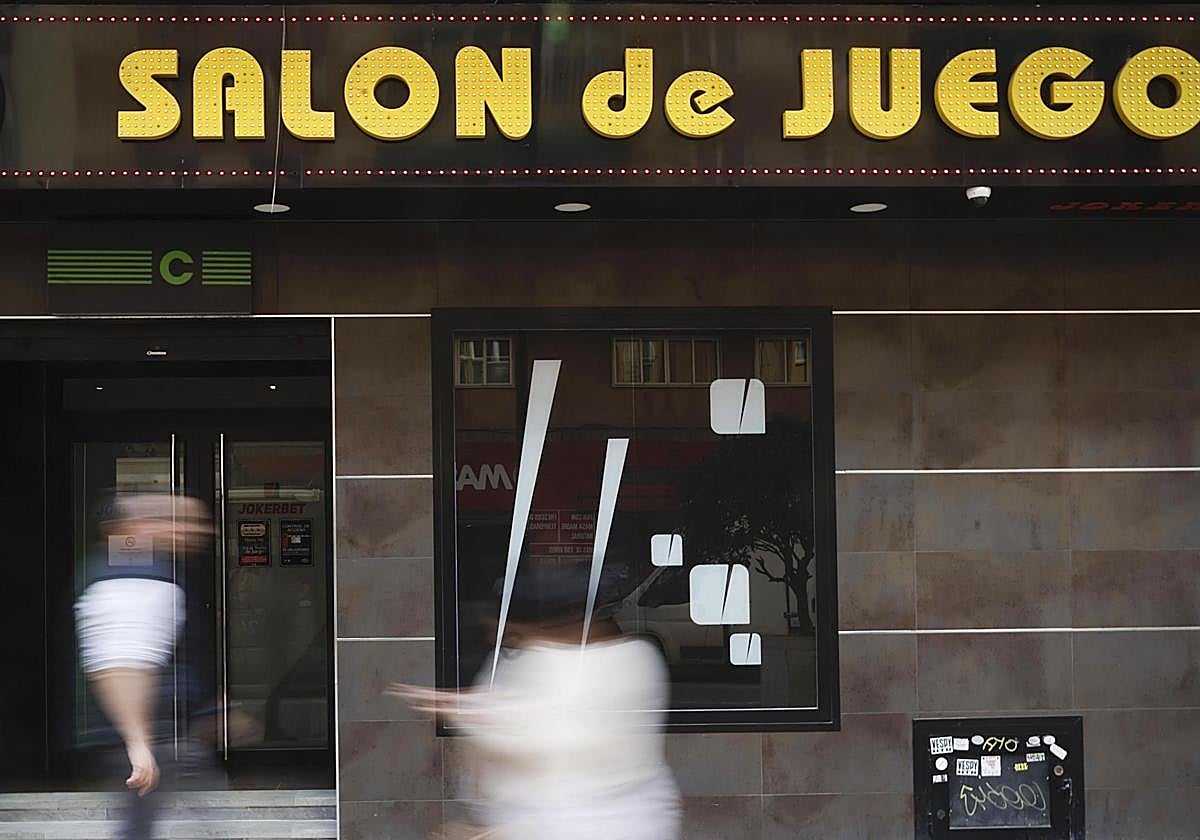
Francisco Abad eventually came to realise that he had a drinking problem. It never once crossed his mind that gambling might be the root of … all his troubles.
One drink after another, he thought, drove him to play slot machines, place bets, go to the casino and play bingo. Whatever came to hand, depending on whether he had money available or not.
And so, day after day, he was swept along by a maelstrom of lies and debts that kept piling up. Added to this were his emotional problems and the deterioration of family relationships.
He hit rock bottom when his business was repossessed, alongside a pile-up of unpaid bills and his wife’s probing questions.
“I sought help to stop drinking but, to my surprise, I carried on gambling just as before. That’s when I realised that what was really happening to me was that I had a gambling addiction.”
It was no easy process, but the Malaga resident overcame his gambling addiction decades ago, “with the odd relapse”, at a time when the concept was completely foreign and there was hardly any information or support network available.
Abad now heads the Malaga Association of Gamblers in Recovery (Amalajer), an organisation that offers a helping hand to people who are currently going through the same ordeal he endured in the late 1980s.
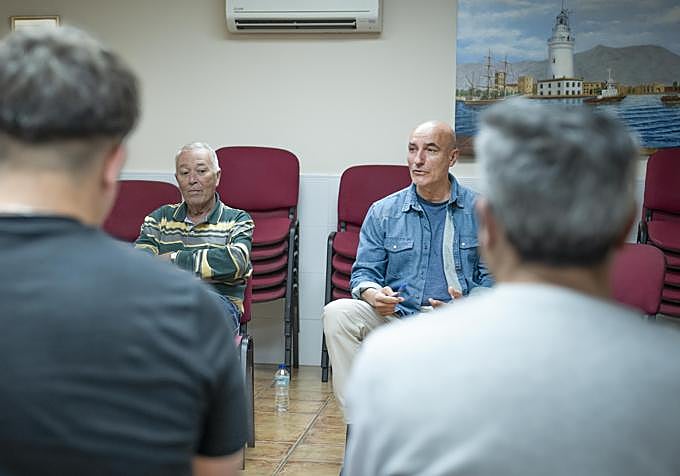
Group therapy session held at the Amalajer headquarters.
(Pedro Quero)
“Everything is different now,” reflects the 72-year-old. Pathological gambling is recognised as a mental illness characterised by a chronic and progressive inability to resist the urge to gamble for money.
In recent decades, gambling addiction has become the most commonly treated non-substance-related addiction in health centres, particularly cases linked to slot machines and bingo.
In Malaga, a total of 4,059 citizens are voluntarily registered on the general register of gambling bans, also known as the register of banned or self-excluded individuals – a measure that protects them from addiction by preventing them from accessing gambling activities.
Upon registration, the authorities and gambling operators block both access to online betting sites and physical entry to casinos, bingo halls or gaming arcades.
“When someone comes to our office asking for help, the first thing we do is register them, as a safeguard. It is a prerequisite for starting any treatment,” explains Abad, who reveals that a person registered in the database cannot even collect a lottery prize.
“Gambling, fuelled by online platforms, is affecting more and more people, and at increasingly younger ages”
According to data on banned players compiled in the 2024 statistics on private gambling in Andalucía – the most recent year for which updated figures are available – there are 2,621 men and 1,438 women registered.
The total for the province represents 137 new registrations compared with the previous year (a 3.49 per cent increase on 2023). Across Andalucía as a whole, there are 18,262 self-excluded individuals, with Malaga ranking second in terms of numbers, surpassed only by Seville, where the figure stands at 5,029.
Granada ranks third with 2,632 registrations, while Jaen is the province where the fewest people have applied for self-exclusion from gambling: 587.
The association is convinced that these figures represent just the tip of the iceberg: “These are the people who have taken the step because they are already facing dramatic personal and family situations. Gambling, driven by online platforms, is affecting more and more people at increasingly younger ages,” warns Abad.
Profile and playing styles
At Amalajer’s headquarters (located on Calle Diego Vázquez Otero, next to the Puente de las Américas), there is a sense of calm. Posters serve as reminders that it is not worth risking your job, family, savings or well-being.
In one of the many meeting rooms on the premises, a group therapy session has just begun.
The presence of the SUR photographer makes participants uneasy, but eventually some pose with their backs turned. “The profile of the addicted gambler has changed. Whereas a few years ago we were talking about a man aged between 35 and 45, we now have people starting treatment in their 20s and 30s. We have university students and young people hooked on online gambling. It’s a hidden problem because you gamble from the privacy of your own home; you don’t have to physically go anywhere, as was the case years ago,” he adds.
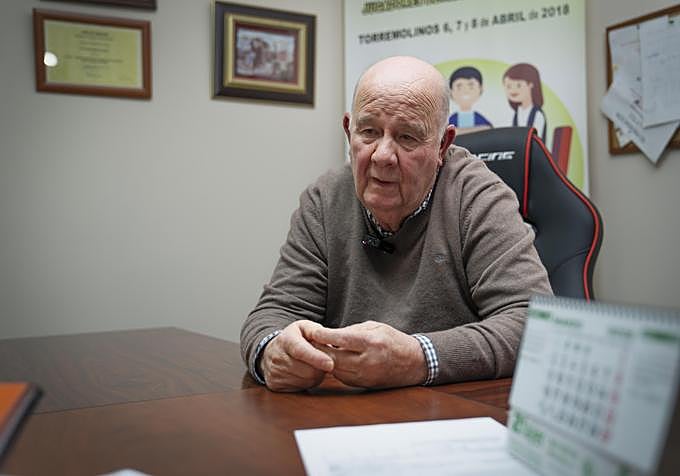
Francisco Abad, Chairman of Amalajer.
(Pedro Quero)
The association is highlighting the need to raise public awareness of the problems caused by problem gambling, as well as the need to restrict access to slot machines – particularly those located in bars – in order to protect minors and vulnerable people. “Those on the exclusion list cannot enter gambling halls, but they can still access gambling machines in premises where access is not currently restricted,” laments the president.
Amalajer is calling for restrictions on access to slot machines, which are the most addictive form of gambling
Based on Amalajer’s experience and the cases they handle, slot machines remain the most dangerous form of gambling when it comes to addiction, with the exception of online gambling, which continues to gain ground rapidly.
In fact, according to data from the Ministry of Social Rights’ 2024 Report on Gambling Activity in Spain, the number of online gamblers saw a sharp rise, fuelled by welcome bonuses from bookmakers: there were more than 450,000 new players compared with the previous year and the total number of active players approached two million.
The report also notes that eight out of ten players are men (83.15 per cent compared with 16.85 per cent women). Another key finding: 85.70 per cent of active players are aged between 18 and 45.
According to this latest government report, gambling operators recorded profits of over eight billion euros in 2024, with the biggest increase coming from state-licensed online gambling, which rose by 17.6 per cent to reach 1.454 billion euros (730 million euros from casino games, 608 million euros from sports betting, 100 million euros from poker and 14.94 million euros from bingo).
Two years of rehabilitation to live a life free from gambling
Most of the people who come to Amalajer do so when they are in desperate straits – emotionally, within their families and financially. The organisation currently supports around 350 people, including patients and their families. Their team includes two psychologists, a social worker, an administrator, a lawyer and volunteers. Their primary focus is combating gambling addiction through therapeutic support, mainly via self-help groups comprising patients and their families. They also offer specific treatments for addictions to new technologies. On average, patients require two years of rehabilitation with regular visits to help them return to a normal life away from gambling. “Here, we don’t teach people how to control their gambling or how to gamble less. In these cases, gambling must be eliminated for good,” explains Abad. During treatment, patients experience what is known as withdrawal syndrome, similar to that caused by chemical substances. When trying to quit, they may feel physical and psychological discomfort, as well as irritability, anxiety, insomnia or obsessive thoughts about gambling. “Addiction lasts a lifetime, but the difference is that I know I don’t want to relive the nightmare I went through. It’s difficult and tough, but it is possible to recover,” concludes the president of Amalajer optimistically.