
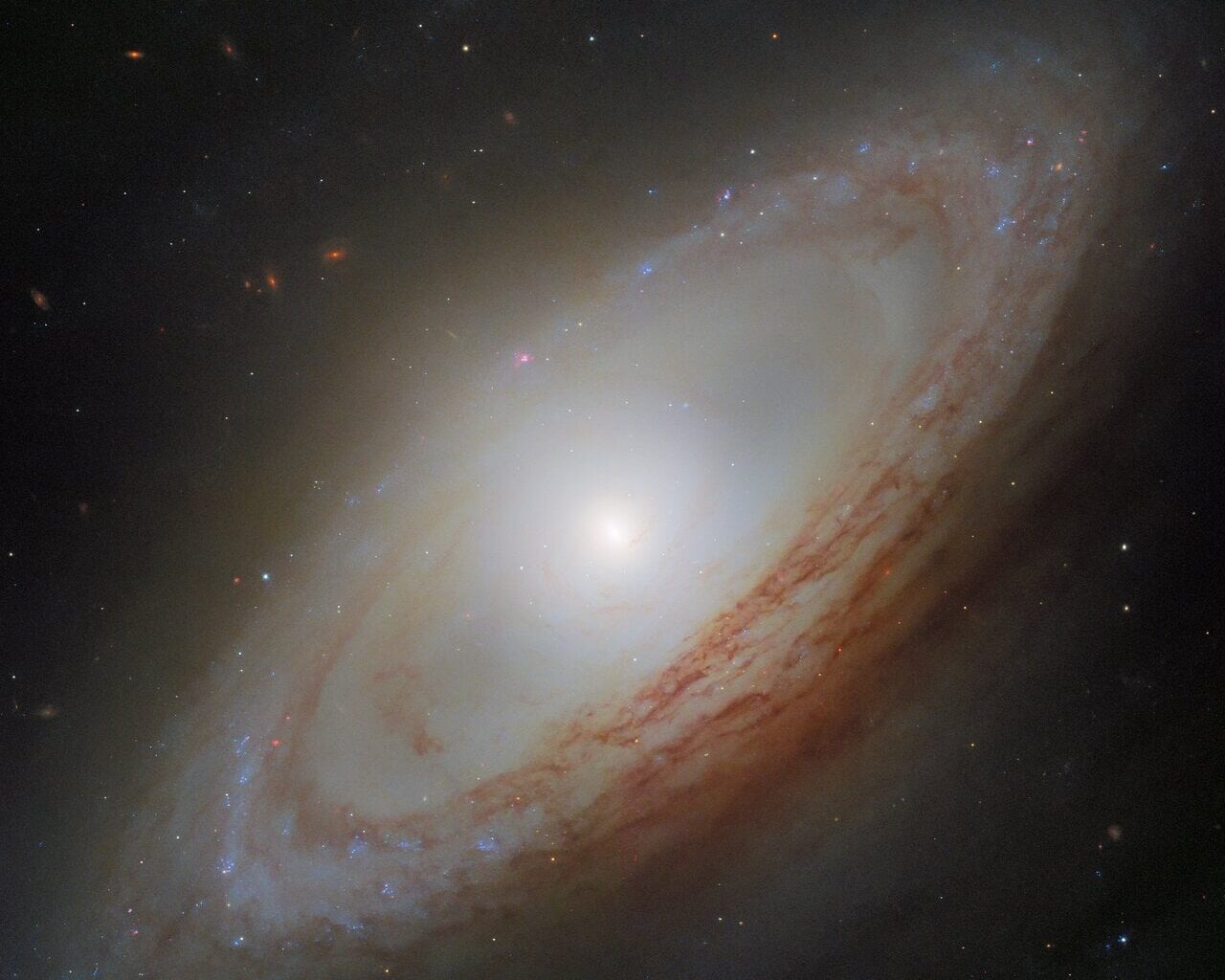
Galaxies are like snowflakes, no two exactly alike, even the spirals. The Hubble Space Telescope did a visual dive into the distant spiral NGC 4693 and found some intriguing hints to its past. For one thing, this member of the Virgo Cluster seems to have a central region that’s rotating out of sync with the spiral arms and bulge. Those arms don’t seem to connect to the central region, and the bulge itself seems to extend out above the plane of the galaxy. In other words, there seems to be a decoupling between the arms and the bulge.
Why is that? Did NGC 4693 evolve with its contrary characteristics? Or did something happen to de-sync its interior stars and gas clouds? Let’s take a look at the bigger picture before diving into its past.
Exploring the Virgo Cluster
This galaxy lies some 55 million light-years away from us and is a member of a larger grouping of galaxies called the Virgo Cluster. The collection may have up to 2,000 galaxies of different types and shapes and is actually part of an even larger galaxy group called the Virgo Supercluster (itself consisting of more than 100 galaxy groups and clusters). The Virgo cluster itself provides us with a look at several types of galaxies in a relatively nearby region of space, within around 54 million light-years of us.
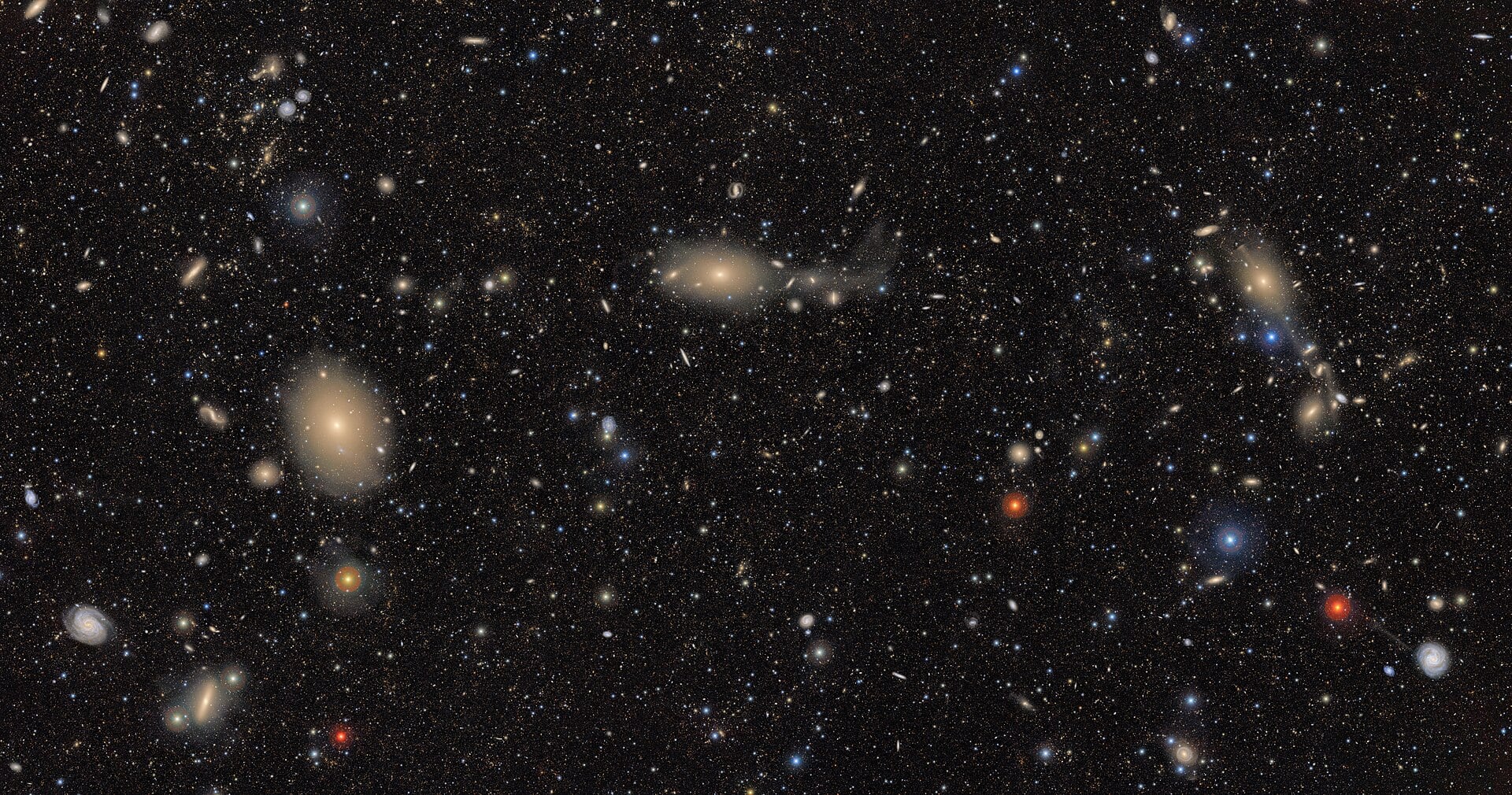
The southern portion of the Virgo Cluster as imaged by the Vera C. Rubin Observatory in very high resolution, taken on June 5, 2025. Credit: NOIRLab/Vera C. Rubin Observatory
The Virgo Cluster environment is made up of several groupings of galaxies (including our Milky Way, which is part of the so-called Local Group of galaxies. There’s evidence that the cluster is still actually assembling itself. That affects the evolution of the galaxies it contains, which appear to be grouped by galaxy type — that is, spirals arrayed in one region, ellipticals centered around the giant elliptical M87, and so on. The groupings appear to be in an ongoing merger, and most members seem to be experiencing a loss of gas due to a process called “ram pressure stripping”. That loss of star-forming material has an effect on star formation rates.
The best estimates suggest that the Virgo Cluster itself has been accumulating galaxies for at least 7 billion years, with individual galaxy formations stretching back to around 11 or 12 billion years. Interactions between galaxies in the cluster have influenced individual galactic evolutionary histories.
What De-synched NGC 4693?
The odd rotation of gas and stars and the extended shape of the galaxy bulge in NGC 4693 have prompted a couple of suggestions from astronomers as to their origins. One theory suggests that the galaxy (like most of its siblings) has experienced a merger or at least a close encounter with another galaxy sometime in the past. If that happened, it could destabilize stellar orbits, and shock fronts could move clouds of gas around. Another idea is that the galaxy itself somehow managed to funnel in gas from the intragalactic medium in the larger cluster. There’s evidence of quite a lot of superheated plasma between galaxies, along with rogue stars and planetary nebulae somehow ejected from galaxy members during close encounters and collisions.
If NGC 4693 did “suck in” some gas from other regions, that material could have gathered in the central region and assumed the strange observed perpendicular orbital motions. Add to the mix the fact that there’s a supermassive black hole at the core of the galaxy. It’s actively sucking in gas from surrounding regions, which also affects star and gas cloud motions.
In addition to the weird central motions, the galaxy’s arms are showing evidence of star formation, likely due to the same merger actions. When galaxies interact, shock fronts often blow through clouds of gas and dust, which sets off bursts of star formation.
Studies of clusters such as the Virgo Cluster and Supercluster give astronomers inside peeks at the evolution of member galaxies. In addition, understanding the interactions between galaxies provides background information on the process of star formation that shapes them. The Universe is filled with galaxy clusters and superclusters, so studying the relatively nearby Virgo Cluster gives us a look at processes that likely have occurred throughout time and space since the Big Bang and the births of the first stars and galaxies.
For More Information