
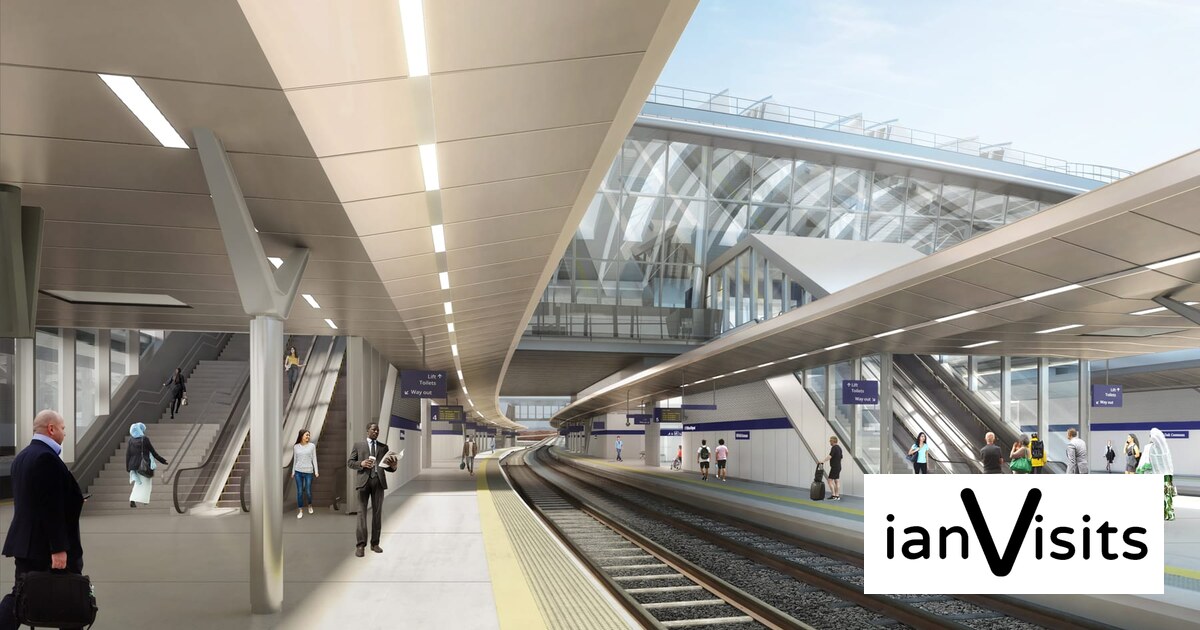
Elizabeth line passengers will be able to board trains at Old Oak Common without the usual step up from the platform, after the government approved a redesign that lowers the tracks serving the station’s four Elizabeth line platforms.
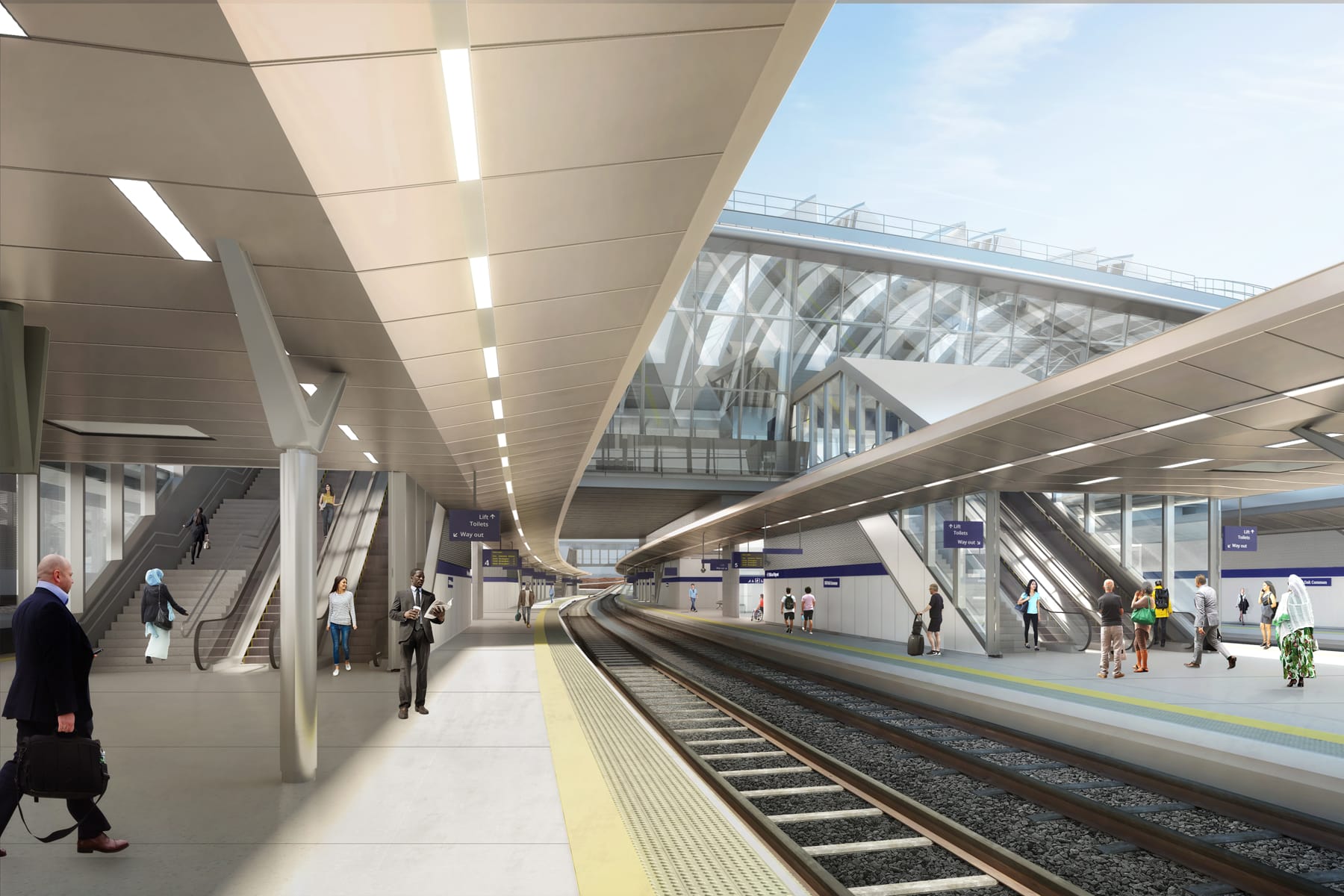 Old Oak Common surface platforms concept image (c) HS2
Conventionally, national rail platforms are set to a standard height above the rails of 915mm, to allow for a wide range of trains to be able to use them – from passenger to freight to engineering. That was a legacy of how the railways evolved over the centuries, with different companies building to different standards – so 915mm was chosen as a middle compromise. However, it usually means a vertical gap for passengers at many stations.
 A typical station gap – at Ingatestone station (c) ianVisits
In 2018, when the Elizabeth line was under construction, it received a special exemption from the rules for its new central London stations to ensure step-free access at the platform doors. This restricted the railway’s flexibility to serve other trains, but since that was never expected anyway, it was deemed a sensible decision.
However, we come to Old Oak Common station.
Here, the national rail platforms are – or were – being built to the UK national standard, but that would mean Elizabeth line trains would need a manual ramp to offer step-free access to passengers. While that’s routine at many stations, the sheer volume of passengers expected to change to and from the Elizabeth line at Old Oak Common would require many ramps and staff, and trains would need more time at the platform, slowing down the service.
 Typical platform ramp (c) ianVisits
Transport for London (TfL) raised this issue a few years ago when it became apparent that Old Oak Common would be the HS2 terminus and therefore much busier than originally planned. TfL says Elizabeth line passengers are expected to make up around 90 per cent of interchanges at Old Oak Common, so enabling step-free access was a significant passenger issue that needed resolving. Talks have been underway since then to find a solution, and at a site visit in August, an HS2 spokesperson confirmed to ianVisits they had found one but were awaiting final sign-off.
That solution is not to raise the platform, but to lower the railway.
Raising the platforms would have meant redesigning all the other station infrastructure, such as lifts, stairs and escalators. But by lowering the railway track, they can build all the platforms and associated equipment to the same specification.
The track at Platforms 5 to 8 will be lowered, and the station will use a solid concrete slab track through the station rather than ballast.
These changes mean the station can offer fully step-free access for Elizabeth line trains at those platforms.
Although in practice the station signs would presume that Elizabeth line trains would call at platforms 5-8 and national rail services would use platforms 1-4, the station was designed so any train could use any platform.
The change doesn’t fully alter that, and an HS2 spokesperson confirmed to ianVisits that the new Elizabeth line tracks and platforms will be designed to allow compatible passenger and freight services to use the relief line platforms when required.
However, if those trains stop at the station, passengers will have to step up to the platform (or down to the train), rather than the other way round as is common at most other stations. Because platform ramps are designed for a gap where the train is higher than the platform, passenger assistance will be provided if GWR or Heathrow Express trains have to use the Elizabeth line platforms.
But those should be rare, such as when engineering work means a national rail platform is out of use. The wider benefit is that thousands of passengers swapping between HS2 and the Elizabeth line will have fully step-free access between the platform and the train.
Andy Lord, London’s Transport Commissioner, said: “Elizabeth line passengers are expected to account for around 90 per cent of interchanges at Old Oak Common, so level boarding is vital for the safety and accessibility of our customers.
“The platforms will also be step-free from the street, benefitting local residents as well as those travelling through the station, and supporting the growth in homes planned in the area.
“The solution that has been achieved highlights the importance of collaboration in the rail industry and with stakeholders, and it is fantastic news that Old Oak Common will join the Elizabeth line’s 41 stations that provide step-free access.”
The decision follows technical and accessibility work by HS2, Network Rail, TfL and the Department for Transport, with input from train operators and accessibility groups.