

Squatting once a week can lower blood pressure, according to new research.
The findings, published in BMJ Open Sport & Exercise Medicine, suggest that isometric exercises, where muscles contract without movement, can deliver notable cardiovascular benefits even at low frequency.
While a study from Canterbury Christ Church University in Kent found that doing the exercises three times a week produced the best results, researchers noted that a single weekly session still yielded significant improvements.
This makes the approach particularly valuable for those who struggle to maintain a more demanding workout schedule.
The trial enrolled 100 individuals, none of whom exercised regularly, with an average age of 37.
All had systolic blood pressure readings falling between 120 and 140 mmHg, classified as normal or high-normal.
Participants were divided into five groups.
One group served as a control and did not train.

Squatting exercise once a week can lower blood pressure
|
GETTY
The remaining four groups completed isometric wall-sit sessions three times a week during the first four weeks.
Each session included four rounds of the wall-sit exercise, with two-minute seated rest intervals between bouts.
During the second month, the four active groups diverged: they were assigned frequencies of zero, one, two or three sessions per week, allowing researchers to assess how training regularity affected outcomes.
By the end of the initial four-week training phase, all exercising participants experienced a systolic blood pressure reduction of roughly 10mmHg.
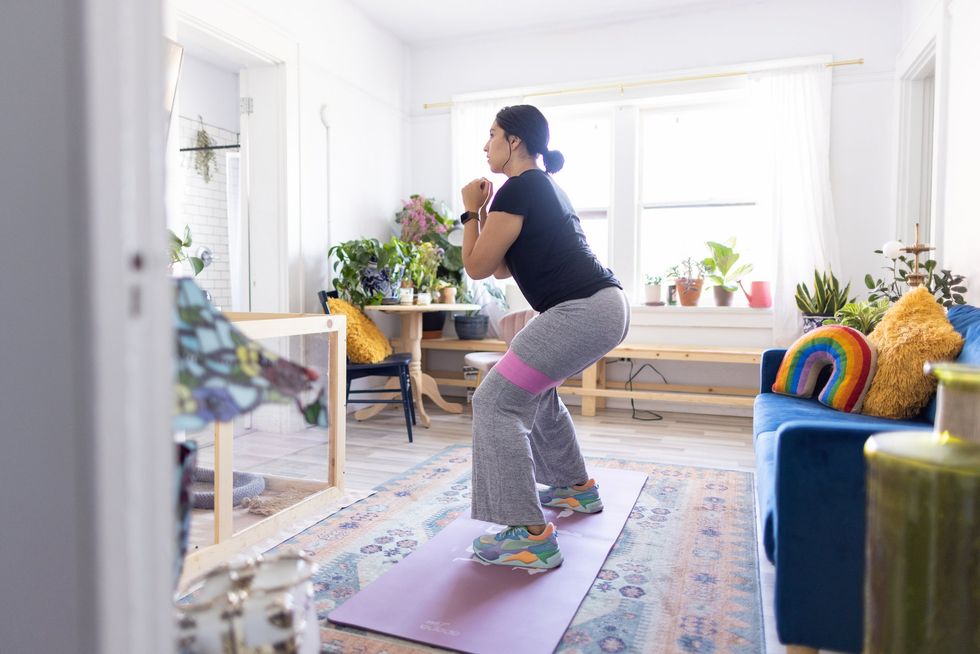
The trial enrolled 100 individuals, none of whom exercised regularly, with an average age of 37
|
GETTY
After the full eight weeks, those who maintained three weekly sessions saw the greatest improvement, with an average decrease of 13.73mmHg, bringing their systolic reading to approximately 117mmHg.
Participants who trained once or twice per week recorded reductions of 6.56mmHg and 6.95mmHg respectively, with readings settling at around 123mmHg.
Those who ceased training entirely during the second month saw their blood pressure climb back to levels comparable with the control group, averaging about 128mmHg.
The study authors wrote: “For individuals unable to commit to higher training frequencies, even minimal engagement (once a week) can help maintain significant benefits over a short four-week period.
“However, for optimal blood pressure reductions … a frequency of three times per week may be recommended.”

Each session included four rounds of the wall-sit exercise, with two-minute seated rest intervals between bouts
|
GETTY
Emily McGrath, a senior cardiac nurse at the British Heart Foundation, highlighted the research’s broader significance.
She said: “Regular exercise is one of the best things you can do for your heart and general health.
“It can help to lower blood pressure, support a healthy weight and reduce your risk of developing heart and circulatory diseases.”
She emphasised that the findings show how even modest training can produce considerable health gains, offering encouragement to people who find frequent exercise difficult to sustain.
McGrath also stressed the importance of offering varied exercise options so people can choose activities that realistically fit into their lives.
She did, however, note that the four-week follow-up period was brief, and that longer-term studies would be needed to determine whether such benefits endure.