
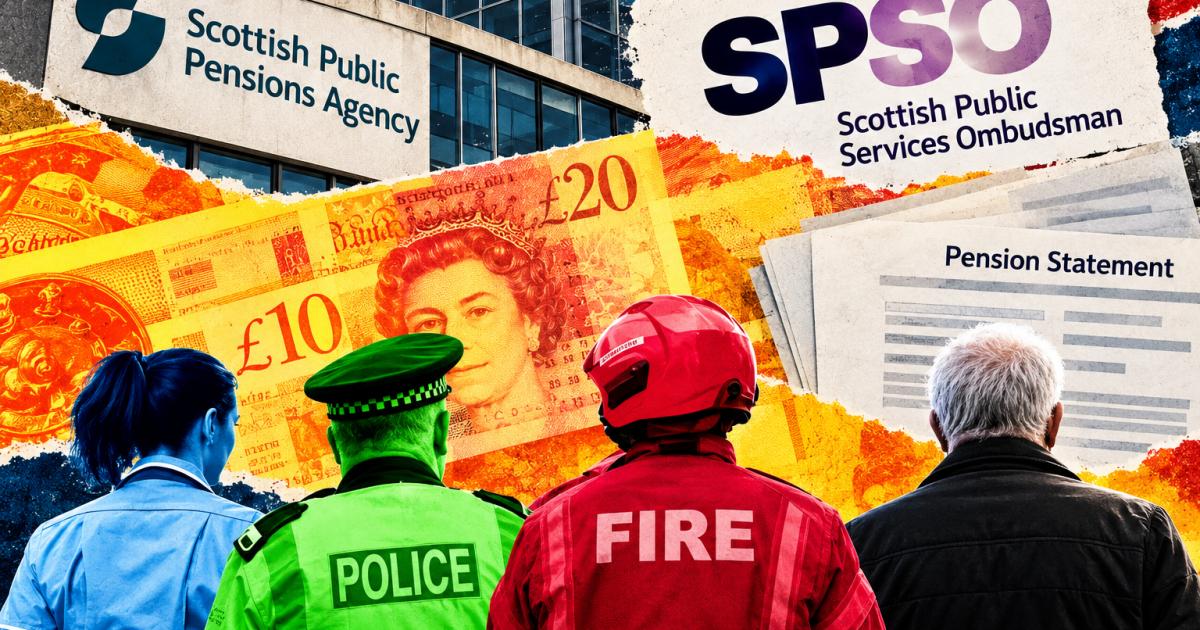
He argues that the alleged failure goes beyond a dispute about pension calculations and concerns misleading information that influenced crucial retirement decisions and has called on the SPSO to reconsider its decision.
He said: “It’s well within SPSO’s powers to investigate the SPPA and they should be doing so, but they are choosing not to.”
The remedy followed a court ruling that changes to public sector pensions introduced in 2015 unlawfully discriminated against younger workers. Eligible members have since been entitled to choose between legacy and reformed scheme benefits for the period from April 2015 to March 2022.
Under the Public Service Pensions and Judicial Offices Act 2022, all eligible members were legally supposed to receive their remedy outlining their choice between legacy and reformed scheme benefits by April, last year. But as deadline after deadline was missed, tens of thousands of pensioners have been waiting for payments worth tens of thousands of pounds.
The retired teacher said his complaint should have been taken up by the SPSO.
“My complaint was carefully framed. It was not about the (mis)application of pension regulations, which could quite properly be regarded as the remit of The Pensions Ombudsman in London, but concerning maladministration in a Scottish public service which is firmly in SPSO’s remit,” he said.
He added: “In this case, the maladministration of SPPA not telling scheme members until the very last minute (month before the statutory deadline) that their McCloud Remedy was going to be massively delayed.”
The pensioner said the agency’s communications had affected important financial decisions.
“Financial and retirement planning decisions that were irreversible and cannot be undone were made on the basis of information put out by the SPPA over this period which have turned out to be wholly misleading,” he wrote in his original complaint.
Read More:
He said the agency had indicated between October 2023 and February 2025 that it was on track to meet the deadline, but changed its published timetable on February 27, 2025 — the day he contacted it to ask why he had not received his information.
SPPA chief Stephen Pathirana is expected to answer to the Scottish Parliament in a future scrutiny session
He first complained to the SPPA in March 2025. The complaint went through the agency’s internal process but was not upheld.
According to his account, the agency acknowledged that its communications had continued to tell members they would hear by March 31 until shortly before the deadline.
He argues that the response failed to address his central allegation: that the agency’s handling of communications amounted to maladministration, regardless of whether pension regulations had been applied correctly.
His complaint cited figures from a freedom of information response which, he said, showed that only 670 of 21,000 retired teachers had received completed remedy information six months after the deadline.
He sought an apology, acknowledgement of the financial detriment he says he suffered, and priority for the manual calculation of his own case.
By the time he complained to the SPSO in January 2026, he said he had still not been contacted about his individual case and feared that some pensioners would wait until 2027 or beyond.
The SPSO declined to take the complaint beyond its preliminary assessment, concluding that The Pensions Ombudsman was better placed to consider the pension issues and any appropriate remedy. The retired teacher requested a review, but the watchdog upheld its decision.
A spokesman told The Herald: “The SPSO’s role, like that of other ombudsman, is to make decisions on complaints of personal injustice and individual redress from members of the public based on their specific circumstances.
“Our legislation restricts us from undertaking any wider investigation or overview beyond an individual complaint.
“It is important that individuals get to the appropriate organisation with their individual complaint.”
The SPSO said it had discretion over whether to investigate and that specialist expertise was a factor in deciding which organisation was best placed to consider a complaint.
It added: “In cases relating specifically to pensions, we generally recommend engaging with The Pensions Ombudsman which has significant powers and expertise in this area.
The pensions remedies will not be completed till 2018
“If there remain aspects of a complaint that have not been considered or investigated after another organisation has completed its review, it is open to a complainant to return to the SPSO for assessment of whether any further action is appropriate.”
The watchdog’s position is that the complexity of the pension arrangements, the financial loss claimed and The Pensions Ombudsman’s specialist knowledge justified referring the case elsewhere. It also acknowledged concerns about delays at the specialist ombudsman but said these were not sufficient reason for it to take the complaint further.
However, the SPSO’s guidance says investigations arising from individual complaints can lead to improvements across a public service or sector. The distinction is between investigating an individual case that may reveal wider failings and conducting a separate, general inquiry into those failings.
The review process considers whether new information or a mistake affecting the original decision justifies changing it. The SPSO concluded that the pensioner’s request did not provide grounds to reopen the case and said its involvement had ended.
The dispute leaves a question over how complaints about the administration of public services should be handled when they involve specialist subject matter. The SPSO says the pensions ombudsman is better equipped to examine the case, but the pensioner argues that the alleged failure to communicate delays deserves scrutiny in its own right.
For now, the SPSO will not reopen the complaint, leaving The Pensions Ombudsman as the route it has identified for examining the pension-specific issues and any potential remedy.
The SPPA said: “While we cannot comment on the details of individual cases, it is our understanding that the Scottish Public Services Ombudsman routinely expects pensions-related disputes to be directed to the Pensions Ombudsman for further investigation.
“For such an appeal to be made, the Pension Ombudsman expects the person to have first discussed their complaint with SPPA or to have appealed to the Scottish Ministers through the established dispute procedure.
“The SPPA continues to work hard to deliver the remainer of the McCloud Remedy to our members, alongside continuing to support our members to retire and ensure pensions are paid on time.”
“All retired members that are eligible for the McCloud Remedy are receiving a pension, and most are being paid the pension that is most beneficial to them.
“Any arrears of pension or lump sum that arise from a member’s Remedy choice attracts interest at 8% from the date the underpayment arose until 28 days after the RSS is sent. This is a rate above any rate currently found commercially and is designed to recompense members for any shortfall.
“We maintain regular contact with members through our online Remedy hubs and direct to member communications as well as engaging with employers, employer organisations, unions, the scheme pension boards, and The Pensions Regulator to ensure all are kept up to date on Remedy delivery progress.”