
A renowned forecaster on Wall Street says the economic pain of the Iran war is becoming more widespread among US households.
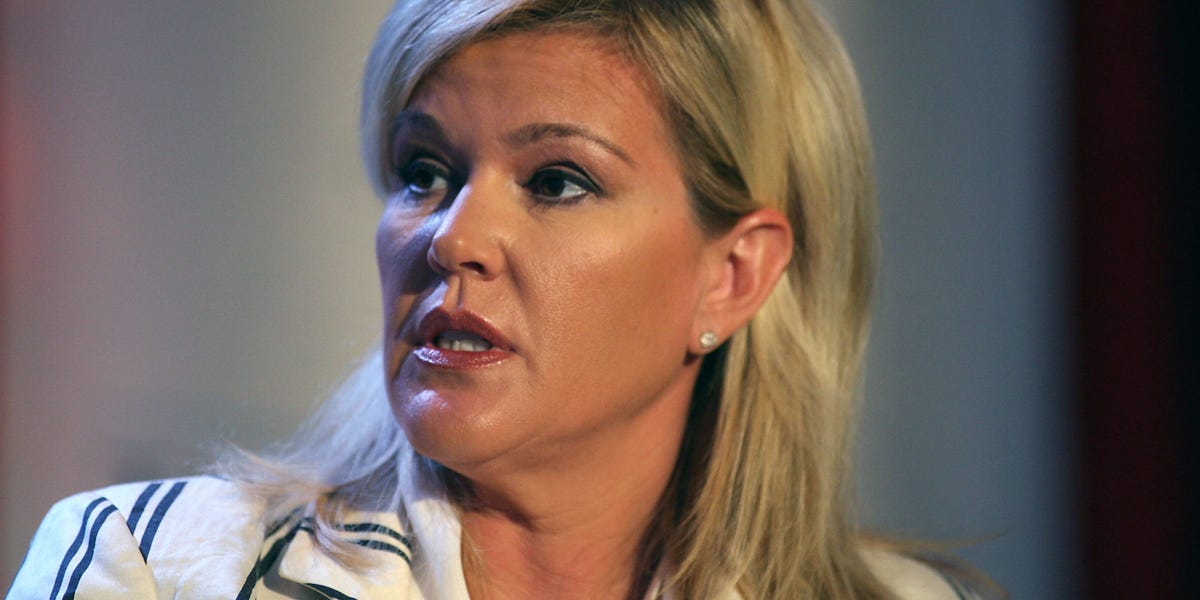
Meredith Whitney, also known as the “Oracle of Wall Street,” says the inflationary impact of higher oil and gas prices is starting to impact high-income Americans.
High-earners have been thought to be largely sheltered from cost pressures drummed up by the war, while lower-income Americans are struggling to keep up with the pace of inflation. But “high-end” bank customers look like they’ve been tightening their wallets lately,
The analyst, who rose to fame for calling the housing crisis ahead of the 2008 recession, pointed to weekly credit card balances, which have started to diverge from the rise in gas prices in recent weeks, though credit card debt previously had a nearly 1-to-1 correlation with gas prices.
“Over the last three weeks, that correlation has diverged, which means even higher-income households are making choices because of this stinging psychological effect of over-$4 gas prices,” Whitney told Bloomberg on earlier this week.
Oil prices have resumed their rise in recent weeks after cooling from summertime peaks. The latest supply disruptions in the Middle East and the lack of progress on a US-Iran peace deal sent Brent crude as high as $109 a barrel this month.
The national price for the average gallon of regular unleaded gas clocked in at $4.43 on Wednesday, up from last year’s $3.15 average.
Higher energy costs from the Iran war have cost the average US household an additional $927 a month, per the latest estimate from Brown University.
Higher oil prices have also stoked fears about inflation and caused the market to price in higher interest rates, which could also spark pain even for borrowers with top-notch credit, Whitney said. The benchmark 10-year US Treasury yield, which influences borrowing costs across the economy and has climbed alongside rate expectations recently, hovered around 5.23% on Wednesday, close to its Great Financial Crisis peak.
Want more Business Insider in your news feed?
Add BI in Google so our reporting is easier to find when you’re searching for what matters.
“They’re lending to people who don’t need the money,” Whitney said, adding that credit lines overall were likely to get more expensive.
The K-shaped economy — the idea that lower-income Americans are struggling while high-earning Americans are thriving — has garnered more attention recently as oil and gas prices have soared.
More economists have floated concerns recently that Americans in the upper-K portion of the economy could pull back on spending. Consumer spending has been a ballast for the US economy in recent years, and has largely been accounted for by high earners who haven’t been deterred by rising prices.
Lower-income households have already made sacrifices to accommodate higher energy costs, Whitney said, pointing to how grocery spending has been flat or seen drops compared to levels last year. In the last quarter, 71% of middle-income Americans surveyed by Primerica said their income was falling behind the cost of living, while 74% said their ability to save for the future was “not so good” to “poor.”