
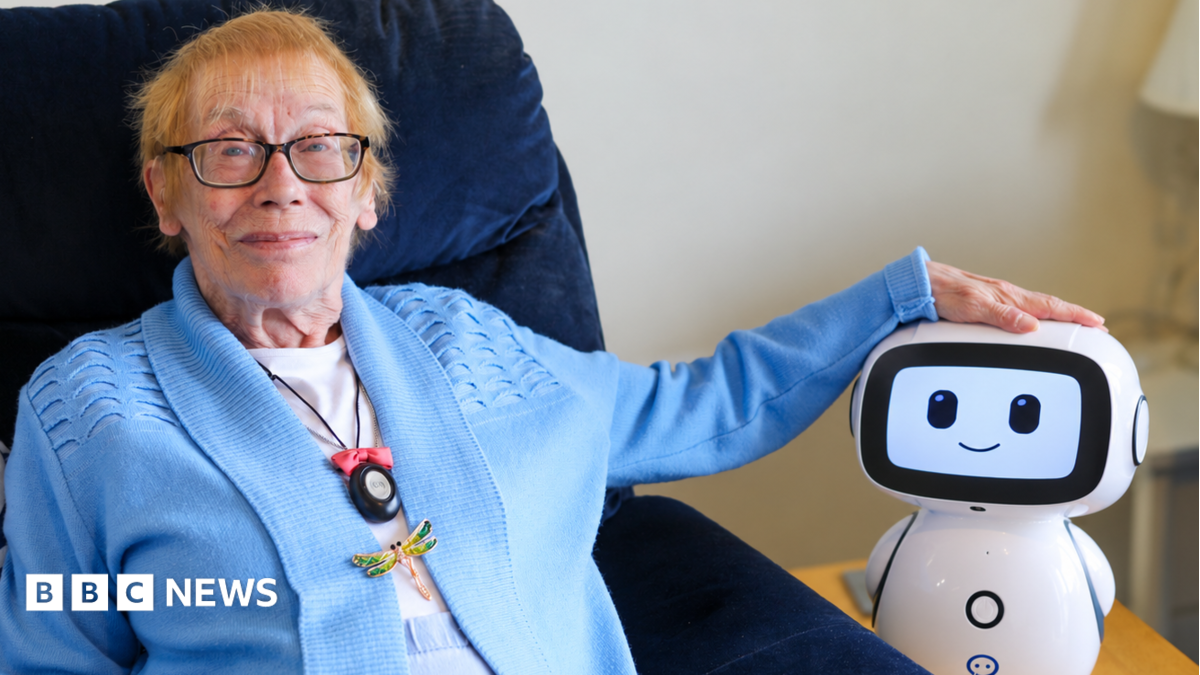
During our visit, Robert – who is programmed to be friendly -repeatedly asked Vera how she was, reassuring her “I’ll be here if you need me”.
“What would you enjoy chatting about today?” it asks.
But it does make mistakes when Vera wants to talk about knitting, often mishearing essential words and offering conversations on “biscuits and cakes” and “music, television, the garden or something else”.
Tech expert James Erskine says when it comes to such robots, what needs to be considered is what they can do well and what they cannot.
“If a job can be followed to the letter like an instruction, a robot or computer can probably do it. If it needs problem-solving, judgement or emotional understanding, it needs a human,” he says.
“AI is already helping surgeons during brain tumour operations, and driverless taxis being trialled on London’s roads.
“In care, robots could be brilliant at monitoring health – vital signs, medication reminders, spotting falls. But can they really read someone’s mental state, their happiness, their overall wellbeing?
“That depends on human connection, noticing the small things, knowing the person. So it’s support, not substitute.
“The best outcome is tech taking on the routine tasks so carers have more time for the human side of care.”