
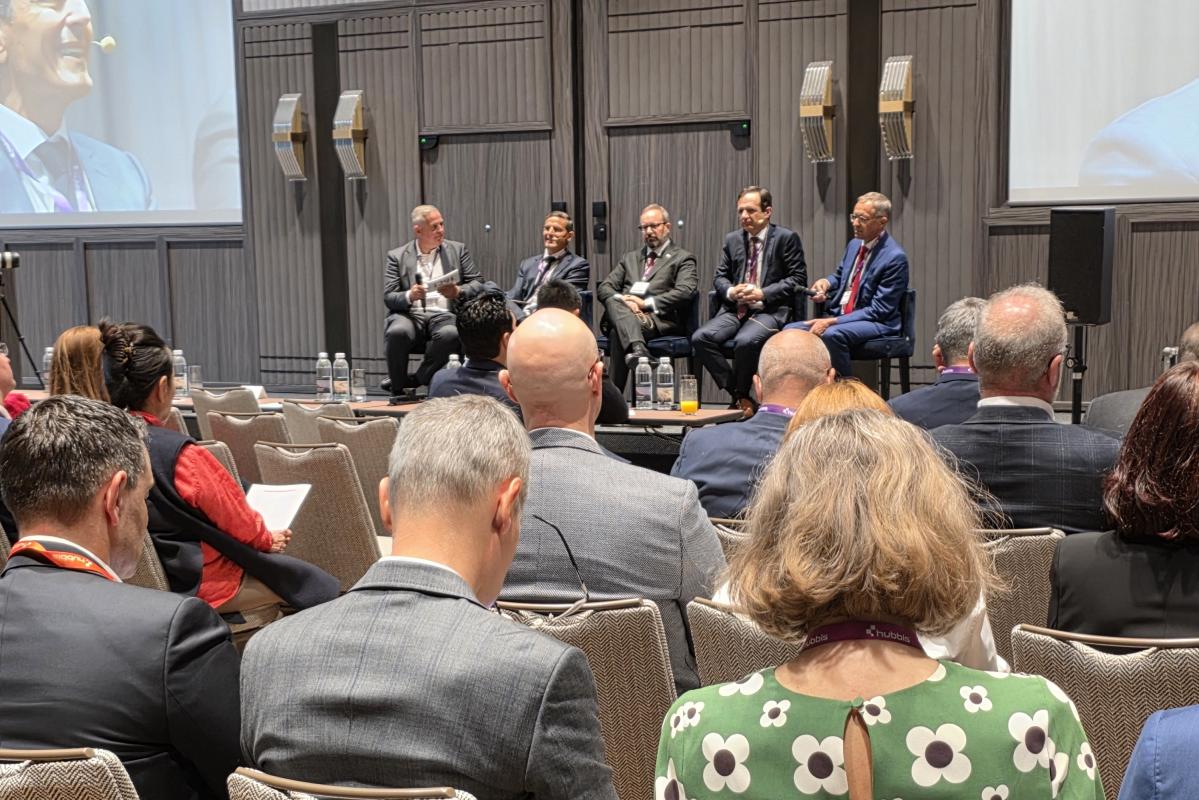
High net worth (HNW) families are asking wealth managers to plan around lives spread across several countries, children with different ambitions and an uncertain political environment. The opening panel at the Hubbis HNW Insurance Summit – Zurich 2026 examined how those priorities are changing wealth structuring, and where life insurance can contribute to investment management, succession and continuity when families relocate.
The discussion brought together perspectives from insurance, taxation and residence and citizenship planning. Panellists explored contractual wealth transfer, the relationship between insurers and existing investment providers, and the practical limits of cross-border solutions. Their differing views on insurance, trusts and holding structures underlined the importance of matching the arrangement to the family’s circumstances and the jurisdictions involved.
Chair: Oliver Dätwyler, Partner, 1291 Group
Panellists
Joao Marmelo, Sales Director Portugal, Baloise Life
Guenther Dobrauz-Saldapenna, Managing Partner, Henley & Partners
Christophe Bréchignac, Head of Wealth Advisory, Swiss Life Global Solutions
Hugues Salomé, Partner Tax, Head of Family Office and Private Clients Services – Switzerland, KPMG
Key Takeaways
Family mobility and the next generation’s choices increasingly shape wealth planning. Residence and citizenship decisions can influence succession and asset structuring before tax or investment questions are addressed.
Life insurance can combine an investment framework with contractual beneficiary arrangements. Its value depends on how those features meet the family’s needs under applicable law.
Open architecture insurance solutions can accommodate existing banking and asset management relationships, although ownership, mandates and policy administration differ from a direct investment account.
Portability requires preparation. Moving country can change a policy’s tax treatment or require adjustments to its investments and death cover; continuity should be assessed before relocation.
Insurance, trusts and other structures serve different purposes and may be complementary. Succession liquidity, including funding a family business buyout, is a practical use worth considering.
Simpler structures aligned with the underlying business are gaining attention. Planning across generations requires review as family circumstances, residence and policy arrangements change.
Family Decisions Come Before the Structure
The panel’s starting point was the growing complexity of clients’ lives. Families may have children in different countries, parents considering relocation and assets managed through several institutions. A solution designed around one person’s present residence can quickly become inadequate when the wider family’s plans change. As one panellist put it, “they have children living in different countries”. That changes both the mobility discussion and the eventual destination of the wealth.
A participant described an American family whose adult sons had encouraged their parents to explore moving abroad. The expectation had been that the parents were educating the next generation; instead, the sons were driving the conversation and linking their willingness to take over the family company to a change of location. “It was not about tax”, the panellist said. Political concerns and the younger generation’s preferences were shaping decisions about the business and family assets.
Residence and citizenship planning therefore formed part of the discussion about preserving wealth and keeping choices open. The example involved exploring several citizenship options alongside a review of the family’s assets. The appropriate combination remained individual: it depended on where family members wanted to live, how their business would operate and the risks they were trying to address. Those questions cannot be settled by selecting an investment product alone.
Insurance Can Build Around Existing Investment Relationships
Some families approach insurance providers looking for a platform through which to organise their portfolios and prepare for succession. Panellists described arrangements that can accommodate assets held with more than one bank, rather than require every investment relationship to move to a single institution. Private placement life insurance (PPLI) was discussed as an “open architecture asset management solution”, allowing an insurance arrangement to be built around selected investment service providers.
That flexibility does not make the policy identical to a personal bank account. The discussion addressed the change in ownership when investments are held through an insurer and the importance of explaining the respective roles of the insurer, bank, manager and client. Discretionary or advisory arrangements depend on the market and product. Familiar custody and management relationships may continue, but the policy introduces its own contractual and administrative processes.
Panellists also discussed the insurer’s review of assets proposed for inclusion, particularly where private equity or other less straightforward investments are involved. Asset eligibility, valuation and the calculation of net asset value (NAV) become part of policy administration. That scrutiny can provide an additional check, but it does not remove investment risk. Clients need to understand how valuations, withdrawals and the liquidity of underlying holdings affect access to their money.
Succession Benefits Need a Defined Family Purpose
A central argument for insurance was its ability to organise wealth transfer contractually through a beneficiary clause. Rather than relying entirely on the ordinary estate process, a family can specify who should receive insurance proceeds within the applicable legal framework. One panellist described the settlement process as “much smoother, much quicker, much simpler” than succession. The point was the practical administration of a transfer, particularly for families with an international footprint.
Those arrangements still require attention to the law governing the family and policy. Contractual beneficiary provisions do not universally override forced-heirship rights or other succession rules. The useful question is how the policy works alongside the family’s wider estate arrangements and whether it produces the intended distribution. Flexibility has little value if the beneficiary clause conflicts with obligations elsewhere or no longer reflects the family’s wishes.
Liquidity offered another concrete application. One participant highlighted the potential to generate funds to buy out family members who did not want to remain in a business. Insurance can help address that funding need without making every heir a continuing shareholder. This gives the structure a specific succession purpose: enabling different family members to pursue different objectives while planning for the transfer of the business.
Portability and Protection Require Specific Checks
For mobile families, keeping a policy after relocation is only part of the issue. Its treatment in the destination country also matters. Panellists stressed the importance of insurers with cross-border experience and the ability to design arrangements for the countries concerned. A move may require changes to the policy’s investments or death cover, and its tax treatment must be assessed under the new residence-country rules.
Tax deferral was discussed as a potential benefit of insurance-based investment planning. It should be evaluated against the policy terms and applicable tax rules rather than assumed to apply everywhere. An arrangement that qualifies for favourable treatment in one country may not retain it elsewhere. Planning before a move gives the family and its advisers an opportunity to identify adjustments and the risk of tax disqualification.
The panel also examined Luxembourg’s Triangle of Security as a reason families consider the jurisdiction for insurance. The mechanism involves the insurer, custodian bank and insurance supervisor, with segregated policy assets and policyholder priority over other creditors through the so-called super privilege. These protections address risks associated with the insurer’s financial position. They do not guarantee the performance of investments held within a policy, a distinction that matters when explaining asset protection to clients.
Insurance and Trusts Serve Different Needs
The chair challenged the panel to consider whether insurance genuinely offered more value than trusts, foundations or holding structures. The answers reflected different legal environments and professional experience. One participant explained that Swiss family planning had more often involved trusts and other structures, with insurance used less extensively for succession. The relative stability of the Swiss tax framework was offered as one possible explanation for that practice.
Others emphasised the familiarity and legal treatment of life insurance in European civil-law markets. The discussion also acknowledged that trusts can support objectives and forms of control that insurance does not necessarily reproduce. As one panellist observed, “both are maybe complementary”. The comparison therefore turned on the client’s residence, the recognition of the proposed structure and the functions the family needed it to perform.
For wealth managers, that makes a general claim of superiority unhelpful. Insurance may provide an investment and transfer mechanism or a source of succession liquidity, while another structure addresses governance or longer-term control. The panel’s contrasting views provided a reason to examine the available tools together and establish what each contributes, rather than treat the choice as a competition between product categories.
Simpler Structures Still Need Continuing Review
Alongside the discussion of insurance, a participant identified a trend towards arrangements that are easier to understand and reflect the underlying business. “More simple structures, easy to read by the authorities, and aligned with business functions”, the panellist said. Onshore structures and treaty access featured in that discussion, with attention to how a holding arrangement supports the business rather than relying solely on a jurisdiction’s tax reputation.
The ambition to support successive generations also came through strongly. One panellist argued for thinking beyond a single transfer and considering how insurance arrangements might serve children and later generations. That ambition requires careful design: continuity depends on the insured lives, ownership, beneficiary provisions and contract terms. A standard policy does not automatically continue through successive generations after the insured person’s death.
The closing discussion returned to the need to keep planning current as families and their circumstances change. Asked which nationality was best, a participant replied that the answer depended on “where you live and what your life is going to be”. The same consideration ran through the session’s assessment of wealth structures. Advisers need a clear view of the family’s intended future, then arrangements that can be reviewed as residence, business involvement and succession priorities develop.
**
Disclaimer: This article summarises a panel discussion and reflects information available as at 1 October 2026. It is for general information only and is not tax, legal, financial, investment or other professional advice or a recommendation. Its contents may not apply to individual circumstances, products or jurisdictions. Hubbis accepts no responsibility or liability for actions taken or omitted in reliance on it. Readers should obtain independent advice from qualified professionals before making any decision.