
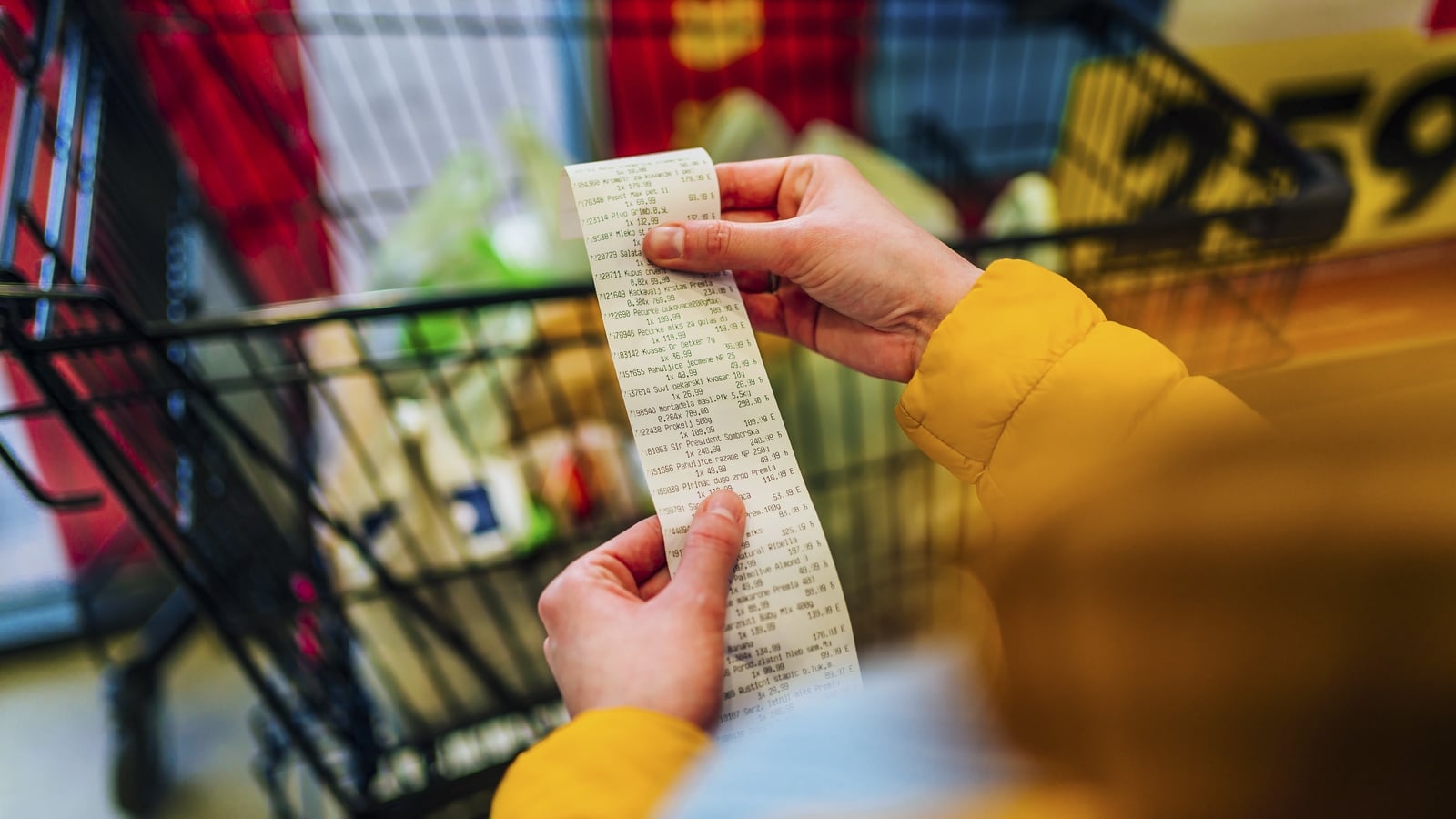
This time next week, Budget 2027 will be spliced, diced and debated. But while people wait for the details, fuel and food costs continue to put pressure on household budgets.
How are they coping? What are they cutting back on? Morning Ireland reporter Cian McCormack speaks to people at Kinnegad Plaza in Co Westmeath.
“I literally can’t afford to live. I’m working 50 hours a week and barely ever survive,” says Jason Stapleton from Offaly.
He is on his way to Dublin, stopping at Kinnegad Plaza to break his daily commute. He is in a hurry.
“I’m a local locksmith, so I drive to Dublin every morning. Fill tank on a Monday, fill again on Tuesday. The fill of my car is about 110 quid,” he explains.
For Jason, the biggest pressure is the cost of diesel and home heating oil.
People feel the pressure as prices continue to rise at the pumps (stock pic)
“The price of food as well is ridiculously bad as well,” he says. His weekly groceries cost €240.
“I’m basically living paycheck to paycheck at the minute. No holidays,” he adds.
As heating oil becomes more expensive, he burns turf to heat his home – and “that’ll never change”, he says firmly.
Asked about his mood, he curses and says “it’s just absolutely diabolical”.
“I just sometimes don’t even want to get out of bed in the morning. That’s how bad it is,” he says.
Over roughly six hours at Kinnegad Plaza, everyone I speak to talks about struggling to make ends meet. Fuel and food cost more. Money does not stretch as far.
‘I’m cutting back on food’
Jane McGuirk, from Monaghan, is travelling from Portlaoise when we meet. Her work keeps her on the road, and the cost of diesel is taking its toll.
“I’m cutting back on food, cutting back on the heating in the house,” she says.

Some people are cutting back on food (stock pic)
She pauses, looks thoughtful and continues: “I’m working 30 years and I’m still living paycheck to paycheck. Would you think after working for 30 years you wouldn’t be going paycheck to paycheck to paycheck?”
“Was it always like that?” I ask.
“Not as bad as it is now,” she replies, adding: “I have somebody in college and I suppose my expenses are going up, but my wages aren’t raising to the same extent. I’m just finding it hard to make ends meet”.
Working on the road brings other expenses too. There is food to buy, as well as fuel.
Jane likes to support local businesses and buys a coffee when she can. Increasingly, though, she brings her own teabags to keep costs down.
“There’s times that I would just get hot water, bring my own tea bags,” she says.
“I don’t mean to sound so negative because I’m one of the lucky ones.”
With the ESRI predicting this week that food prices will continue to rise next year, Jane sometimes wonders: “How am I actually going to pay more for things?”
That thought, she says, “kinda gets her”.
The next woman I meet works in Dublin four days a week. She does not want to give her name.
With diesel so expensive, she takes backroads to avoid motorway tolls. It saves money but adds hours to her commute, eating into her quality of life.
‘I’m trying to make ends meet to pay my mortgage’
“I get paid I’m trying to make ends meet to pay my mortgage. Holidays, that’s a non-thing.”
At home, she uses the gas heating less, even when she is cold.
“I’m afraid it’s going to be a bill that I’m not going to be able to pay,” she says.
“But if you’re cold?” I ask.
Her response: “Electric blankets, hot water bottles. I have to look at other ways.”
Trucks pull in and out of the plaza throughout the day. Jerry Gill, from Donegal, is the next person to stop and talk.
Whatever the Government does, he does not “think that’s got to be enough”.
“Whatever’s coming in the budget, won’t even look at it, I don’t think,” he says.
He can see fuel protests happening again because ” you can see people’s not happy”.
Like the woman before him, Jerry uses less oil to heat his home.
“I have a wee back boiler stove, so we have a bit of turf,” he says.
Jerry turned, footed and saved his turf during the summer. The plot cost him €150, he says, and the bags from his work on the bog will heat his home for the winter.
‘It’s just surviving week to week’
Inside the plaza, people order breakfast rolls, coffees and dinners. Grannie Jessop is with her son.
“It’s just surviving week to week to be honest …day-to-day,” she tells me.
“You’re on a budget … it’s stressful … your money is just going on surviving, and you’ve nothing left over,” she says.
From the many conversations I have with people, it’s clear they feel they have less. There is little to save, little extra money to go out, and life is about heating the home and putting food on the table and with rising costs they worry that’s getting harder to do.