
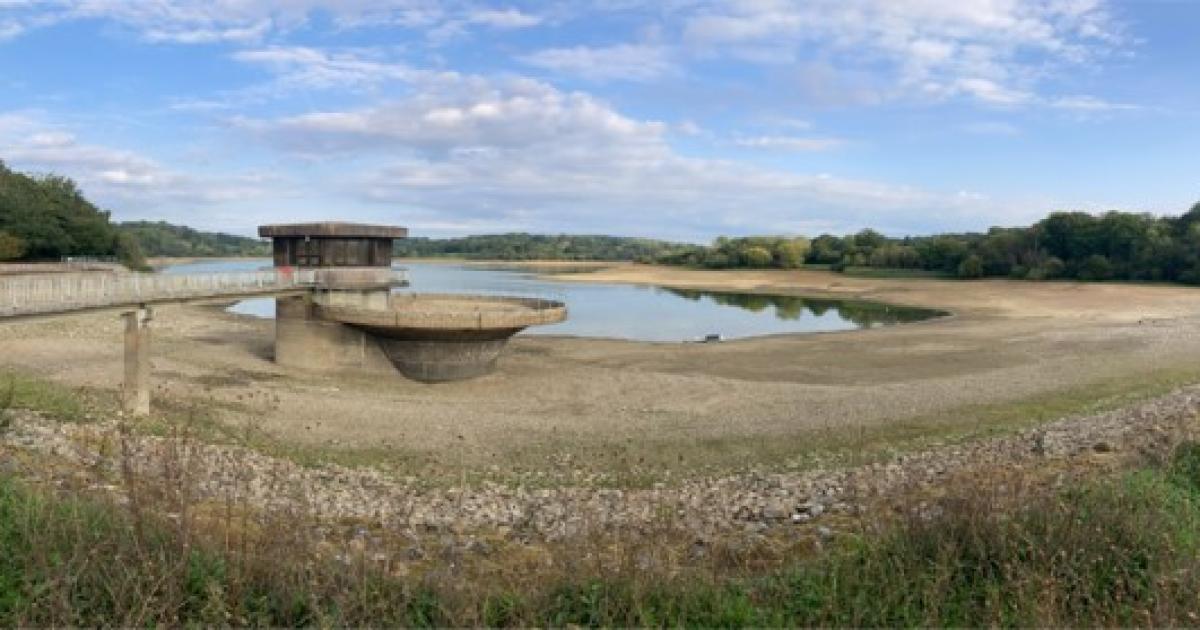
The Environment Agency granted the permit to South East Water for Ardingly Reservoir in West Sussex, which serves around 280,000 customers and has reached its lowest recorded level for this time of year.
As of September 28, the reservoir was at just 23 per cent capacity.
The permit allows reduced water releases from the reservoir to compensate the Shell Brook tributary of the River Ouse.
Richard O’Callaghan, environment planning manager at the Environment Agency, said: “Granting any drought permit is not a decision done lightly.
“We take great care weighing up the needs of the environment and will continue keeping a close eye on river conditions.
“We are also staying alert for any impacts on the environment and we will make sure South East Water obeys the tough but fair conditions of its temporary permit.”
The Environment Agency has warned that the drought permit alone will not be enough to secure the water supply, and that further measures in South East Water’s drought plan may be needed.
These could include removing exemptions from the current temporary use ban or applying for a non-essential use ban.
The drought permit is valid for six months, until March 29, 2027, unless withdrawn earlier by South East Water.
Under normal circumstances, the company is required to release four million litres of water per day from Ardingly Reservoir to support the Shell Brook tributary.
The permit reduces this to one million litres per day.
The Environment Agency said the coming winter will be crucial for water resource recovery in the region.
At least average winter rainfall is needed to refill Ardingly Reservoir and move Sussex out of drought by spring.
If rainfall is below average, pressure on water resources is expected to continue.
The Met Office has forecast average rainfall and temperatures for October.
South East Water applied for the drought permit on August 28.
A public hearing was held on September 18, allowing stakeholders and objectors to raise concerns about the application.