
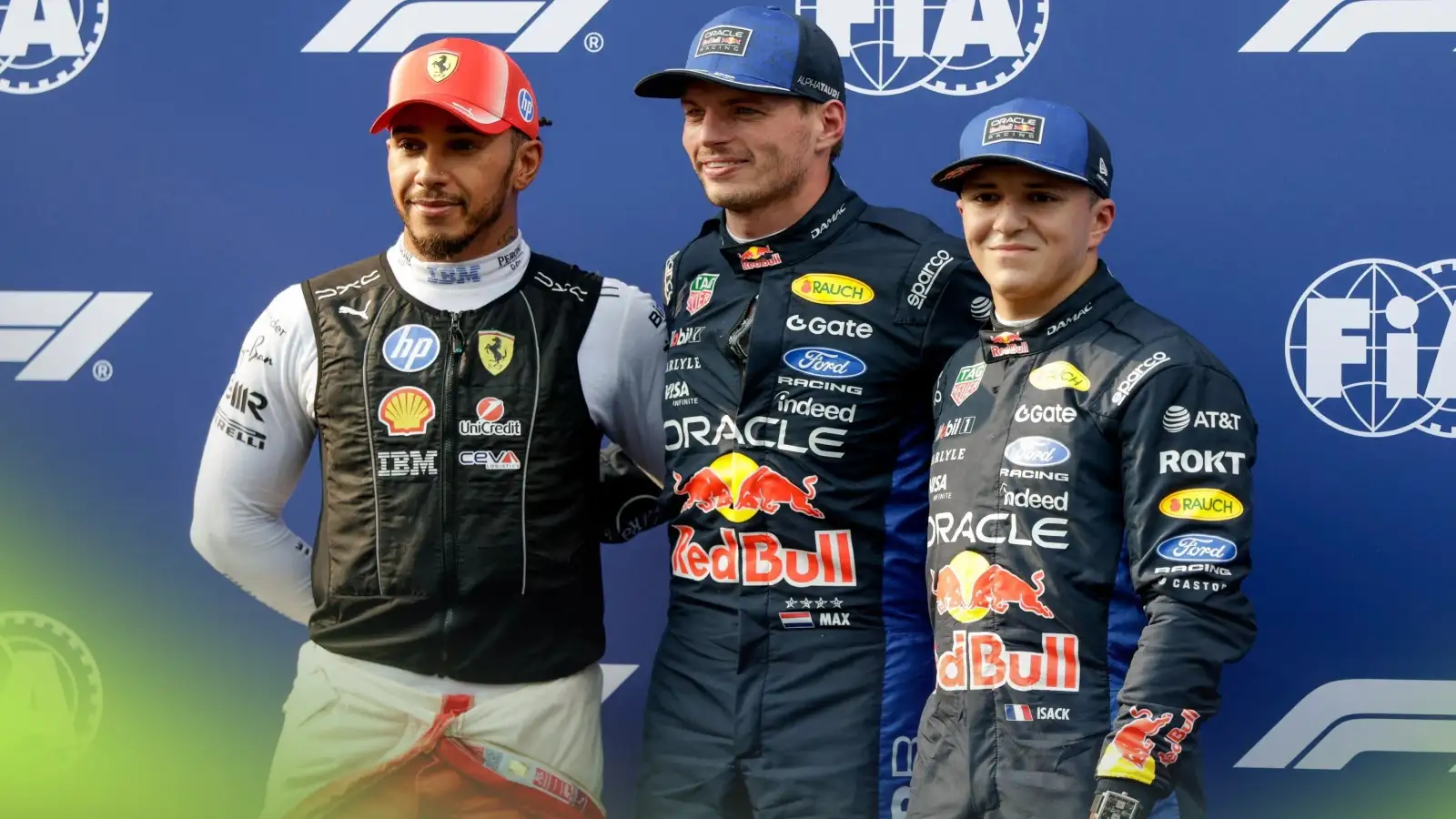
The teams provided a wealth of data during free practice regarding what we can expect on Sunday. So, let’s look at the numbers and answer the ultimate question: who possesses the strongest race pace?
Does Max Verstappen remain the outright favourite for victory?
Starting the race in Malaysia from pole position is obviously ideal, but this weekend, it isn’t as critical as it was at other venues. Overtaking at Sepang is significantly easier, shifting the focal point of the Grand Prix towards strategy and tyre degradation – a phrase echoed throughout the paddock all weekend.
Finding a sweet spot in vehicle balance to minimise wheelspin and sliding can dramatically extend tyre life, yielding a massive payoff over a race distance. It is precisely why teams pushed hard during FP2 to refine their setup in this area.
When it comes to compound selection, long runs were overwhelmingly conducted on the soft and medium tyres, signalling that these might be the primary compounds utilised during the race. However, a crucial variable remains: tyre availability.
None of the front-running teams managed to preserve a fresh set of soft tyres for the race – even though Verstappen had the opportunity to do so, as his initial flying lap in Q3 would have secured pole position anyway. Red Bull clearly preferred not to leave anything to chance.
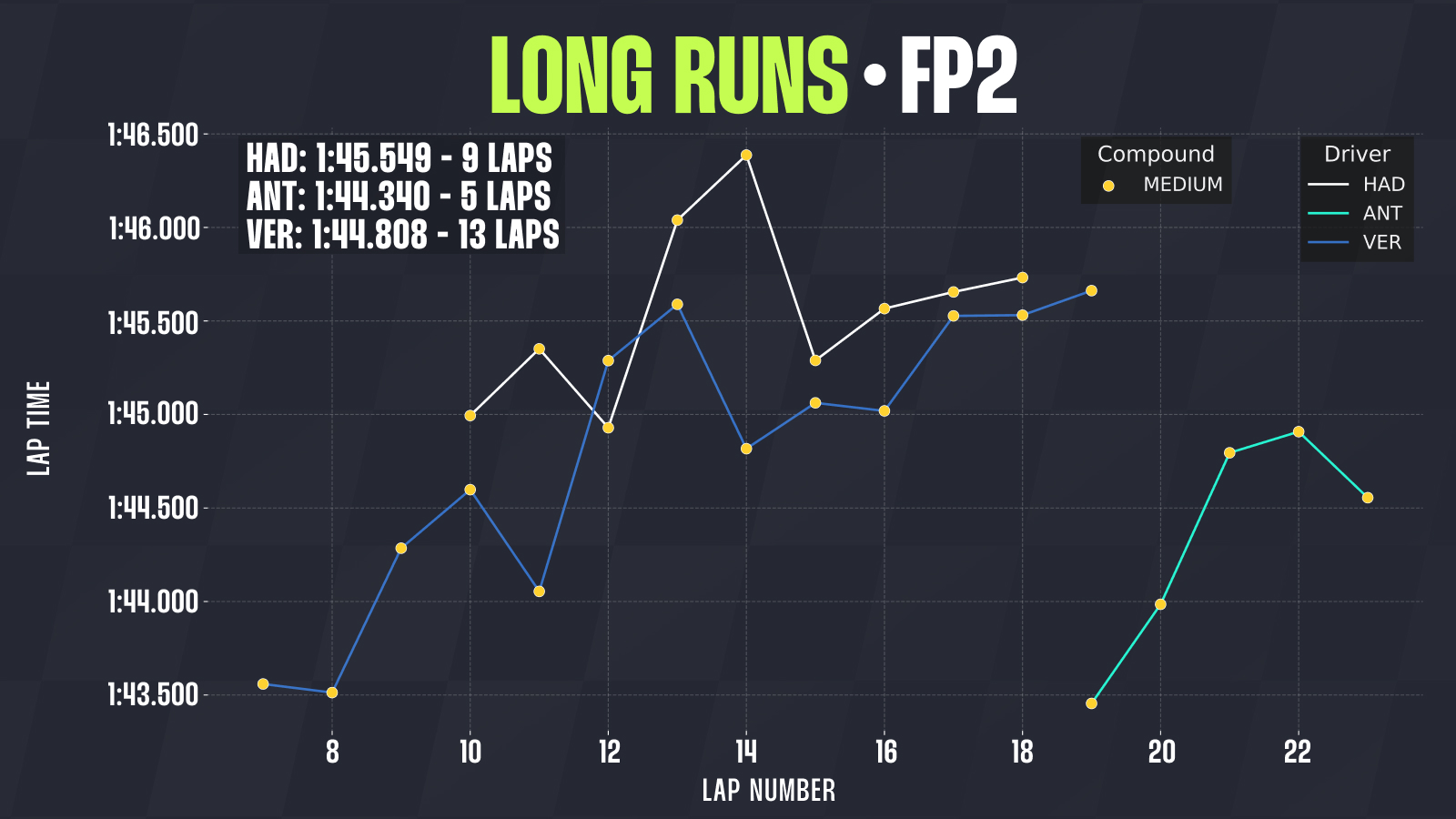
The longest stints were logged by Verstappen on mediums and Russell on softs, after which the Dutchman proved roughly four tenths of a second quicker per lap on average. Hadjar trailed his teammate’s pace, whereas on paper, Antonelli recorded the fastest average stint on the medium compound – albeit across a considerably shorter run than Max’s.
Looking at the graph below, we can see the trajectory of these stints and just how severe the tyre degradation is. Lap times progressively deteriorate lap by lap, despite the car burning off fuel and becoming lighter.
Long runs comparison – FP2
The primary catalyst for such high thermal degradation is the track layout itself, featuring sweeping, high-speed corners that exert immense lateral loads on the rubber. Compounding this are blistering track temperatures, high humidity that hinders tyre and engine cooling, and an abrasive track surface – a characteristic highlighted by several drivers.
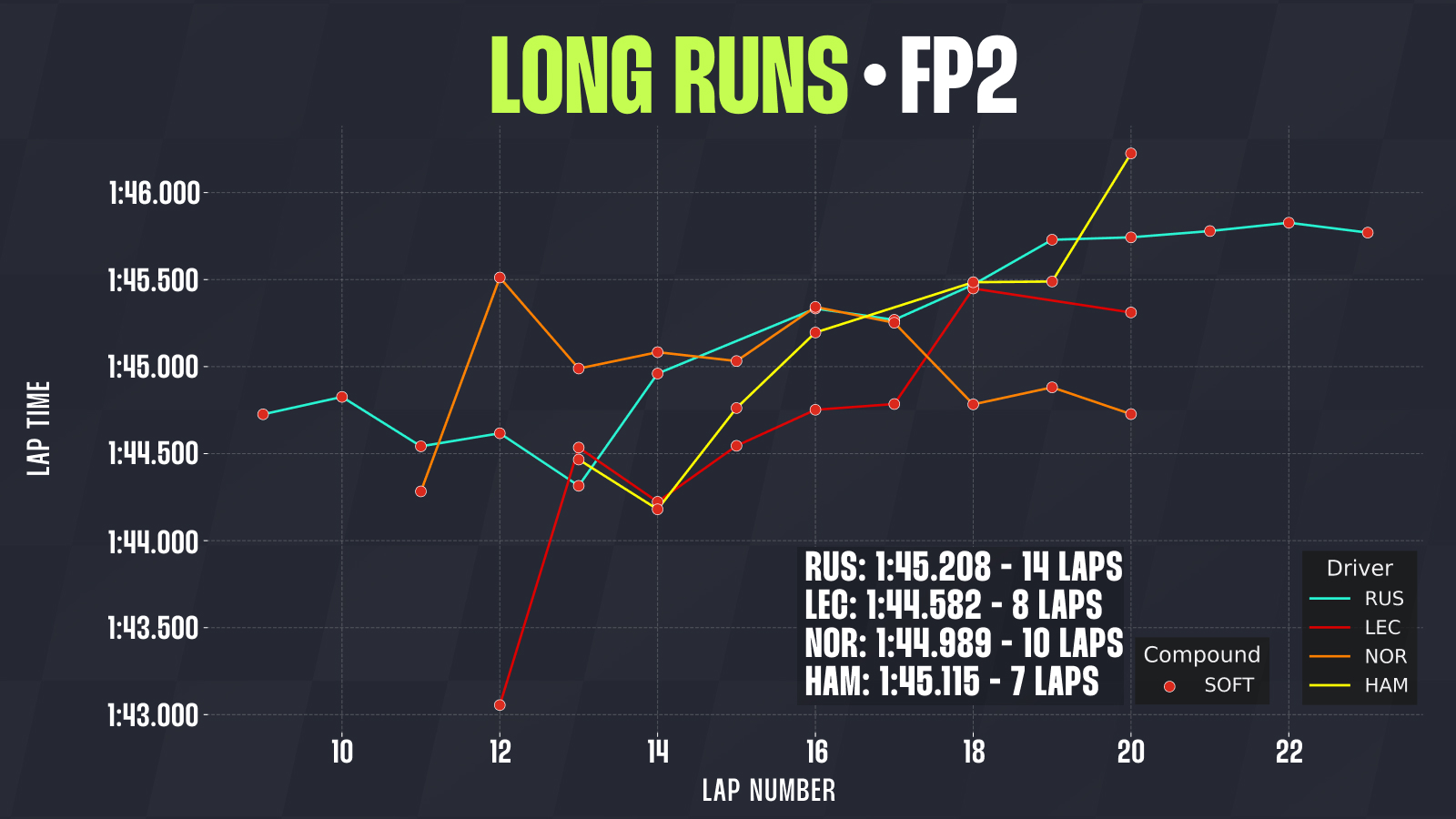
A similar picture emerges on the soft compound, as illustrated in the graph below comparing the remaining drivers who executed race pace simulations during FP2.
Long runs comparison – FP2
Leclerc stood out as the benchmark among the four, boasting an average pace a full four tenths of a second quicker than the next best, Norris. Both Hamilton and Piastri were noticeably slower than their respective teammates.
What matters most for Ferrari is that they made tangible progress compared to FP1, indicating they are heading in the right direction to unlock an optimal setup window – a sentiment Hamilton himself echoed following qualifying.
The SF-26 was renowned for its gentle tyre usage earlier in the season; if that characteristic resurfaces at Sepang, the Scuderia could well be in contention for a podium – a result that has eluded them by a distance in recent outings.
Latest Bahrain GP talking points on PlanetF1.com
Secret Honda engine upgrade emerges after latest FIA findings
Lewis Hamilton: ‘Lots of drivers at the front can’t compete with Alonso talent’
Ferrari’s lingering issue remains the car’s nervous rear end, a handling trait Leclerc continued to wrestle with during qualifying.
Instability across the rear axle during a stint leads to micro-sliding from the rear tyres, which is detrimental to thermal management. Overheating the surface tread causes drivers to bleed lap time while accelerating compound wear.
It should be noted that these FP2 long-run metrics must be taken with a pinch of salt. Key operational variables, such as engine modes and fuel loads, remain undisclosed, making direct cross-team comparisons somewhat imprecise.
If conclusions are to be drawn, Red Bull remain the outright favourites, though both Mercedes and Ferrari possess enough underlying pace to mount a genuine challenge provided their strategic execution is spot-on. McLaren currently appear a step behind the top three teams.
Beyond baseline setup, the deciding factor will be adaptability. No team can predict exact race stints with absolute certainty, given fluctuating track temperatures and the looming possibility of rainfall.
Ultimately, the team that reads the evolving track conditions most accurately and adapts seamlessly will hold the winning hand.
Want to be the first to know exclusive information from the F1 paddock? Join our broadcast channel on WhatsApp to get the scoop on the latest developments from our team of accredited journalists.
You can also subscribe to the PlanetF1 YouTube channel for exclusive features, hear from our paddock journalists with stories from the heart of Formula 1 and much more!
Read Next: Bahrain GP in Malaysia: Verstappen dominates as Hamilton makes front row