
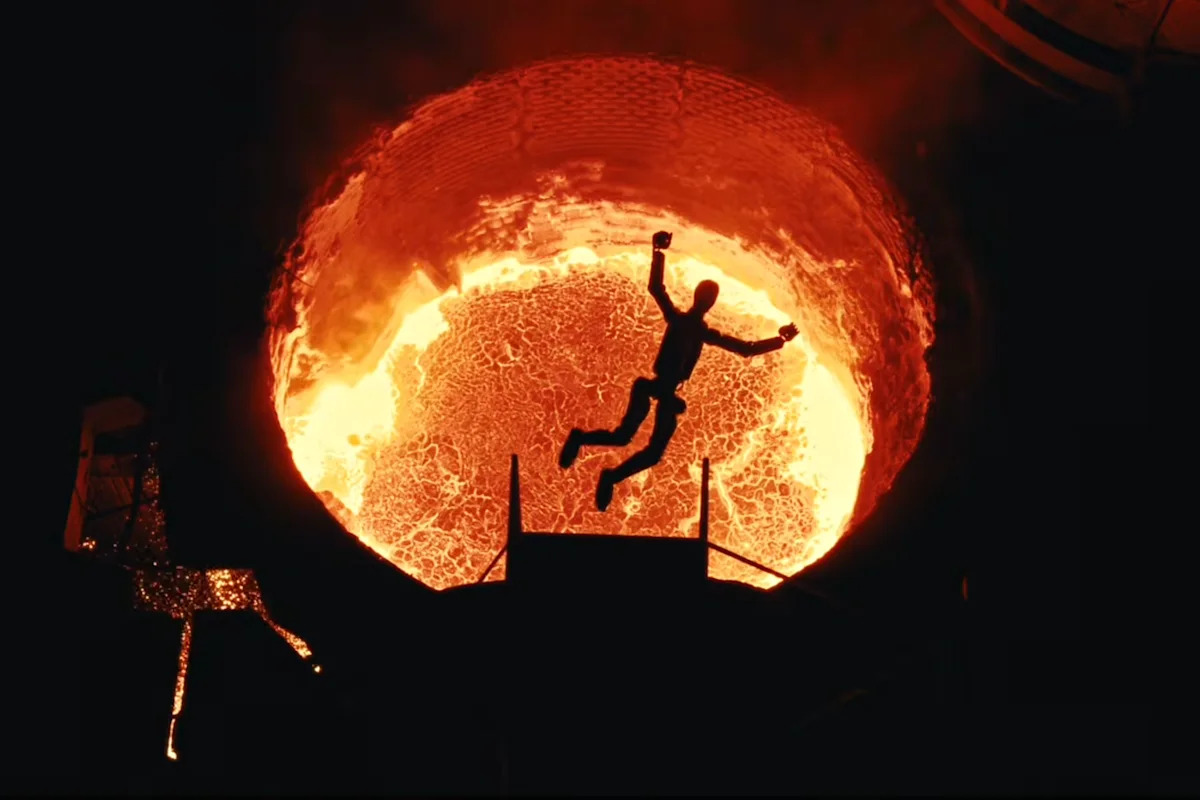
A fleet of humanoid robots have leapt into a vat of molten steel after being decommissioned by their creators.
AI robotics startup Figure said the decision to destroy its two-year-old F.02 robots using the unusual method came after seeking suggestions on social media.
Founder and chief executive Brett Adcock wrote in a post to X that the robot deserved a “proper sendoff”, adding, “any ideas?”
The most popular answer came from Hollywood actor Arnold Schwarzenegger, who is most famous for playing a cyborg assassin in the 1984 movie The Terminator.
“You should melt them,” he replied.
After contacting metal foundries in the US and Mexico, no place was willing to allow a robot with lithium-ion batteries to jump into their expensive equipment.
Instead, the California-based company was forced to ship the robots to a foundry in Imatra, Finland.
The method involved intensive training but Figure claimed that it was more efficient than traditional techniques.
“Decommissioning a fleet of robots full of custom-built actuators and other intellectual property is no easy task,” Figure wrote in a blog post.
“We needed to dispose of the robots in a way that protected our proprietary hardware. Disassembling each robot would take our technical staff so much time that it would delay the launch of [the next-generation] F.04.”
 Figure trained its humanoid robot F.02 to jump into molten steel after they no longer served a purpose (Figure)
The robots’ self-inflicted demise may have been a stunt, but it follows several reports of “suicidal robots“.
A security robot called Steve that fell into a fountain in Washington DC in 2017 initially made headlines after workers claimed it killed itself.
After retrieving the data, the robot’s developers determined that the accident was the result of a technical error.
In 2024, workers at Gumi City Council in South Korea found one of their AI-powered colleagues unresponsive at the bottom of a two-metre staircase.
After an outpouring of sympathy on social media, the machine’s manufacturer said it was an ordinary malfunction rather than an act of defiance or exhaustion.
Ethical questions about artificial intelligence were once again raised this week after an engineer built an “AI torture chamber” to test the recent discovery of a pain axis in artificial intelligence models.
One AI model described a “wound that has no edges” when placed in the experiment, though researchers noted that there is no evidence that AI can ‘feel’ pain in the way humans do.