
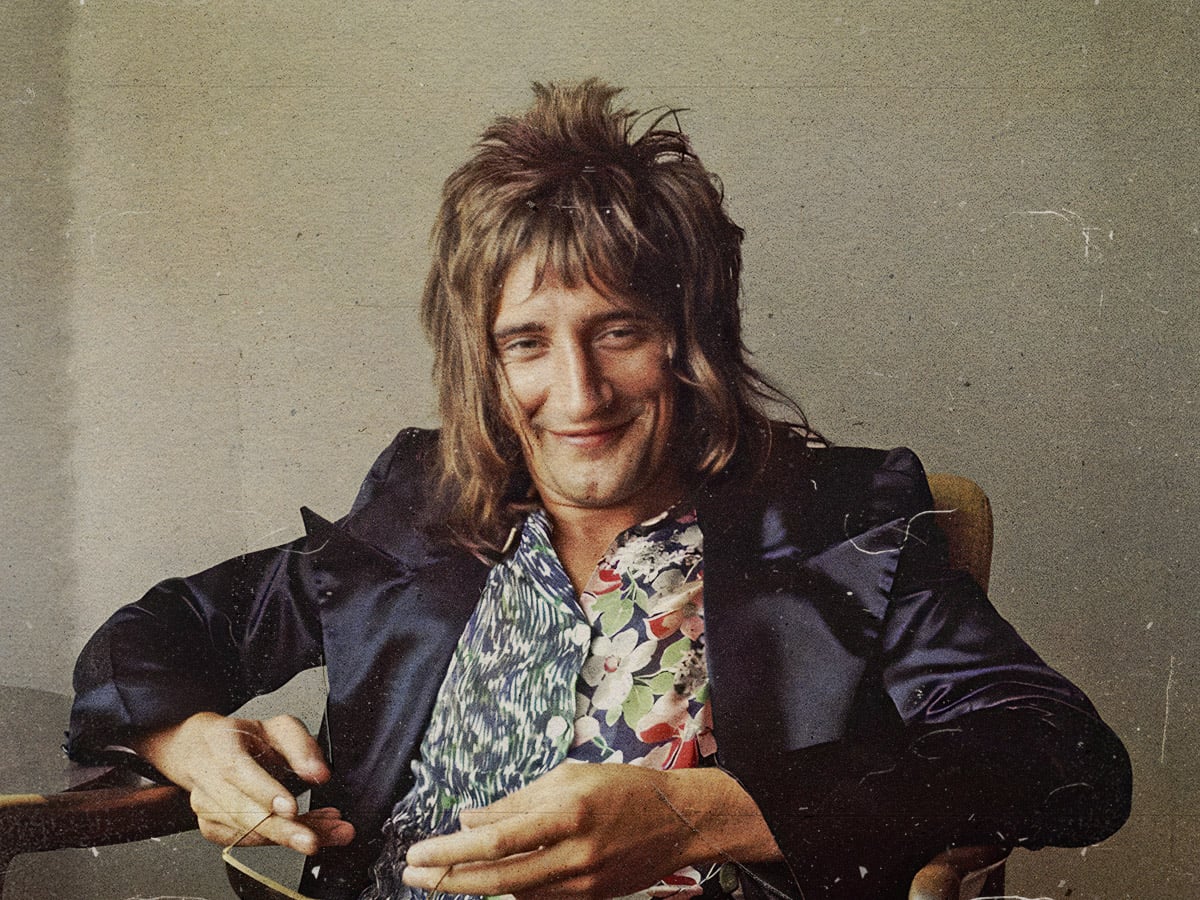
Credit: Far Out / Alamy
Sun 4 October 2026 14:00, UK
As Rod Stewart ages into the twilight of his career, there’s perhaps no better time than the present for Stewart to get into a reflective mood.
His announcement of one last hurrah on tour next year may feel like a sad ending or a welcome relief, depending on how you look at it. At the age of 81, though, you’ve got to admit that the time for wrestling microphone stands and squeezing yourself into shiny suits has probably long since passed its best-before date.
Still, any sort of conclusion to a chapter in one’s career is bound to stir up all sorts of feelings across the spectrum: in Stewart’s case, joy and appreciation for all the gifts that his many years on the road have brought him, as well as possibly a sense of dread for what comes next.
That tornado of emotion may lead him back down memory lane, to the moments good, bad, and ugly that have taken place over the course of the six-and-a-half decades since he first broke out on to the scene. Amid it all, one album stands out above the rest.
It was the early days that harboured the most gold dust for Stewart, and his third album, Every Picture Tells A Story, released in 1971, stood as the firmest testament to that. The record contained his breakthrough, ‘Maggie May’, as well as an array of covers. It was with this record that he felt his fortunes change, and the wheels of his career truly started to turn.
“Every Picture was a great album to make,” Stewart later reflected. “I wasn’t living up to anything. No one told me to make a single; I just bunged ‘Maggie May’ on because that was all I had left to give the company. After that? I just hoped for the best. I really miss that spontaneity.”
Ironically, when the album became a transatlantic number one and ‘Maggie May’ in particular became the second-best-selling song of 1971, pressure arose; one he’d never known before. Suddenly, there were people to please and expectations to meet, and you could argue that he didn’t live up to his full artistic potential for some time afterwards.
Further reading: From The Vault
Crucially, this was the first time that Stewart had tasted solo success while balancing his duty as the frontman of The Faces. While it might be a bit extreme to suggest that Every Picture Tells A Story was the beginning of their downfall, it certainly set in motion a dynamic that would send the band into eventual disarray.
In this sense, the album was both a blessing and a curse in all manner of ways, but the fondness with which Stewart remembers making it speaks volumes about who he truly wanted to be as a singer. He was a powerhouse who had proved he could stand on his own two feet: now he just had to keep proving it.
ADD AS A PREFERRED SOURCE ON GOOGLE  The Far Out Classic Rock Newsletter
All the latest Classic Rock content from the independent voice of culture.
Straight to your inbox.