
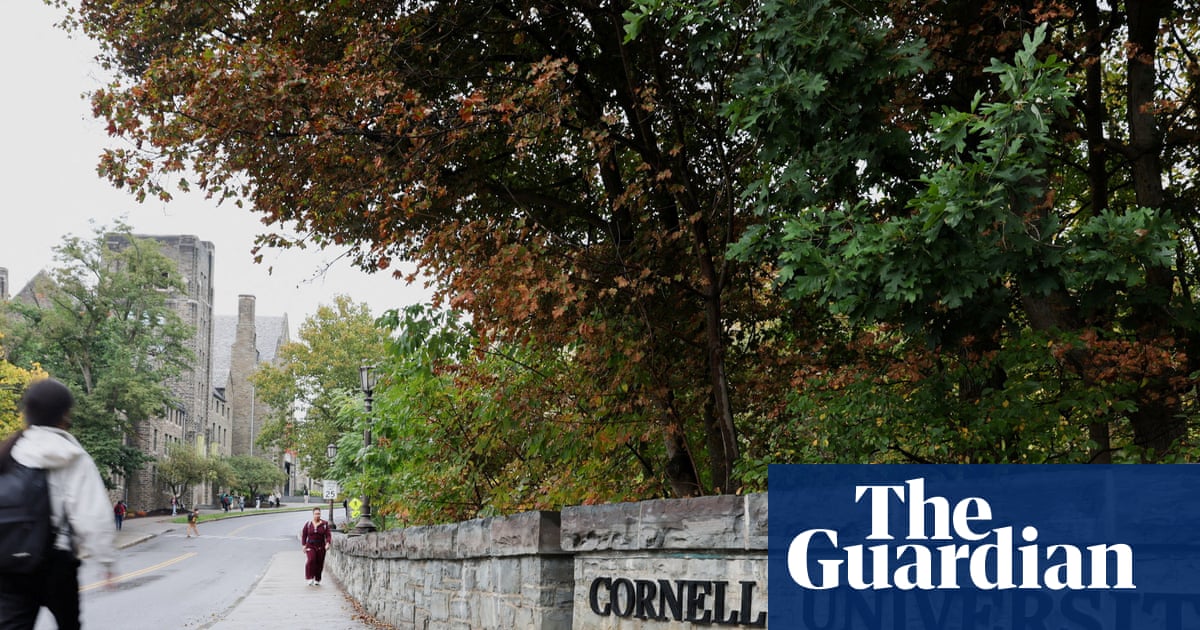
Cornell University will examine the role of fraternities and sororities on campus after an outcry over the school’s handling of a student’s rape allegations, the Ivy League school’s president has said.
A civil lawsuit filed last month by the woman, who alleges she was drugged and raped in 2024 by several members of the Chi Phi fraternity, has prompted outrage and soul-searching at Cornell over its campus culture at the school in Ithaca, New York.
In a video message on Saturday, the Cornell University president, Michael Kotlikoff, said the school would take steps to prevent a similar situation in the future. That included “a serious look at the role of fraternities and sororities in campus life”, Kotlikoff said.
“At their best, these organisations can provide students with friendship, belonging, mentorship and a powerful sense of community,” he said. “But being part of a group can never diminish individual responsibility.“
The university would seek input, he said, from students, alumni and others on how to “preserve what is valuable about Greek life while strengthening individual accountability, transparency and a culture in which every member understands their responsibility to protect the safety and wellbeing of others”.
The lawsuit against Cornell, seven fraternity members and others, alleges that the school failed to adequately punish some of the accused students.
The accused men have denied all wrongdoing, the New York Times has reported.
Cornell has defended its handling of the matter, saying that in 2024 it launched a comprehensive investigation and barred the Chi Phi fraternity from campus. The school said it also imposed a range of disciplinary measures, including expulsions.
But “we must do better”, Kotlikoff said, adding: “We don’t have all the answers, but we are committed to investigating and finding the answers our community deserves.”
He vowed that university officials would “be more transparent” about their actions related to the 2024 incident, but he did not detail specific initiatives that the university would take. “In the coming weeks, we will create additional opportunities for members of our community to ask questions and hear directly from university leadership,” he said.
The case has reignited scrutiny of how law enforcement and universities handle sexual assault complaints, with students questioning whether processes are enough to protect them. It has also drawn the attention of New York state officials, who have appointed a special prosecutor to investigate.
As the special prosecutor, Letitia James, the New York attorney general, investigates, new attention has been drawn to the findings of a state-mandated sexual violence survey conducted by Cornell in 2025, which found that 35% of female undergraduates who completed the survey reported that they had experienced nonconsensual sexual contact while at the university.
The 2025 version of the survey was the first to specifically include unwanted choking or strangulation in the definition of nonconsensual sexual contact involving force or incapacitation that students were asked about, in addition to nonconsensual penetration and/or sexual touching.
Guardian staff contributed reporting
Information and support for anyone affected by rape or sexual abuse issues is available from the following organizations. In the US, Rainn offers support on 800-656-4673. In the UK, Rape Crisis offers support on 0808 500 2222. In Australia, support is available at 1800Respect (1800 737 732). Other international helplines can be found at ibiblio.org/rcip/internl.html