
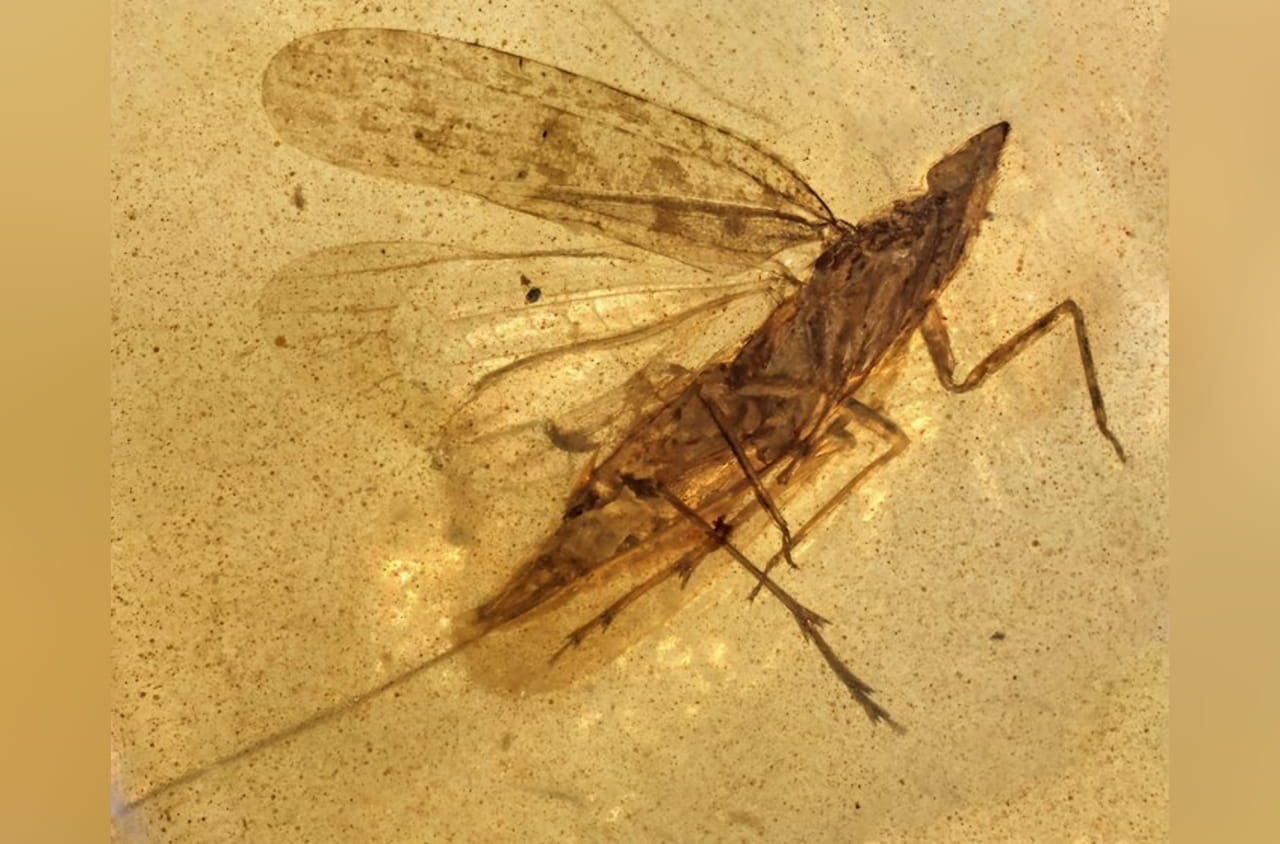
A tiny insect trapped in amber about 99 million years ago had a strange way of feeding. Its mouthparts stretched almost twice as long as its body and could bend without collapsing.
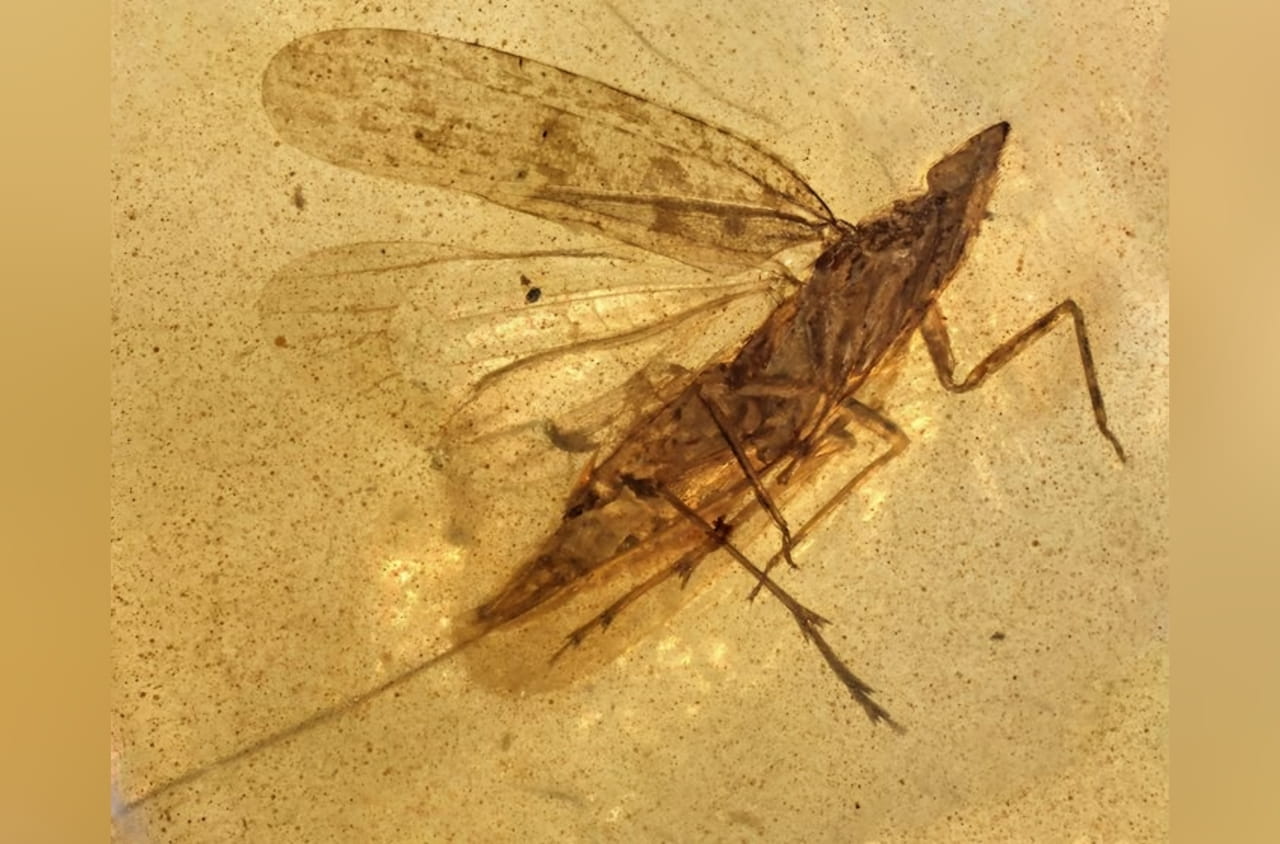 The newly described species – Cretoduros noonoo. Credit: Dolev Fabrikant
Researchers named the new species Cretodorus noonoo, or “Noo-Noo.” The insect belonged to Neazoniidae, an extinct family of planthoppers. Fossils came from Kachin amber in Myanmar and date to the Cretaceous Period.
The study examined 13 amber fossils from Neazoniidae and related insects. Researchers used micro-computed tomography to study their feeding organs in three dimensions. The scans showed fine folds along the mouthparts, forming a dense, accordion-like surface.
The folds formed part of the mouthpart structure. They likely made the long tube flexible while stopping it from bending too far. The design resembles a bendy drinking straw or a flexible vacuum hose.
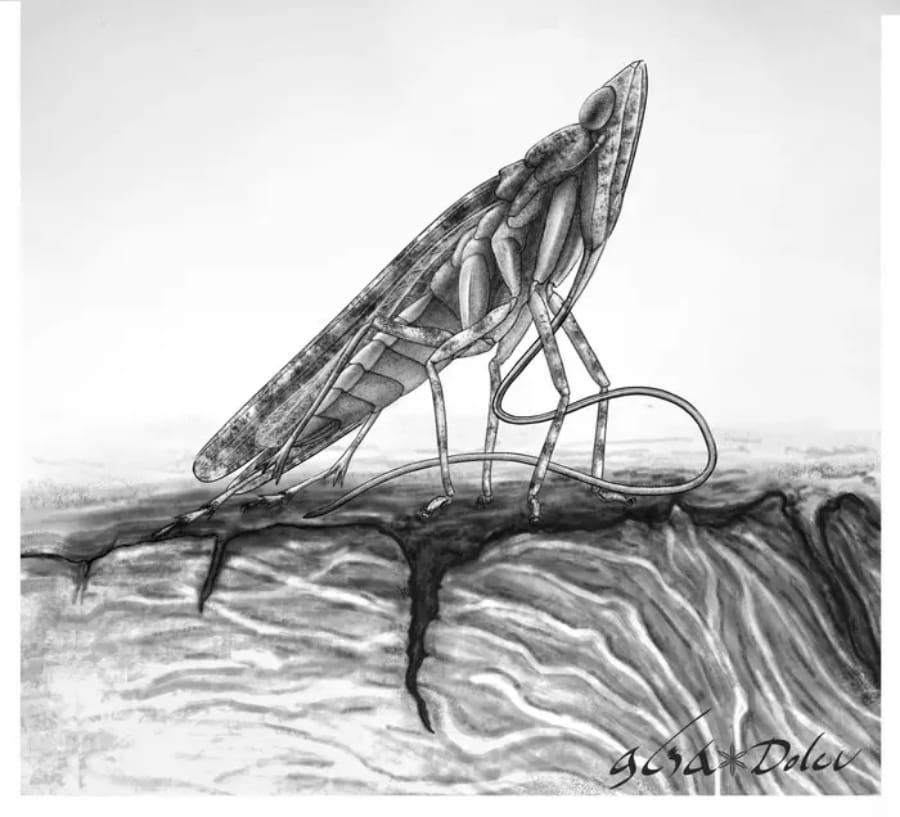 Illustration of Cretoduros noonoo. Credit: Dolev Fabrikant
Several fossils preserve the mouthparts in bent positions. Amber trapped the insects in place, giving researchers evidence about their shape during life. The fossils support the idea of a flexible feeding organ.
Modern planthoppers use straw-like mouthparts to pierce plants and draw out internal fluids. The ancient insects had a much longer and more flexible version of this feeding system.
Researchers think Noo-Noo used its long mouthparts to probe cracks and narrow spaces in tree bark. The tip could reach deeper plant tissues, including vascular bundles carrying nutrient-rich fluids.
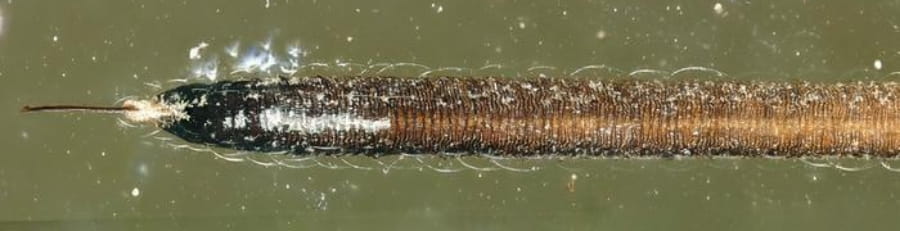 Details of the specialized proboscis in Neazoniidae. Credit: Dolev Fabrikant
The mouthpart tip had another unusual feature. Two grooved lobes likely expanded during feeding and helped hold the organ against the crack walls. The action was similar to a wall plug expanding inside a drilled hole.
This feeding system would have helped the insects reach places inaccessible to insects with stiff mouthparts. Their organs also differed from the flexible proboscises used by butterflies to drink nectar.
Noo-Noo’s mouthparts pointed backward and formed a piercing system. Researchers found no strong evidence of pollen on the insects’ bodies. The fossils therefore offer little support for a role as pollinators.
The study also changes the classification of several extinct planthopper groups. Researchers propose treating Mimarachnidae as a synonym of Neazoniidae based on shared body and mouthpart features. This links fossil nymphs and adults within one family.
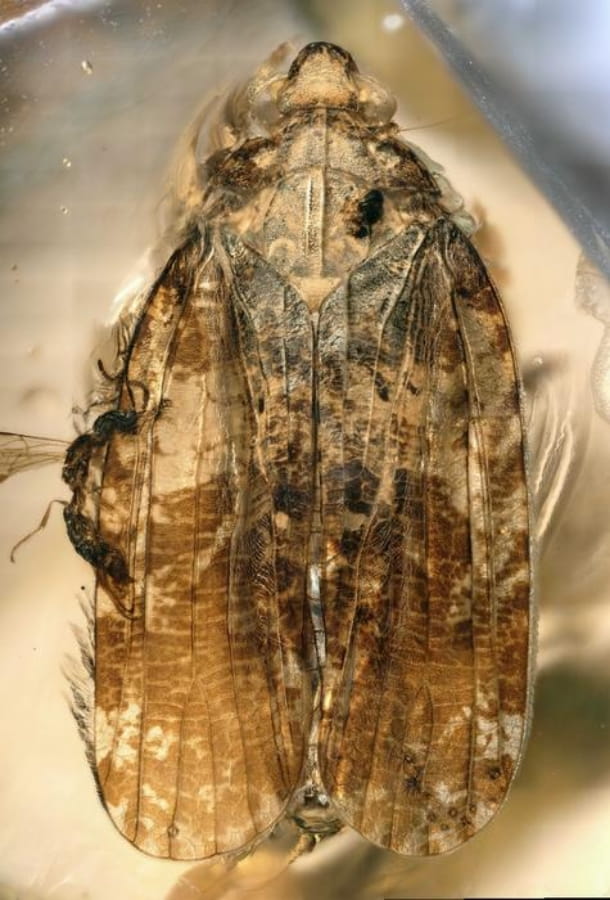 An amber fossil of a Neazoniid planthopper. Credit: Dolev Fabrikant
The team also moves the previously unplaced genus Spinonympha into Neazoniidae. Cretodorus noonoo represents a new species within the genus Cretodorus.
The name Noo-Noo comes from the friendly vacuum cleaner in the children’s television series Teletubbies. Its long, flexible hose resembles the feeding organ of the ancient insect.
Similar corrugated feeding structures appeared independently in several unrelated Cretaceous insects. Some long-proboscid mecopterans also had comparable structures.
The repeated pattern points to specialized feeding methods in Mesozoic forests. The researchers link these insects with ancient resin-producing forests dominated by gymnosperms.
Such forests offered insects many plant surfaces and narrow spaces to feed from. Long, flexible mouthparts gave some insects access to fluids hidden deeper inside bark.
The findings show a feeding strategy with no close match among living planthoppers. They also add another example of unusual insect forms from the Cretaceous Period.
Publication: Fabrikant, D., Fu, Y., & Davranoglou, L.-R. (2026). Flexible drinking straws of the Cretaceous: A novel type of labium in Mesozoic Auchenorrhyncha and its functional implications. Insects, 17(8), 789. doi:10.3390/insects17080789