

Members Only
For the teams competing in pro cycling, it’s not all about crossing the finish line first.

Gruber Images, Cor Vos
There is a despairing logic to bike races, in that despite all of the talent, hard work and technological innovation, only one person out of a field of more than a hundred can cross the line first and win.
Initially, this is likely difficult to stomach as young racers rise up through the ranks, and all but the top 0.01% eventually find their ceiling. You may be the best in your club, but are you the best in your town? Region? Country? What about once you’ve made it professional? The majority of those that reach the professional ranks will toil for a decade in exchange for a handful of wins.
But for the businesses in the sport – the teams – it’s an insane market to operate in. How on Earth do you plan for the emergence of a Tadej Pogačar? The cycling equivalent of several 2008 financial crises falling upon your two-wheeled Lehman Brothers.
Luckily, it’s not all about winning. Professional cyclists exist to do what many of the rest of us spend our days doing: creating shareholder value. Make the big number go up and you get things like a home, food and clothes. It’s a pretty good deal.
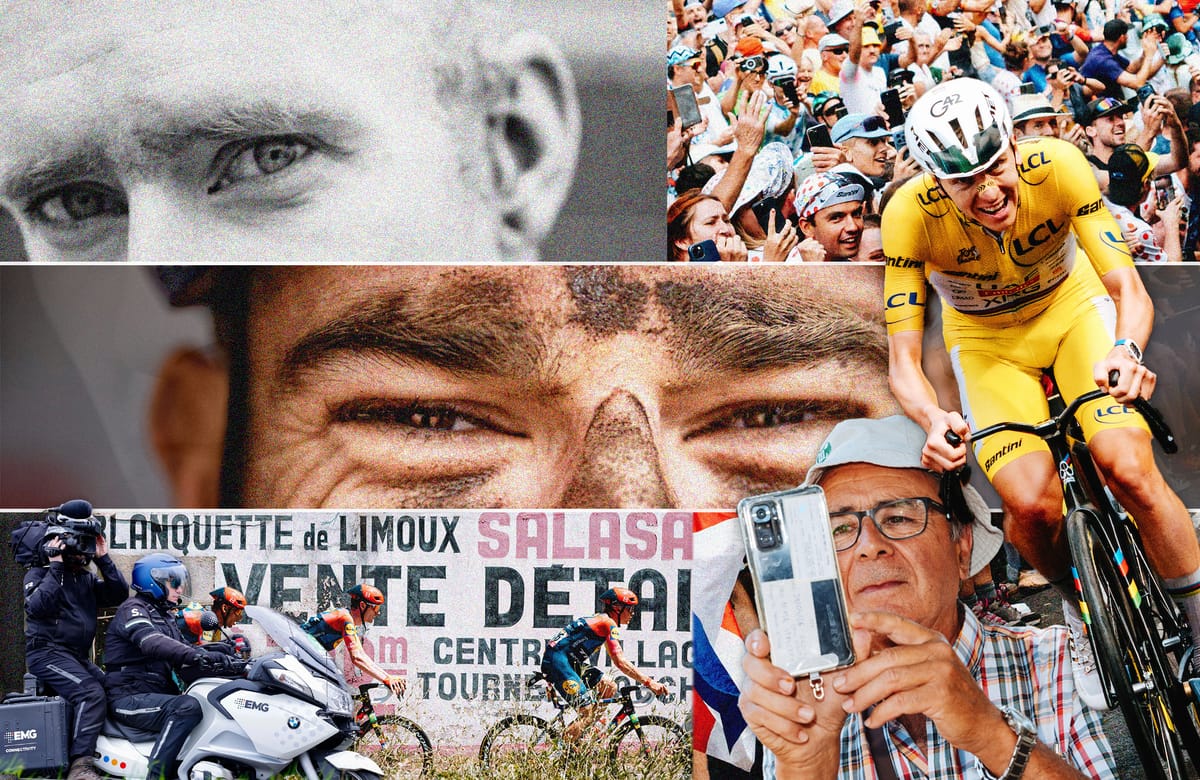
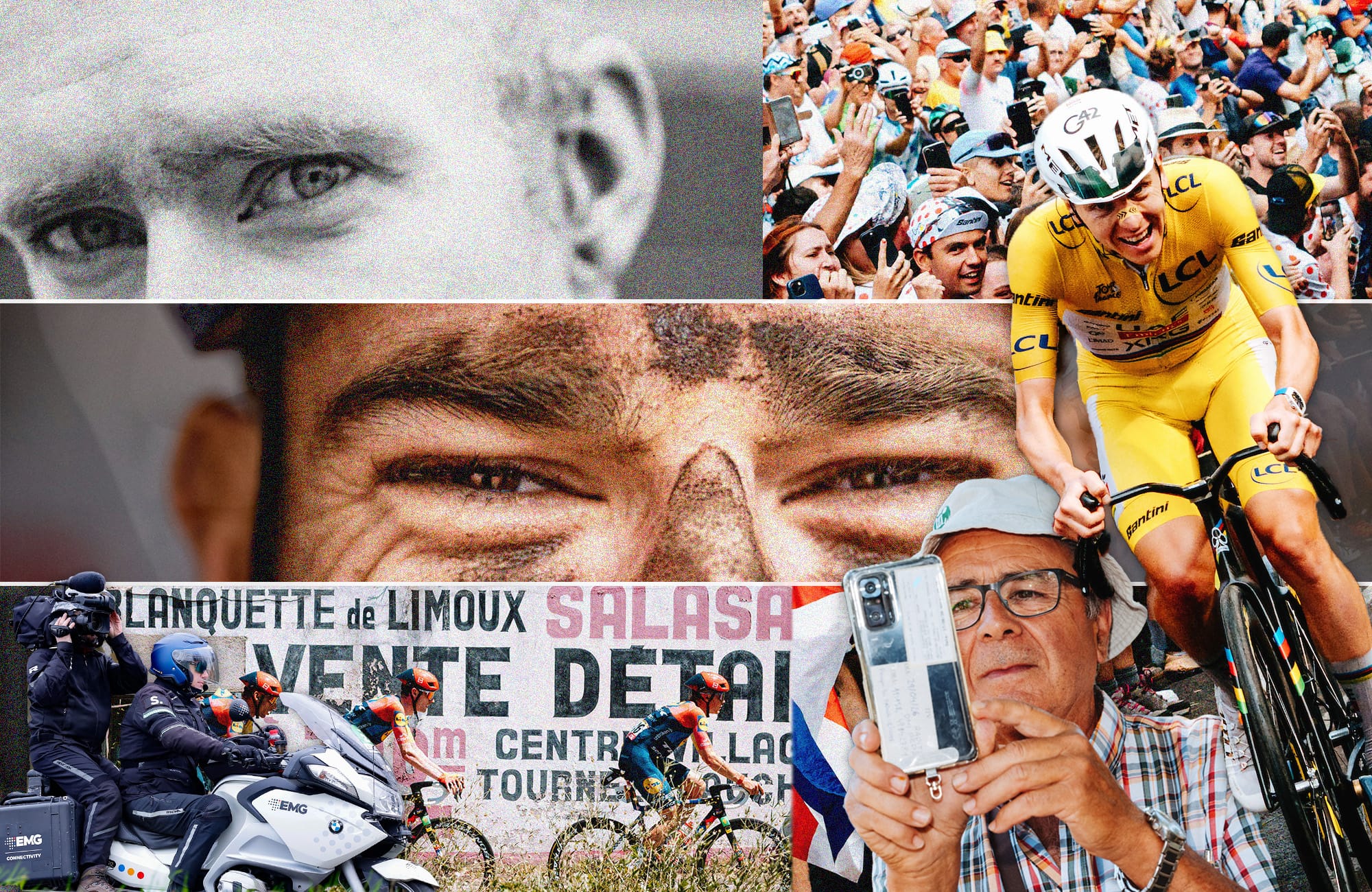
WorldTour teams and riders are travelling, televised billboards, and companies fund them in return for capturing the attention of cycling fans and the general public. Tadej Pogačar receives the most eyeballs on account of being arguably the greatest cyclist of all-time while also being quite charming and cheeky. But that’s not a replicable strategy unless, for instance, Alpecin switches from producing shampoo that stops your hair thinning to growing physiological anomalies in a laboratory who also know how to meme.
So what are the rest of the peloton to do? Those who only have an outside chance at the biggest bike races of the year, the Grand Tours and the Classics, which are the races that sponsors mostly care about.
“Honestly, it’s a little bit like we basically run a small media company inside the cycling team,” EF Education-EasyPost boss Jonathan Vaughters tells Escape Collective.
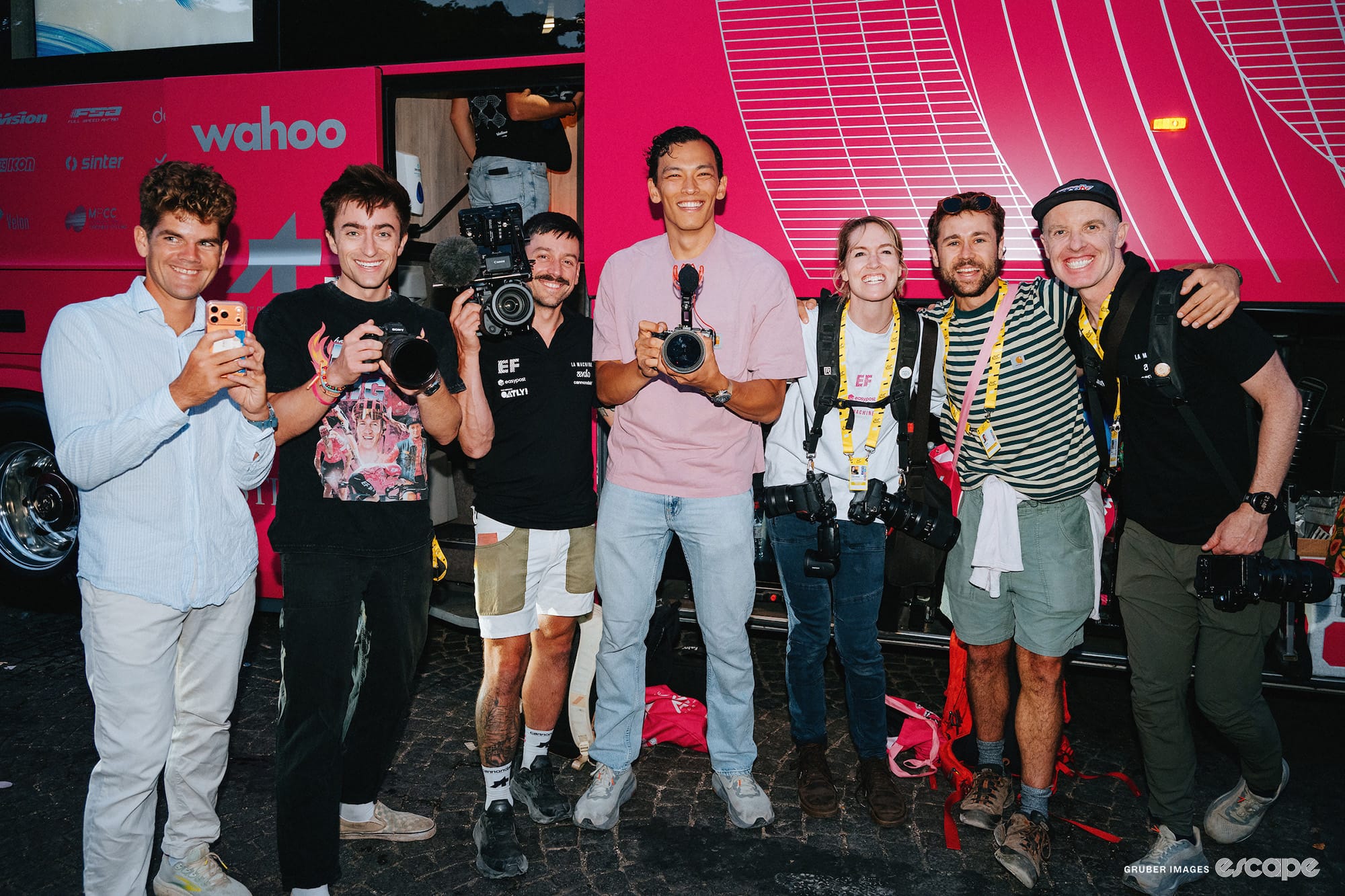 A portion of the in-house media team at EF Education-EasyPost.
This post is for paying subscribers only
Subscribe now
Already have an account? Sign in
Did we do a good job with this story?
Yep
Nope