
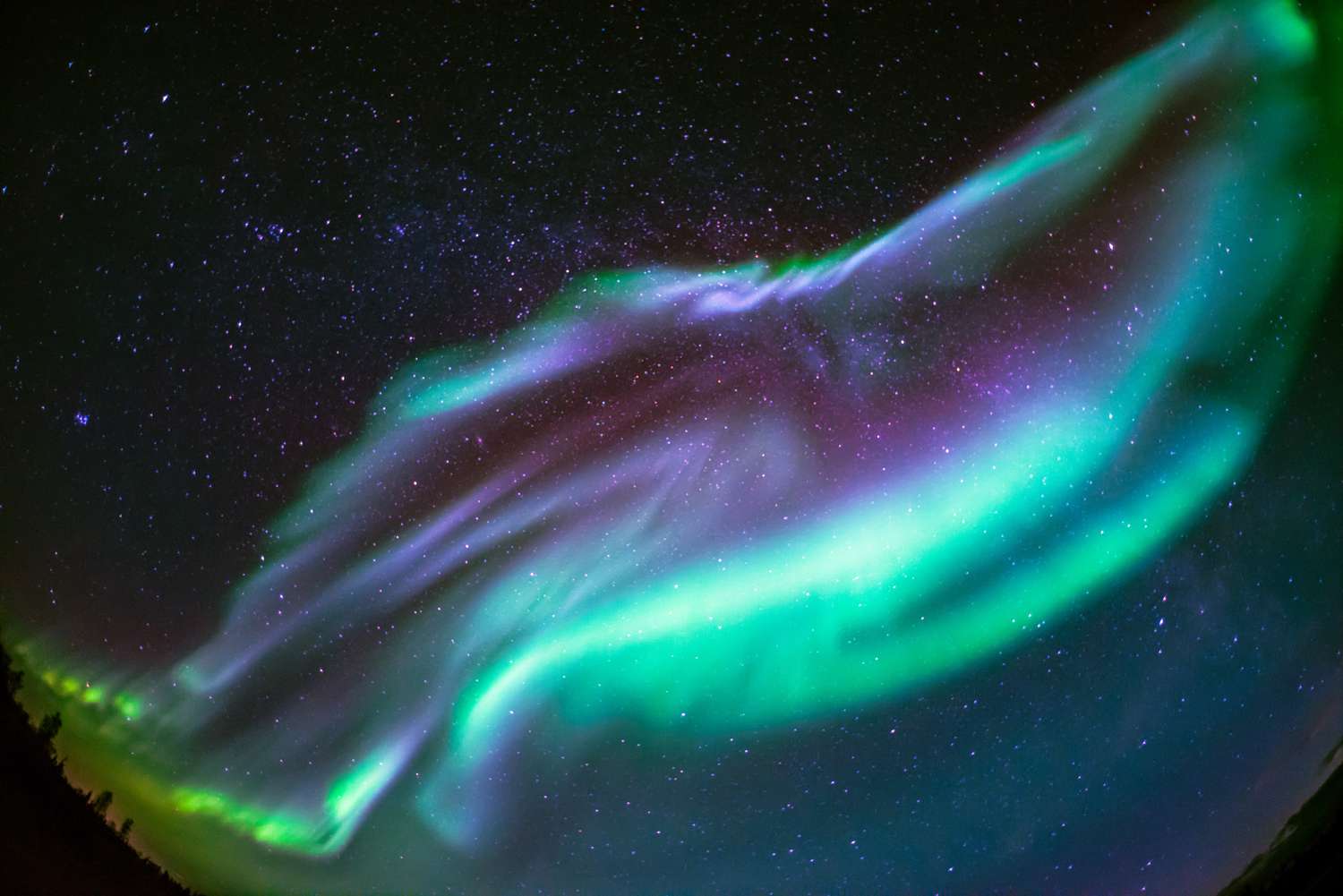
Keep your eyes on the northern horizon tonight, because the auroras continue!
After a coronal mass ejection (CME) blasted off the Sun on Tuesday, Oct. 6, following a long-lasting M1.4 solar flare, the Sun is still stirring up some drama.
NOAA’s Space Weather Prediction Center expects its arrival to spark up G1 (minor) geomagnetic storm conditions overnight, with a chance that activity could strengthen to G2 (moderate) levels early Friday, Oct. 9.
This means part of the northern U.S. and Canada could get another round of northern lights, although the sky show is probably more camera-friendly than visible to the naked eye.
For reference, the aurora borealis (the northern lights) are a result of geomagnetic storms, which occur when charged particles from the Sun collide with gases in the Earth’s atmosphere, creating brilliant waves of light in the sky.
Still, their visibility depends on several factors, including intensity and location.
When will the northern lights be visible?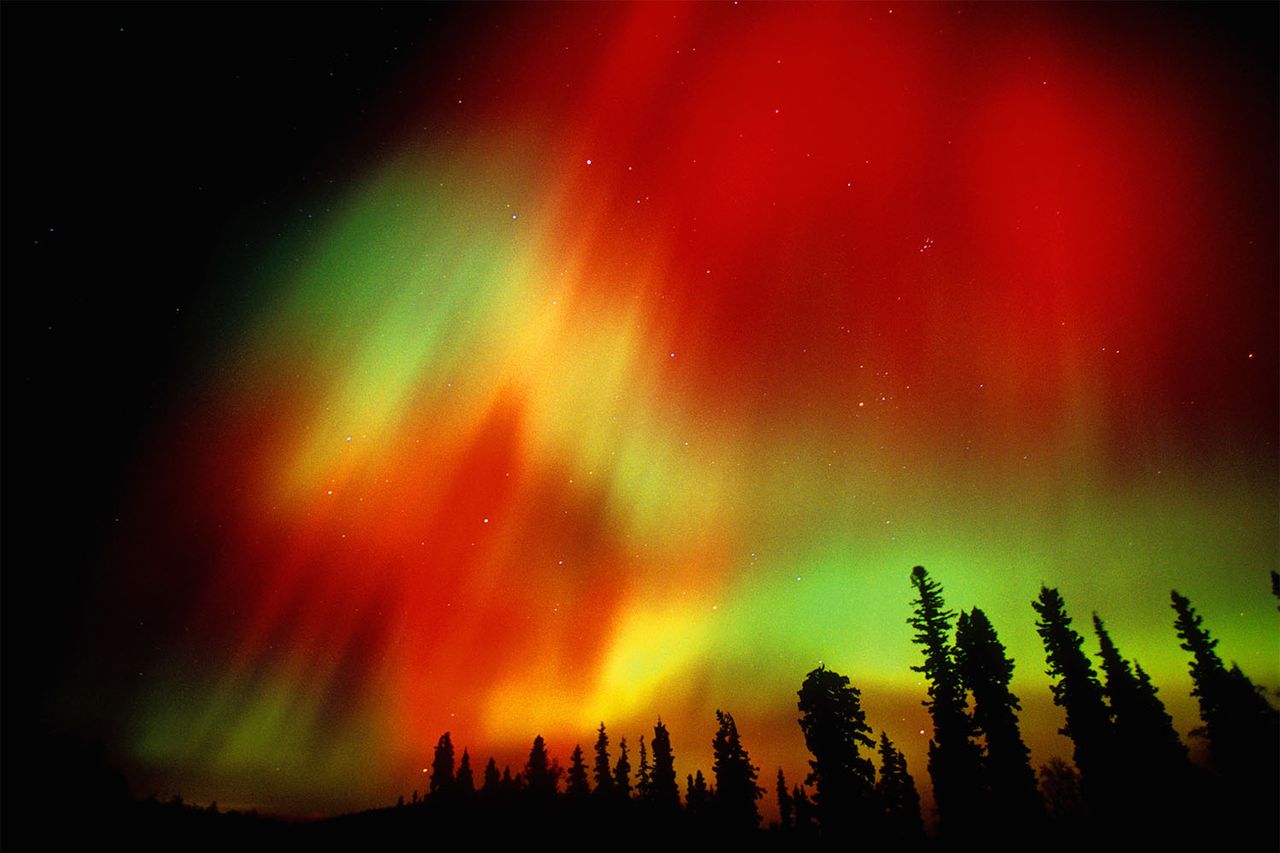
Aurora BorealisCredit: Getty
NOAA forecasts geomagnetic activity to ramp up around 11 p.m. ET tomorrow, Thursday, Oct. 8, with a potentially stronger window around 5 a.m. ET Friday, Oct. 9.
Still, the exact arrival time of a CME can shift, so be sure to check NOAA’s Aurora Dashboard before heading out and give yourself a viewing window overnight.
Where will the northern lights be visible?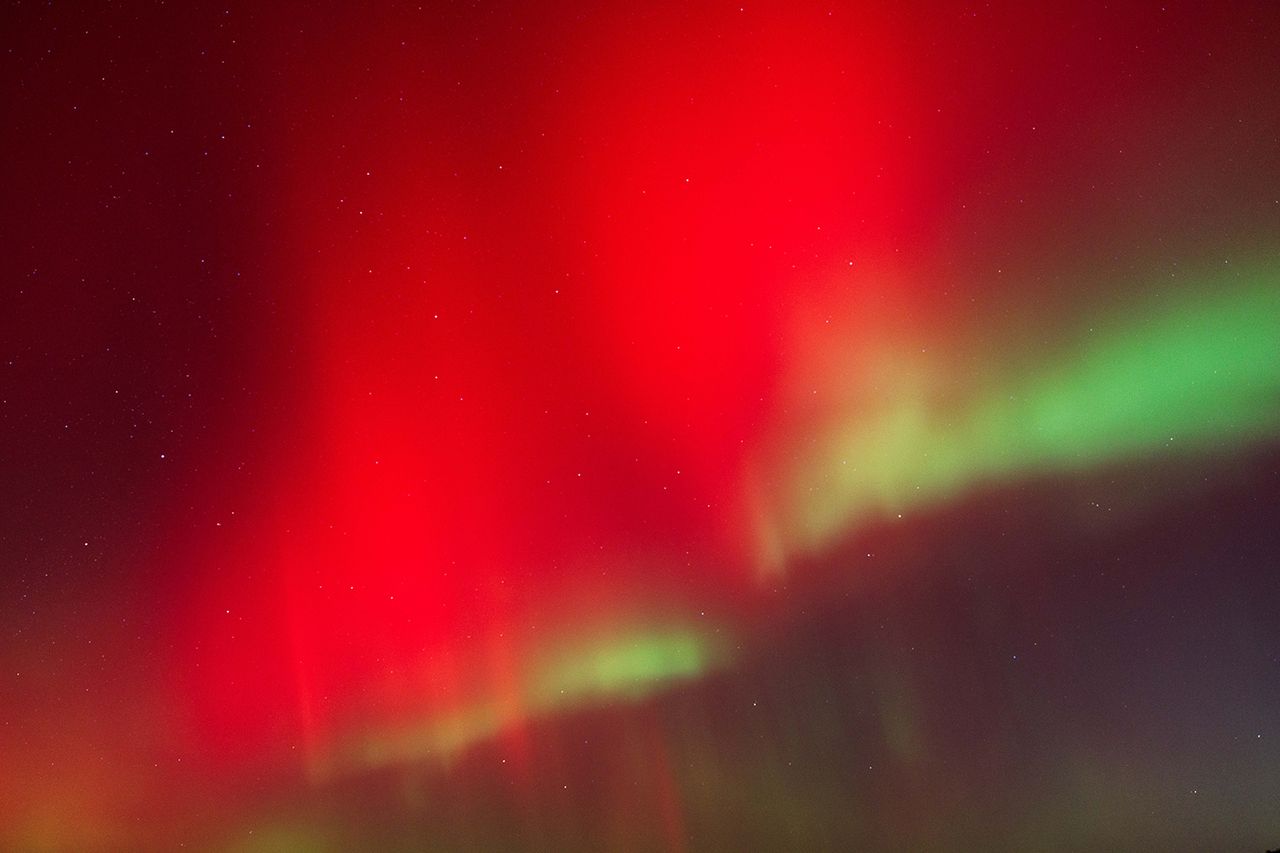
The aurora borealisCredit: Jeremy Hogan/Getty
Under G1 (minor) conditions, the best odds are in Alaska, Canada, and northern-tier states, including Washington, Idaho, Montana, South Dakota, North Dakota, Minnesota, Wisconsin, Michigan, Maine, Vermont and New Hampshire.
If the storm reaches G2 strength, however, the auroral oval could push farther south toward Oregon, Wyoming, Nebraska, Iowa, Illinois, Indiana, Ohio, Colorado, Pennsylvania, and New York.
Be sure to look toward the northern horizon from the darkest location possible.
Remember, your smartphone’s Night Mode could pick up color before your eyes do.
How to watch the northern lights?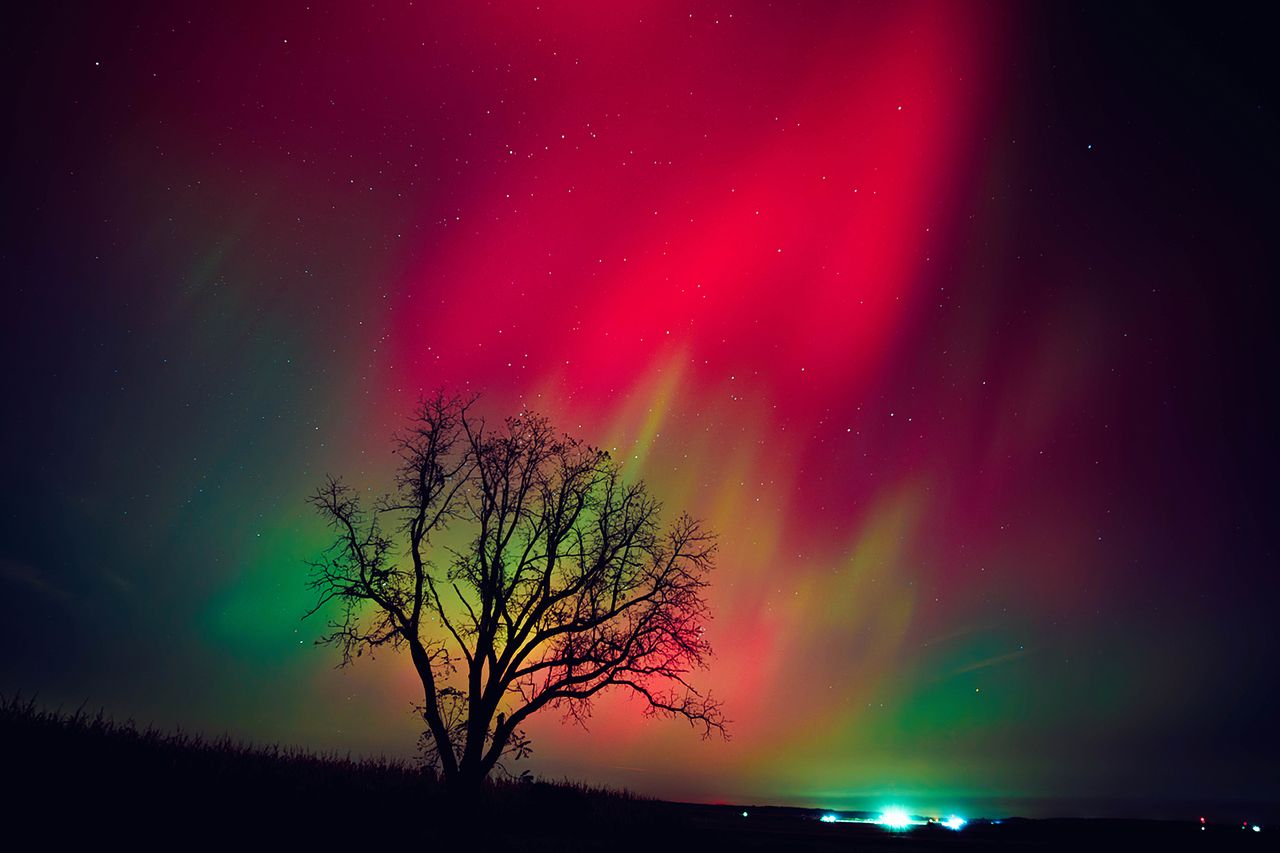
Northern LightsCredit: Ross Harried/NurPhoto via Getty
Find a dark location away from city lights, ideally with a clear view of the northern sky.
The darker your surroundings, the more vivid the aurora colors will appear. Remember to also keep tabs on real-time conditions using NOAA’s 30-minute aurora forecast and space-weather apps that track solar wind and magnetic field changes.
How to photograph the northern lights?
You don’t need professional gear to capture the auroras… but it certainly helps!
If you’re hoping to photograph the northern lights, you’ll want to keep your setup as steady as possible, since the auroras are best captured with long exposures. But if you have a smartphone handy, that works just fine.
All you have to do is head to your device’s settings and tap the “Night Mode” option or “Pro Mode” with similar exposure times.
Read the original article on People