
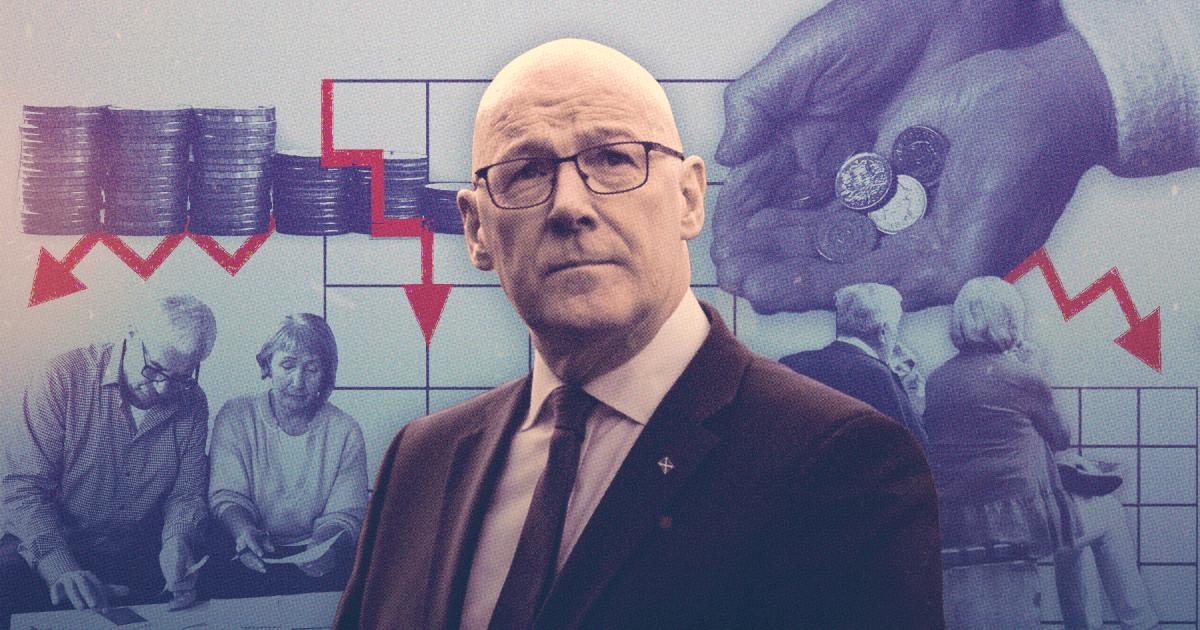
There is a legitimate argument to be had about the future of the state pension. Swinney should make it. But what he should not do is tell Scots they are going to lose their pensions.
Under the UK Government’s proposed reforms, the current triple lock will change from 2030-31.
Instead of increasing by whichever is highest of earnings, inflation or 2.5%, pensions would rise by at least inflation or 2.5%, alongside a mechanism intended to keep them in line with earnings over the longer term.
People can reasonably think that is less generous. The Scottish Government certainly does.
READ MORE:
Its modelling suggests Scottish pensioners could collectively receive around £1.3 billion less each year by 2039-40, rising to roughly £4bn by 2049-50, compared with the existing triple lock continuing indefinitely.
That is worth scrutinising. But it is not the same as Scots “losing our pensions”.
Nobody is proposing to abolish the state pension. The comparison is between two future uprating systems, one expected to produce a lower pension than the other.
David Phillips of the Institute for Fiscal Studies points out that the existing triple lock contains a ratchet. Because pensions rise each year by whichever is highest of earnings, inflation or 2.5%, over time they tend to grow faster than each measure.
With an ageing population, that becomes increasingly expensive. Phillips argues that removing the ratchet while keeping pensions aligned with prices and earnings could make the state pension more secure in the long term.
That is almost the reverse of Swinney’s presentation: future pensions may be less generous than under an indefinitely maintained triple lock, but reform could make the pension more sustainable.
There is another complication.
The pension changes are intended partly to help fund Labour’s planned National Care Service in England. Swinney has suggested Scottish pensioners are effectively being asked to pay for English social care.
But if social-care spending in England rises, Scotland would normally receive additional funding through the Barnett formula. The IFS has told The Herald this could amount to £1bn a year or more once the system is fully established.
That money is not guaranteed. It depends on how Westminster funds the reforms. But that is the point: we do not yet know Scotland’s overall financial position.
Phillips is clear it is wrong to suggest Scotland suffers the pension change while receiving nothing when spending rises elsewhere.
Perhaps most awkwardly, this machinery should be familiar to Swinney. He was finance secretary when Scotland’s fiscal framework was negotiated.
His fuller quote was: “We have been taken out of the European Union and we are now going to lose our pensions. Scotland needs to have independence.”
It is effective politics because it is simple. But simplicity and accuracy are not always the same thing.
The SNP is entitled to argue the proposed system is less generous than keeping the triple lock indefinitely, and that Scotland would be better served by a different settlement.
But that case should stand on what is actually being proposed.
The state pension is not disappearing. Scotland’s eventual financial position is not yet known. And the difference between receiving less under one future system and “losing your pension” is not trivial.
In a debate affecting millions of people’s financial security, that distinction matters.