
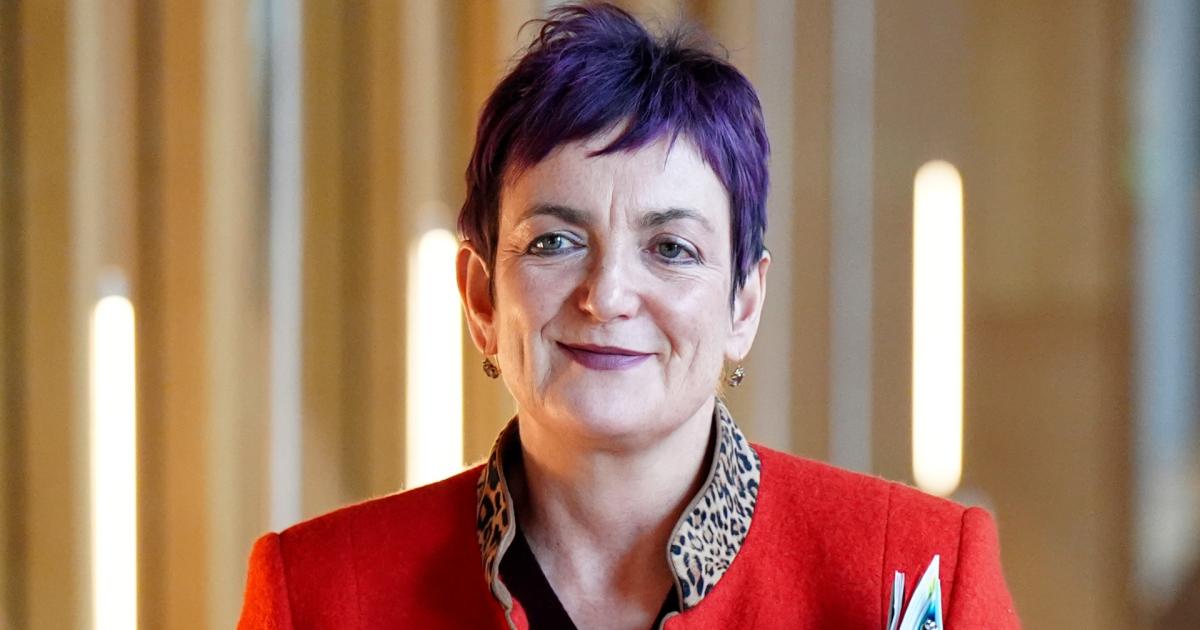
Ms Constance told MSPs preparations had been under way for months, with the Scottish Government seeking to keep more patients out of hospital, speed up discharge and expand care delivered in people’s homes.
READ MORE:
Opening her winter preparedness statement at Holyrood, she said: “I want to be clear and transparent that we will be facing a difficult period.”
She also issued a pointed message to councils over social care, telling Parliament it was their statutory responsibility to deliver services and that “decisions about budgeting cannot take precedence over the needs of the very people we were all elected to serve”.
Ms Constance added: “The status quo with delayed discharge must end.”
The intervention comes amid persistent concern over patients remaining in hospital after they are medically fit to leave, reducing the number of beds available for people coming through emergency departments.
Ms Constance said 97% of discharges happened without delay but described current levels of delayed discharge as “troubling”, warning that unnecessary hospital stays could damage patients’ independence and recovery while reducing capacity elsewhere in the system.
Responding to MSPs after her statement, she said the median delayed discharge wait across Scotland was currently 33 days, rising to 60 days in the worst-performing area, and said geographical variation was “unacceptable”.
Scottish Labour’s Jackie Baillie accused ministers of presiding over continuing deterioration despite annual winter planning exercises.
Figures published this week showed more than 1,600 patients had waited longer than four hours at Edinburgh Royal Infirmary and more than 1,200 at Glasgow’s Queen Elizabeth University Hospital, the worst weekly figures on record.
Ms Baillie said pressures were being seen through “increasing corridor care, ambulances stacked up outside and staff burnout” and challenged the Health Secretary to spell out how success would be measured.
She asked whether that would mean reducing delayed discharge, meeting the four-hour A&E target, improving ambulance turnaround times or ending corridor care.
“We have these statements every year, and it seems that little changes,” she told MSPs.
Ms Constance said all those indicators needed to move “in the right direction”, but insisted winter resilience had to be combined with longer-term reform of the health service.
She later accepted calls for the scale of corridor care, where patients are treated in corridors and other unsuitable areas because of a lack of capacity, to be recorded.
Scottish Conservative MSP Miles Briggs said the practice was becoming “the norm” and warned that it was unsafe, increased infection risk and deprived patients of dignity.
Mr Briggs described the winter preparedness statement as “another flimsy SNP plan”, adding that it will “do nothing to stop a crisis in Scotland’s NHS this winter”.
He asked whether ministers would back a Royal College of Nursing call for incidents of care in inappropriate places to be recorded and reported this winter.
Ms Constance said corridor care was “unacceptable” and “should absolutely not become the norm”, adding that ministers needed to agree a definition and establish a proportionate way of measuring it.
Pressed later for a timetable, she said she had a proposal in front of her but wanted to examine whether the process could be accelerated.
She told MSPs: “Corridor care is first and foremost distressing for patients. It is not right. It is not in their best interest.”
However, she declined to give an immediate deadline, saying: “I will come back to [Parliament] on that because I am interrogating that. I have a proposition in front of me that has a timeline, and I want to see what I can do to reduce that timeline.”
Under the winter plans, the Government intends to expand Hospital at Home services, with a target of more than 10,000 people benefiting this winter, as well as strengthening rehabilitation, community services and discharge planning.
Ms Constance also confirmed a refreshed national Surge Preparedness Framework, designed to allow NHS boards, councils, integration authorities, primary care, social care and the voluntary sector to identify pressure earlier and coordinate their response.
The Government has separately allocated an additional £90 million announced in July to tackle long waits for planned appointments and treatment, including money intended to maintain planned care activity during winter.
The Health Secretary also urged eligible Scots to take up their flu vaccination, warning that seasonal illnesses were already circulating.
Around 5,000 adults and 1,700 children in Scotland were hospitalised with flu last winter, according to figures cited in her statement.
Asked what was being done to increase uptake, Ms Constance said the Government would use a refreshed national awareness campaign alongside targeted work with groups where vaccination levels were lower.
Vaccines would be available through settings including community clinics, care homes, pharmacies and outreach services, with NHS boards expected to tailor programmes to their local populations.
A separate public information campaign will launch later this month encouraging people to use alternatives to A&E where appropriate, including Pharmacy First, GPs, community dentists and optometrists and NHS 24.
Ms Constance said there was “no doubt” the coming winter would be challenging, but argued Scotland was entering it having planned early.
“The measure of our preparedness is not whether pressures arise,” she said, “it is how effectively we respond to those pressures.”