
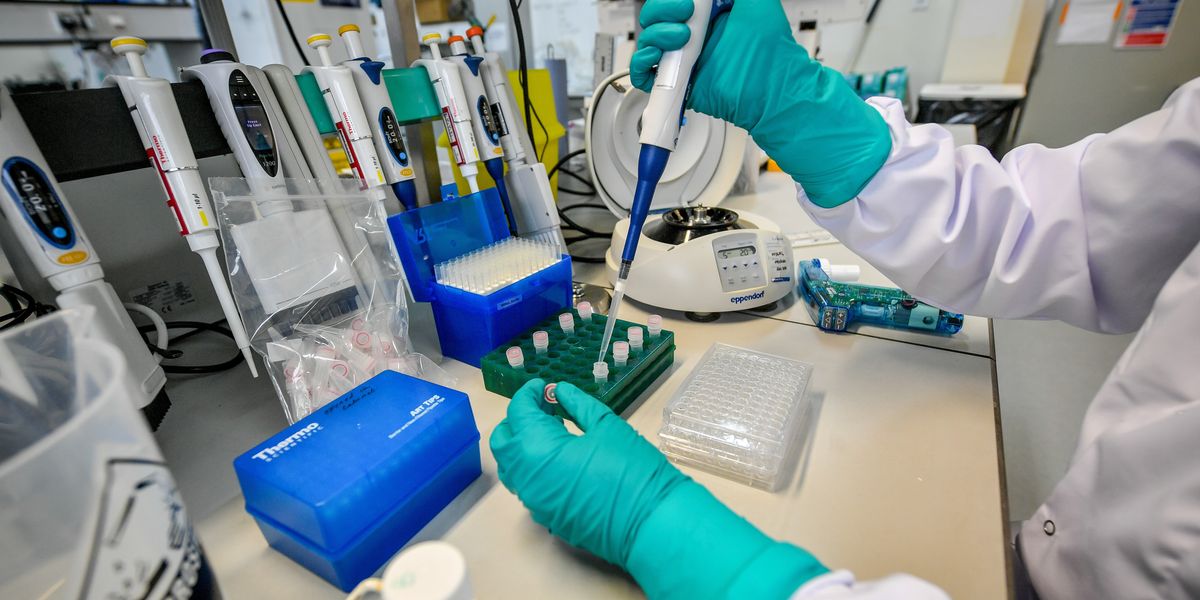
A daily pill has raised hopes patients could see the first major new class of Parkinson’s treatment in decades.
The drug, called solengepras, was tested in a late-stage clinical trial and was found to significantly reduce the time patients spent struggling with symptoms associated with the condition.
It eased stiffness, slowness and tremors. It also helped them stay more alert during the day, improving their quality of life.
While most treatments for Parkinson’s act on dopamine, solengepras works differently.
Instead, it targets a different part of the brain’s movement system, opening a new avenue for further treatment.
Dame Kate Bingham, managing partner at SV Health Investors, whose Dementia Discovery Fund backed Cerevance, the Boston-based biotech company behind the drug, said it was an “entirely novel drug class beyond the dopamine pathway”.
Around 166,000 people in Britain are currently diagnosed with the progressive brain condition.
Thousands more may be suffering without a formal diagnosis.
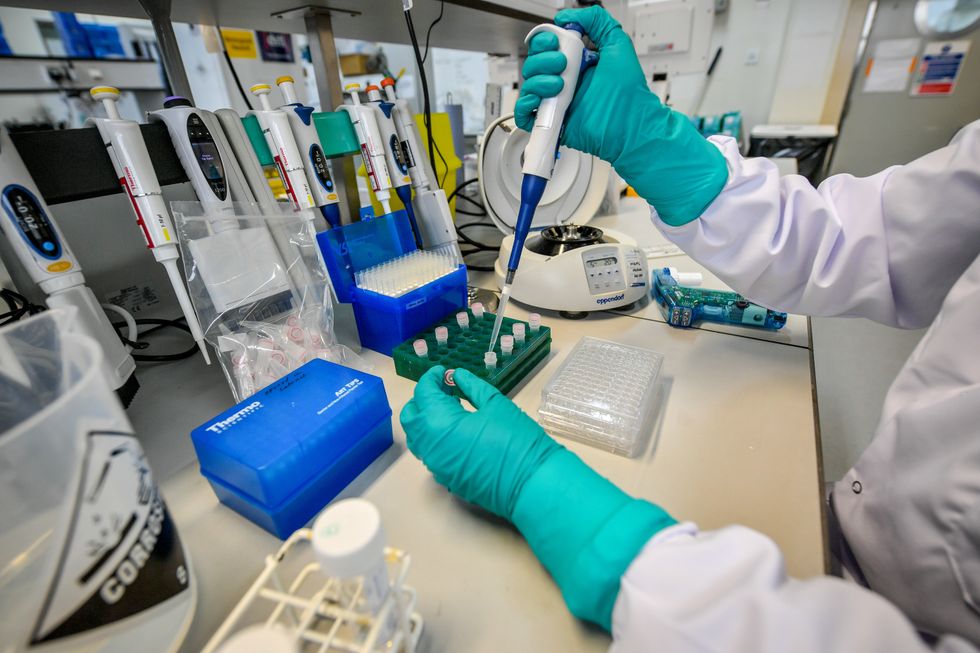
(file photo) Cerevance’s drug solengepras works differently than existing Parkinson’s drugs
| PA
Parkinson’s develops when nerve cells that produce dopamine are gradually lost, resulting in slower, stiffer movements and tremors.
The most widely used treatment for the condition is levodopa, developed in the 1960s.
The body converts levodopa into dopamine to replace what it would otherwise produce.
Dopamine-based treatments can be highly effective, but as the condition develops, its effects become less predictable.

(file photo) Levodopa is currently the most widely-used treatment for Parkinson’s, but can become less effective as the condition progresses
|
GETTY
Patients may experience “off” periods when a dose wears off and symptoms.
Instead of influencing dopamine levels, solengepras targets a receptor called GPR6.
Parkinson’s affects movement by upsetting the balance between brain signals that encourage movement and those that hold it back.
But solengepras works as a “brake”, making movement in patients more comfortable.
Claire Bale, associate director of research at Parkinson’s UK, said: “These phase three results indicate that solengepras could be an important new treatment option for Parkinson’s.”
She added: “We are keen to see this important new treatment made available to people with Parkinson’s in the UK as soon as possible, and will be reaching out to the company behind solengepras to offer our support.”
The late-stage trial involved 341 people diagnosed with Parkinson’s.
Those in the study were given a 75mg dose or 150mg of solengepras, or a placebo.
All participants in the trial improved, but those on higher doses had about 37 minutes less “off” time each day than those taking the placebo, and about 94 minutes less “off” time before the study began.
They also gained 36 extra minutes of “on” time without troublesome dyskinesia compared to the placebo group.
No serious adverse effects were reported. The drug developers will now approach US health regulators for approval. If talks go smoothly, UK health regulators would follow.
Dr Lynsey Bilsland, managing director of Parkinson’s UK’s global drug development programme, said: “Right now, no drug can stop or slow the progression of Parkinson’s.
“These latest results from the trial of SNT-4728 [solengepras] are encouraging, showing an improvement in movement symptoms in a population that has yet to be diagnosed with Parkinson’s in such a short time.”