
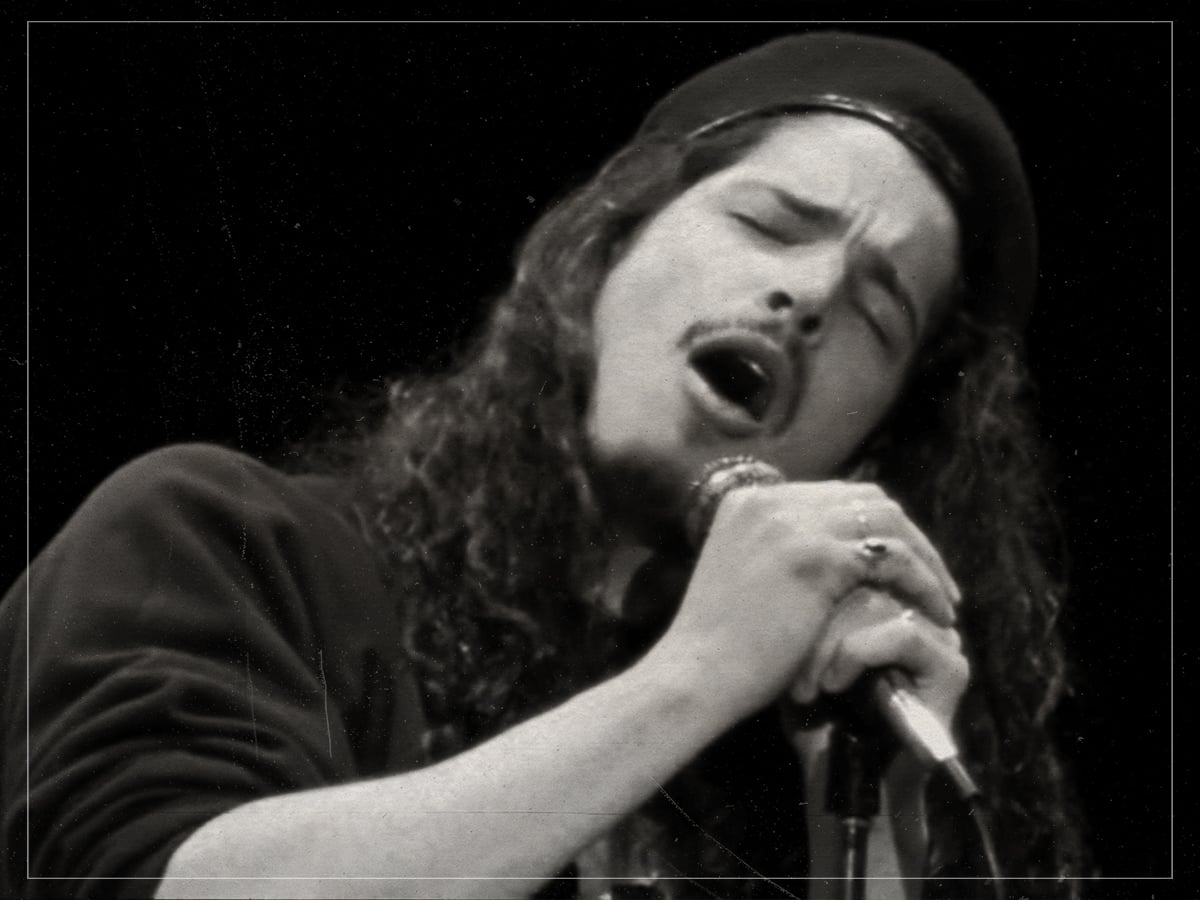
Credit: Far Out / YouTube Still
Fri 9 October 2026 22:00, UK
Chris Cornell could always try to be diplomatic whenever it came to his music.
He knew that the world wasn’t necessarily going to like every road that he went down whenever making any number of his tunes, but every album that he ever made was meant to be a bit of a risk, considering what he had done with Soundgarden. There was no way that he wanted to retread and make the same music over and over again, but he also had a pretty good idea of what his music shouldn’t have sounded like whenever he started working with the wrong people behind the board.
Granted, it’s not like Cornell was a snob about who he worked with, either. Every member of Soundgarden was bringing their own ideas to the table, and when he began working with Audioslave, a lot of the best moments of that band came from Cornell feeding off of what the other members of Rage Against the Machine were doing when he made songs like ‘Cochise’ or ‘Like a Stone’.
And considering who was behind the desk for a lot of his best albums, it’s not like he wasn’t getting the top people for the job. Cornell was almost spoiled in a sense after learning from people like Brendan O’Brien on a lot of his mixes, and the fact that Audioslave managed to come together through Rick Rubin manning the boards meant that most of the tunes were going to be in good hands regardless.
Maybe his collaboration with Timbaland was a bit ill-advised at the time of its release, but that was more in the spirit of taking chances for Cornell. He wanted to make music that no one would have thought someone like him could have made, but all the way back at the beginning, getting someone to get the right sound for what the band wanted was never going to be easy, making an album like Ultramega OK.
The album itself does feature some of the first great Soundgarden songs like ‘Beyond the Wheel’, but compared to the classic albums they would make, the frontman thought that some of their best moments weren’t being represented that well. And while he tried his best to be cordial when working with the producer of the record, he was the first to say that he didn’t know the first thing about what the band wanted.
Drew Canulette may have had a decent track record when working with underground bands, but Cornell felt that there was no way that he could figure out what they needed on their debut, saying, “Production-wise, it didn’t really sound like us. Drew Canulette produced based on the fact that SST had used his mobile unit for a live Black Flag record.”
Further reading: From The Vault
Adding, “We figured, ‘OK, he was involved in making this live Black Flag record, so he can’t be a complete idiot about recording.’ But in my opinion, he was a complete idiot about recording. We had done demos for Ultramega in Seattle with Jack Endino that sounded much better.”
Then again, the fact that they managed to sound different on every record was a case of them having somewhat of an identity crisis. They didn’t want to sound as metallic as they did half the time, but when they did finally hit that perfect balance on tunes like ‘Outshined’, it felt like they found that perfect middle ground between Black Sabbath heaviness and the kind of strange artsiness of the underground scene.
They were by far some of the biggest names in grunge at the time, but even if they didn’t have as many credentials, that didn’t seem to matter when the songs rocked that hard. No one would have thought that being able to play at that scale was possible for an underground band, but suddenly, when the band debuted, everyone found out what a slacker version of Led Zeppelin could sound like.
