
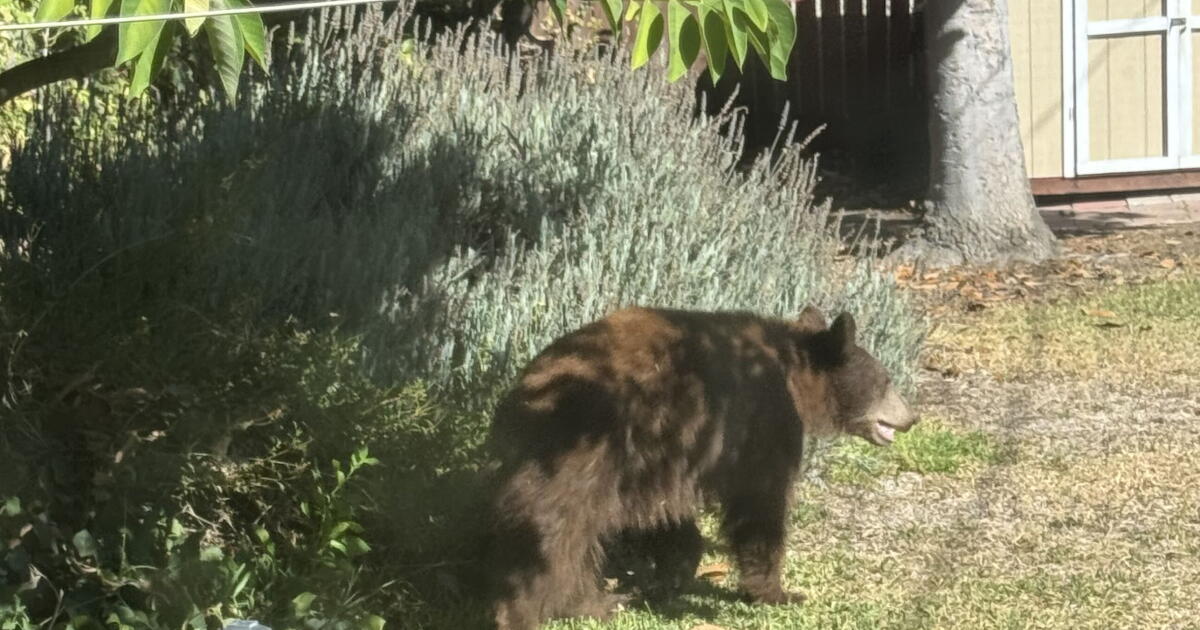
My first encounter with a wild bear, I have to admit, was frightening.
I was working on my frontyard near the Monrovia hills when a large black bear squeezed itself out of the crawl space of my neighbor’s house and ambled across the street.
The bear was headed for a home that abuts our neighborhood park. From my street, I could hear families and children playing in that park.
What to do? A huge, wild animal was headed for our idyllic park full of innocent children.
It’s a question more Southern Californians are asking themselves, with home construction encroaching on neighboring wilderness and climate change bringing more intense heat waves and drought, which push animals into suburbia in search of water, food and shade.
You’re reading the Essential California newsletter
L.A. Times reporters guide you through the most important news, features and recommendations of the morning.
By continuing, you agree to our Terms of Service, which include arbitration and a class action waiver. You agree that we and our third-party vendors may collect and use your information, including through cookies, pixels and similar technologies, for the purposes set forth in our Privacy Policy such as personalizing your experience and ads.
Wildlife encounters on the rise
A 2025 study by UC researchers found that the number of reported wildlife conflict in California increased by about 2% for every one-inch decrease in annual precipitation. The types of critters crossing paths with humans varies based on location. Bears, wild pigs, mountain lions and coyotes were at the top of the list in California, according to the study.
And right now — in the late summer and early fall — is when the reported incidents hit their highest rates, according to the California Department of Fish and Wildlife. It’s not clear if that’s because wildlife is most active during this season or it’s when people are more likely to be outdoors.
So, what do you do when you encounter a wild animal? That questioned turned into a heated debate recently in my Nextdoor website, when a fellow Monrovian posted photos of a mountain lion resting in his yard. Several neighbors suggested reporting the giant cat to the Department of Fish and Wildlife, which, presumably would help get the animal returned to its habitat safely. Others disagreed vehemently, saying a report would only lead to the animal getting trapped or killed.
“Let the lion stay in his home,” one neighbor commented. “Fish and game not good!”
Peter Tira, a spokesperson for the California Department of Fish and Wildlife, disagrees (obviously).
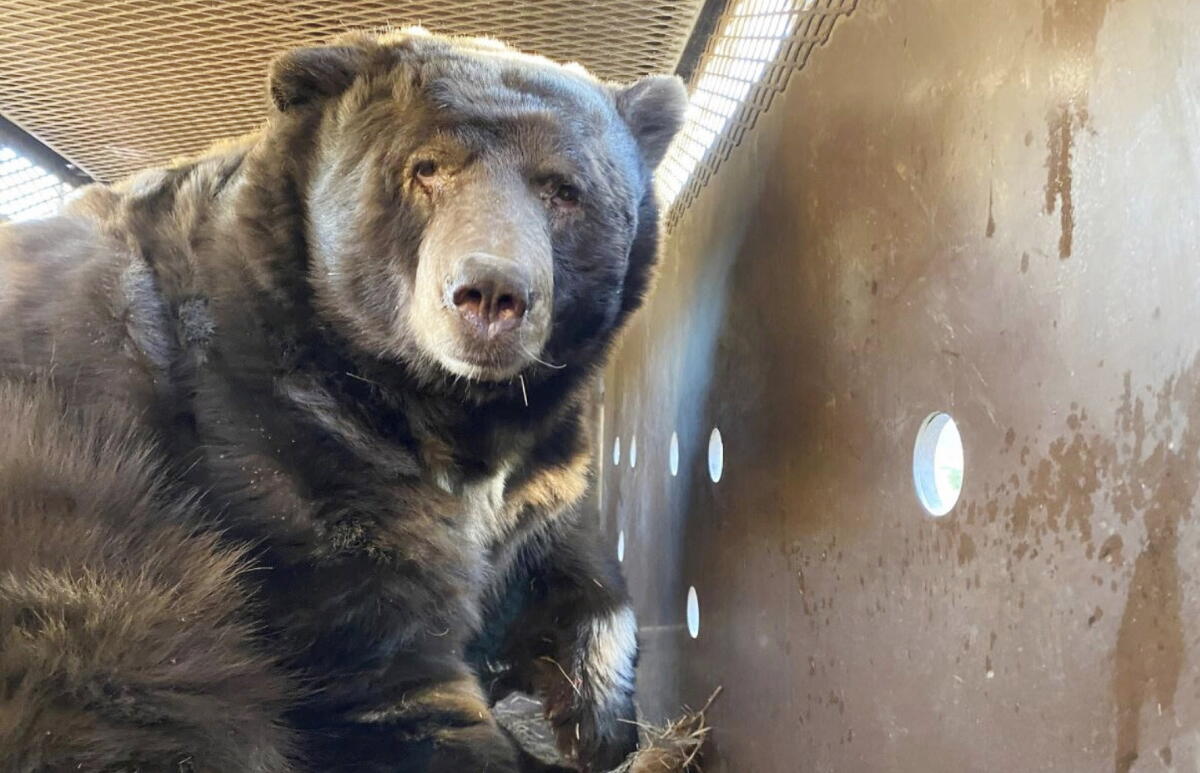
Wildlife officials rescued a 525-pound bear that was hiding underneath an Altadena home that was evacuated during the Eaton fire.
(California Department of Fish and Wildlife)
When a bear is (or isn’t) an emergency
One of the reasons to report a wildlife encounter to fish and wildlife, he said, is to spot trends before they turn deadly. For example, a flurry of reports about mountain lions in a neighborhood could suggest someone is feeding deer, which could attract the predator mountain lions. Once the lions get comfortable in a neighborhood where deer are plentiful, an attack on a pet or a human is more likely, Tira said.
The same problem could crop up if someone feeds stray cats — drawing coyotes that feast on the cats — or if people leave trash cans unsecured, which can bring bears to the neighborhood, he said. The agency can hold community meetings or disperse fliers to warn neighbors about the potential risk.
“Conflicts can get worse over time,” Tira said. “When residents don’t alert us until we get a crisis, that’s a crisis we could have resolved.”
As for my first bear encounter, I called the Monrovia police, but the officer who responded didn’t seem concerned. He took a peek into the backyard where the bear took shelter and then got back into his patrol car and drove away. I rushed over to the park to alert the unsuspecting parkgoers of a bear nearby, but no one there seem to share my uneasiness.
Since then, several bears have entered my backyard (surrounded by a six-foot fence) most likely to try to climb into the crawl space under my house to get relief from the heat. But I sealed it up years ago.
I haven’t reported the sightings. Still, I have the state agency’s number readily available just in case a bear were to get comfy under my house.
“You don’t want a 500-pound bear living under your house,” Tira said.
They don’t make great house guests. Just ask Altadena resident Ken Johnson, who had a bear living under his house for six weeks.
The week’s biggest stories 
A wave crashes against seawall boards and damaged beachfront homes along the Long Beach peninsula on Thursday.
(Allen J. Schaben / Los Angeles Times)
Rain, winds and coastal dangers to SoCalVehicular crashesL.A. crime and courtsMore newsEditor’s pickMore picksThings to do 
(Photo Illustration by Diana Ramirez/De Los; Photos By Amar Studio, Ludovic Delot Studios, Cristian Rojas, Gary Coronado/Los AngelesTimes, Lorena Endara/For De Los, Eric Thayer/Los Angeles Times.)
Today’s recipe 
Mutabbal, a bright, smoky eggplant dip.
(Stephanie Breijo / Los Angeles Times)
Mutabbal — a Levantine eggplant dish similar to baba ganoush — is smoky, bright, creamy and rich, and would work well as an appetizer with pita, or as the base for grilled chicken or lamb. This recipe was inspired by cooking editor Cody Reiss’ recent trips to Zankou Chicken in Glendale, and adapted from “The New Book of Middle Eastern Food” by Claudia Roden.
Photo of the day 
(Kayla Bartkowski / Los Angeles Times)
Games 
Here’s today’s mini crossword, plus our other free, daily crossword puzzle, sudoku, word search and jigsaw games.
Have a great day, from the Essential California team
Jack Dolan, investigative reporter
Hugo Martín, assistant editor, Fast Break desk
Kevinisha Walker, multiplatform editor
Andrew J. Campa, weekend writer
Karim Doumar, head of newsletters
How can we make this newsletter more useful? Send comments to essentialcalifornia@latimes.com.