
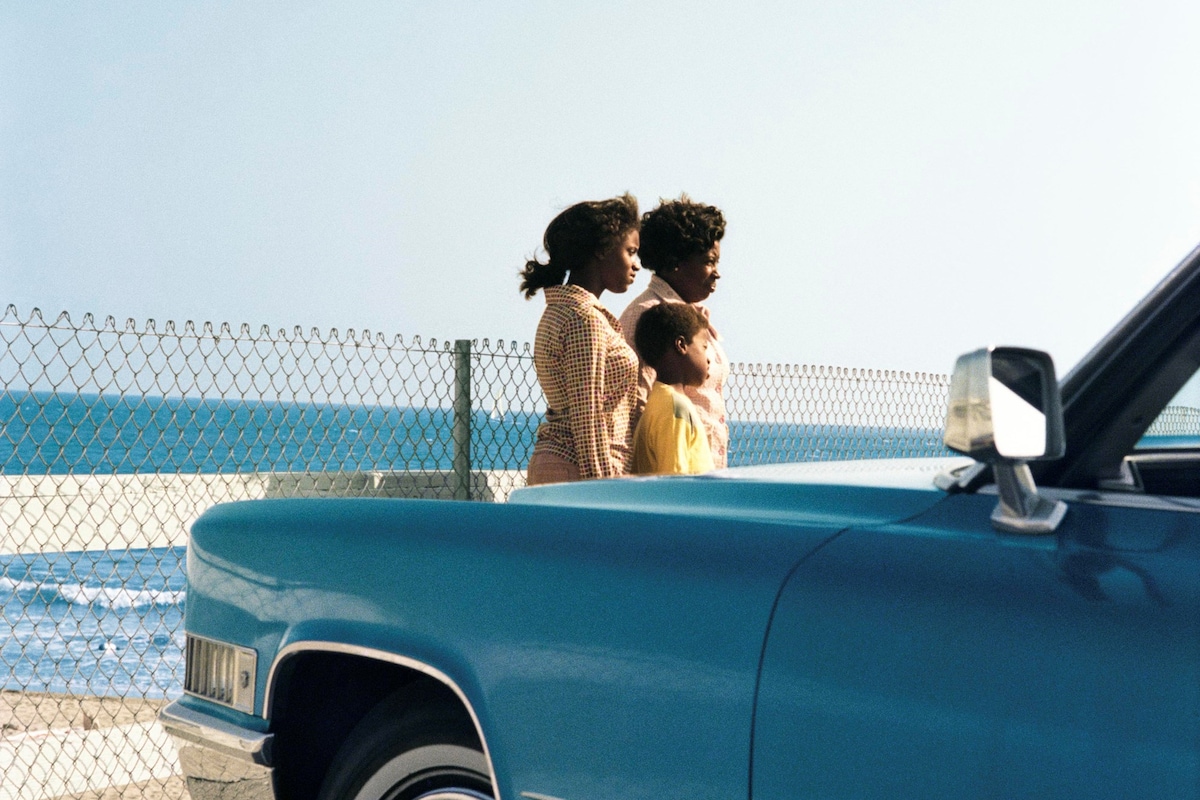
William Eggleston: All That Goes Unnoticed
Gallery / 16 images
Few photographers have had as profound an influence on image-making as William Eggleston. His vision of Americana, his use of colour and his poetic, cinematic treatment of everyday life – petrol stations, diners, suburban streets – forged a blueprint which continues to inform today’s artists, photographers, filmmakers, fashion designers and musicians. Lana Del Rey exists in a creative lineage that relies on Eggleston’s imagery. His fingerprints can be felt in the blue-hour melancholy of Lux Lisbon waking alone in her prom dress on a school field in Sofia Coppola’s The Virgin Suicides (1999), as well as in the eerie phantasmagoria of the Red Room in David Lynch’s Twin Peaks (1990-1991). Eggleston is a touchstone for the unsparing intimacy of Nan Goldin’s pictures. And undoubtedly, Gus Van Sant, whose cinema and photography echo Eggleston’s focus on the American vernacular, roadside culture, and unpolished youth.
But in 1976, when Eggleston’s photographs were displayed in the Museum of Modern Art’s first-ever solo exhibition dedicated to colour photography, Photographs by William Eggleston, The New York Times scathingly deemed it their “most hated show of the year”. 50 years on, Eggleston stands as the godfather of the medium. Through his “democratic” approach – treating every subject with equal visual significance – the Tennessee photographer ushered in a new way of seeing that found intrigue in the prosaic details of everyday life. A child’s tricycle, fluorescent motels and empty parking lots are all rendered with the same idiosyncratic eye – his trademark hyper-saturated hues and off-kilter compositions not only subverting but recasting the world around us. What began as a bold defiance of photographic convention has evolved into an aesthetic, a language – perhaps even a world – of its own. One where the banal can transcend into something strange, cinematic and newly alive.
Beyond the frame, Eggleston is now as much a part of the cultural mythology as the photographs that made his name. Whether road-tripping across the Bible Belt with Juergen Teller and Harmony Korine or posing cigarette-in-hand for Marc Jacobs’ SS07 campaign, he eludes easy definition, always existing in between the identities attached to him. This chameleon-like quality, grounded by his uncompromising vision, continues to cement the 87-year-old’s status as a touchstone for generations of boundary-pushing artists.
As William Eggleston: All that goes unnoticed brings together iconic and rarely seen dye-transfer prints at The Photographers’ Gallery in London, we unpack his enduring fascination with everyday surrealism in post-war America.

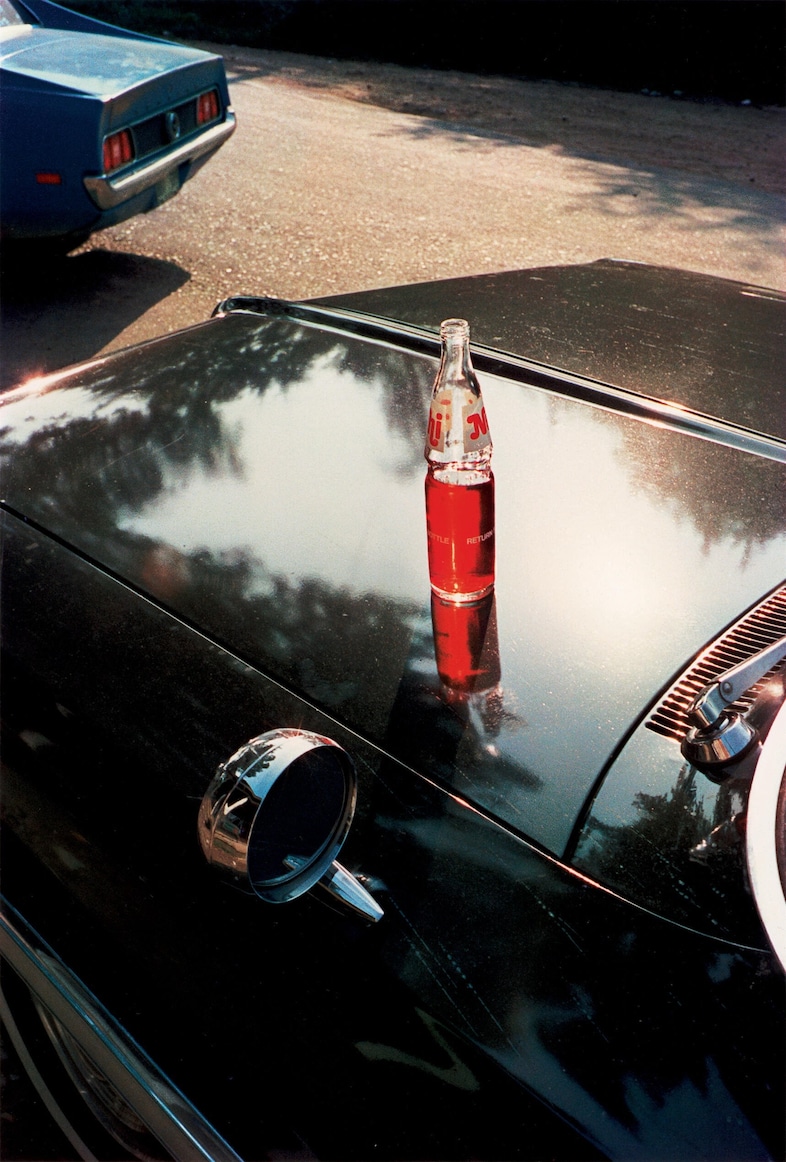 From the Wilson Centre for Photography © Eggleston Artistic Trust, courtesy of the Eggleston Artistic Trust and David Zwirner
A IS FOR AMERICA
Born in Memphis and raised in Sumner, Eggleston always retained his Southern spirit. Despite travelling across America, Europe and Asia – even taking up residence at The Chelsea Hotel with Viva in the 1970s – scenes from his hometown remain indelible in his life and art. Meticulously documenting the waning suburbia of his youth as it collided with the gaudy excesses of post-war America, Eggleston’s photographs often harbour themes of danger, alienation and existential malaise. A troubling warning that, just beneath the veneer of Cokes and convertibles, lurk the fissures of an eroding American Dream.
B IS FOR BOOZE AND WOMEN
Eggleston’s world has never been short on vice. A lifelong drinker and notorious womaniser, he cultivated an air of bohemian mystique that carried him from the dive bars of Memphis to the hard-partying orbit of Andy Warhol’s Factory. Armed with a camera and a glass of bourbon, he populated his photographs with paraphernalia of a life lived to the hilt – loaded pistols, fur coats, lipstick-stained cigarettes and a constantly revolving door of friends, lovers and strangers. As Eggleston pointed out to his friend and collaborator Juergen Teller: “We have a few things in common – smoking, drinking and women. Photography just gets us out of the house.”
C IS FOR COLOUR
At a time when black-and-white reigned supreme, colour was Eggleston’s great coup d’état. In the 1970s, while browsing through a commercial catalogue filled with glossy advertisements, he discovered dye-transfer printing – a process developed by Kodak fifty years prior that could produce uniquely pure prints with an unrivalled range of colour and tone. While the art world shunned colour, Eggleston saw in it a means of elevating the medium beyond mere reproduction and towards something more radical, capable of nuance, ambiguity and genuine expressive power.
D IS FOR DEMOCRATIC
“I had this notion of what I called a democratic way of looking around,” Eggleston once explained, “that nothing was more or less important.” Threading this ethos through his entire practice, every subject – whether his wife Rosa or an unplugged vacuum cleaner – carries the same visual weight and complexity, each equally worthy of the camera’s attention. Rejecting traditional hierarchies of beauty, he captures the world only as it presents itself. This is made manifest in The Democratic Forest, a sprawling survey drawn from a body of over 12,000 photographs and published as a ten-volume set in 2015, following the original 1989 monograph. Here, the epic and the everyday coexist in true Eggleston fashion.

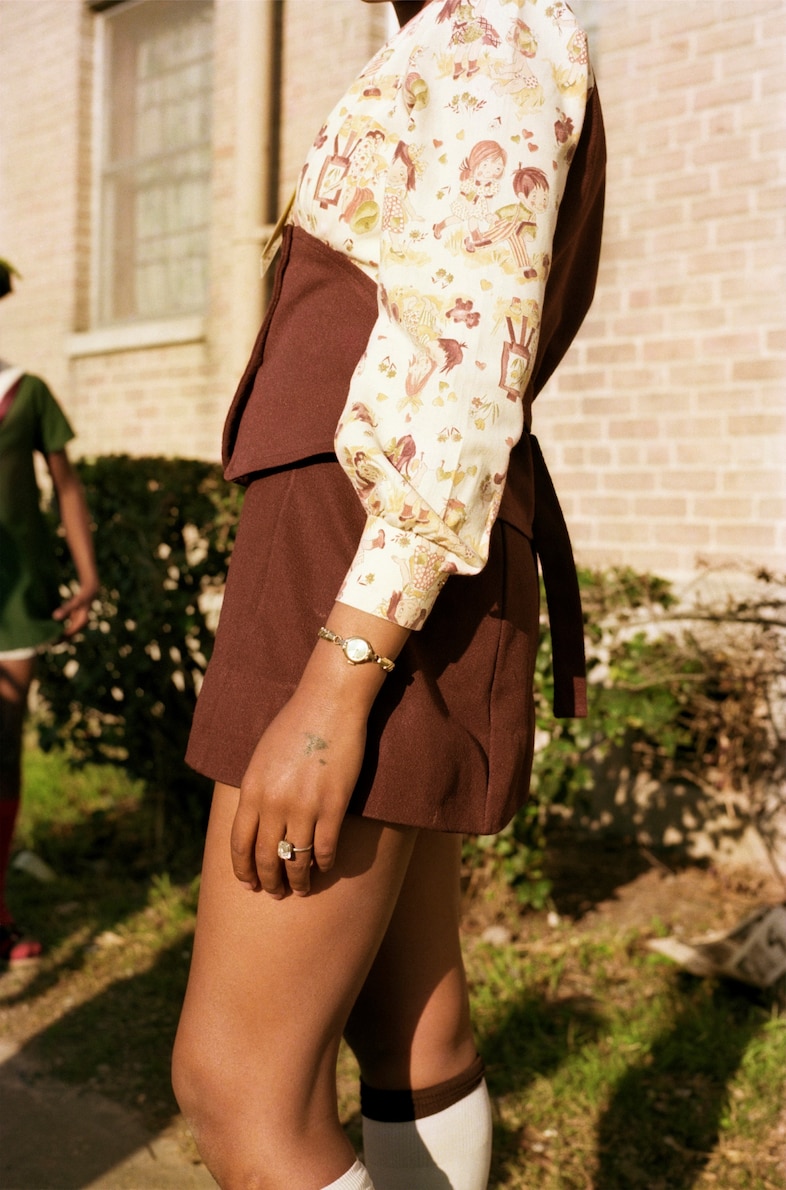 Untitled, Memphis, from the series Los Alamos, c. 1971-74From the Wilson Centre for Photography © Eggleston Artistic Trust, courtesy of the Eggleston Artistic Trust and David Zwirner
E IS FOR ELECTION EVE
Election Eve (1977) chronicles Eggleston’s pilgrimage to Plains, Georgia – the hometown of Jimmy Carter, soon-to-be elected 39th president of the United States. Turning his back on the fanfare of the campaign, he trained his lens on lonesome roads, vacant gas stations and rusted storefronts, revealing a starkly different America from the idealised version broadcast on televisions nationwide. As writer Lloyd Fonvielle reflects in the original introduction, “On the eve of the election, when nothing had yet been decided, when everything – whatever that everything was – hung in the balance, Eggleston made an elegy…a statement of perfect calm.”
F IS FOR 414
What do you get when a Southern dandy, a German fashion photographer and a Californian arthouse provocateur walk into a bar? William Eggleston 414 (2020). Comprising approximately 100 film photographs, the book documents a spontaneous 2010 road trip Juergen Teller and Harmony Korine took with Eggleston across the Mississippi Delta. In the accompanying text, Korine recounts, “We had no real plans. No goals. Just followed the light. We drove like this for a few days. On the last night, Eggleston played us the piano…it was beautiful.” 414 offers up no dates, no locations and no rhyme or reason for how this unlikely trio came to be, but then again, mystery has always been par for the course with Eggleston – who, when Teller asked where he was taking them, simply laughed: “I wanted to show you nothing.”
G IS FOR GRACELAND
Six years after Elvis Presley’s death, Eggleston was invited by the Presley estate to photograph Graceland, rock ‘n’ roll’s most fabled mansion. Working mainly at night after tourists had left, he wandered past gold pianos, cream couches and mirrored walls – all of which appeared suspended in time, like a stage still awaiting its star. Originally commissioned for a 1983 souvenir guidebook, which was withdrawn soon after publication, eleven of the photographs were later reissued as the portfolio William Eggleston’s Graceland (1984).
H IS FOR HASSELBLAD
In 1998, the Hasselblad Foundation awarded Eggleston its prestigious International Award in Photography, previous recipients of which include Robert Frank, Irving Penn and Richard Avedon. The citation named him a “pioneer” who legitimised colour photography as an artistic medium, vindicating the laureate after years of critical scorn.
, from the series William Eggleston’s Graceland, 1983
)
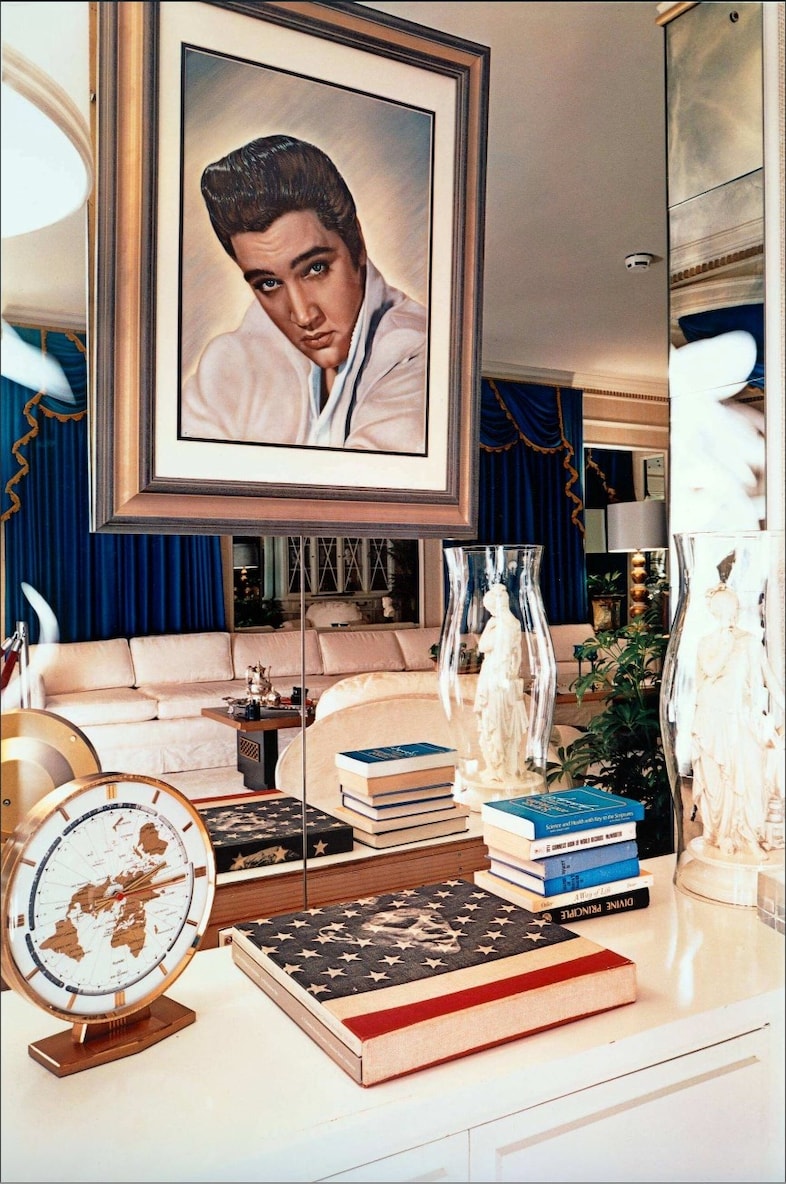 Untitled (Elvis and Kennedy), from the series William Eggleston’s Graceland, 1983From the Wilson Centre for Photography © Eggleston Artistic Trust, courtesy of the Eggleston Artistic Trust and David Zwirner
I IS FOR INTERIORS
“There’s no place like home,” goes the well-worn adage, which for Eggleston rings truer than most. Drawn to scenes of domesticity, his deceptively casual shots of interiors seem to preserve the lives of those who have just stepped out of frame. In Untitled (Freezer) (c. 1972), an almost cartoonish assortment of frozen foods is stacked haphazardly on top of one another, granting us a curious glimpse into the owner’s psyche. Delighting in the absurdity of the lived-in, nothing proves too humble for Eggleston’s gaze; every detail is worth a second look.
J IS FOR JUST LOOKING
There’s a method to Eggleston’s madness, except that it’s not so much a method as a habit of perception. His subjects are steadfastly vernacular, materialising into frame with neither context nor justification. Mining the gaps between neglected spaces and transient moments, his photographs invite us to do as he does: just look. In the 2008 BBC documentary Imagine: The Colourful Mr Eggleston, Eggleston says: “People ask what I’m photographing; it’s a hard question to answer. And the best I’ve come up with is ‘life, today’.”
K IS FOR KANDINSKY
“My favourite painter has always been Kandinsky,” Eggleston told Frieze. Look closely enough at his photographs, and you may just find echoes of that affinity. Their skewed angles and drastic crops work to distort reality into abstraction, so that street corners and household objects transform into rigorous studies of colour and geometry. Eggleston’s 2009 solo exhibition at Fondation Cartier also featured his rarely seen abstract drawings and paintings – exuberant bursts of primary colours speaking to his restless appetite for experimentation.
L IS FOR LYNCH
It’s a perfect, blue-sky day in Lumberton, North Carolina. A man is watering his lawn when he suddenly suffers a violent stroke and collapses to the ground. In the dirt below, a writhing colony of insects swarm, attack and devour one another. Like an Eggleston image come to life (and then some), the photographer’s unnerving eye is most keenly felt in the opening of David Lynch’s seminal 1986 neo-noir Blue Velvet. An avid admirer, Lynch told David Zwirner of still photography: “It’s an amazing art form. I especially love William Eggleston.” From the desolate roads of Lost Highway (1997) to the darkened woods of Twin Peaks, his oeuvre shares with Eggleston not only aesthetic parallels but also a penchant for exposing the uncanny in the everyday.

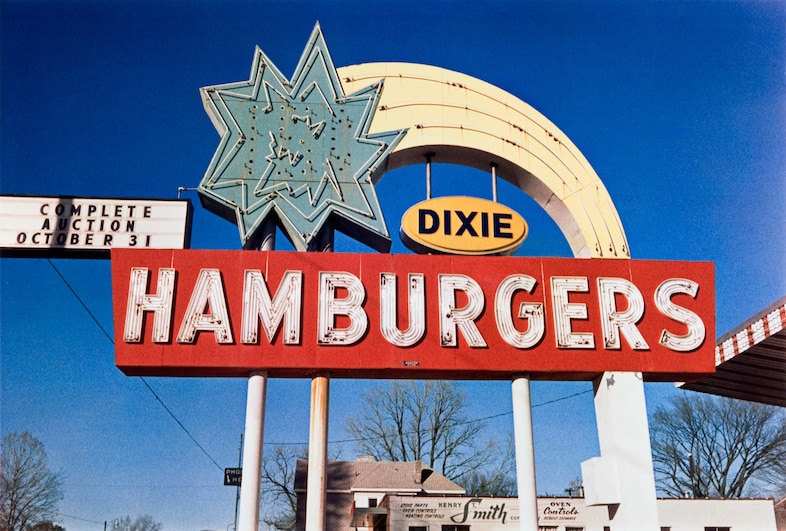 Untitled, Memphis, from the series Los Alamos, c. 1965-68From the Wilson Centre for Photography © Eggleston Artistic Trust, courtesy of the Eggleston Artistic Trust and David Zwirner
M IS FOR MUSIC
Long before photography, there was music. Teaching himself to play the piano by ear at age four, Eggleston considers music his “first calling” and continues to practise daily on his Bösendorfer, treating it as a form of meditation. In 2017, he released his debut album Musik, assembled from some 60 hours of recordings made on a Korg synthesiser – moving between improvisations on his musical hero Johann Sebastian Bach, Gilbert & Sullivan and selections from The Great American Songbook. At once playful and dissonant, Lynch described it as “music of wild joy with freedom and bright, vivid colours.”
N IS FOR NO COMMENT
A man of few words, peers and critics alike have labelled Eggleston as “quiet”, “guarded” and “laconic”. When writer Jim Lewis interviewed him for Frieze in 2000, he recalled Eggleston’s first answer to nearly every question being “I don’t know” or “I don’t care about that”. Less apathy than studied economy, Lewis soon realised that when “left in silence”, he always eventually responded – in his own time and on his own terms. His photographs operate in much the same way, providing no argument or motive, simply leaving the viewer to make of them what they will. As Eggleston told The New York Times, “Words and pictures don’t – they’re like two different animals. They don’t particularly like each other.”
O IS FOR ONE PICTURE OF ONE THING
For Eggleston, photography is a matter of sheer instinct. In an interview with The Guardian, he famously declared: “I only ever take one picture of one thing. Literally. Never two. So then that picture is taken, and then the next one is waiting somewhere else.” Often dispensing with the viewfinder, he likened his approach to firing a shotgun, relishing the opportunity to catch his subjects unaware. Guided by feel rather than precision, the results may seem clumsy at first glance, but there is in fact something wilful, even magical, about them – an over-the-shoulder glance here, a half-finished cup of coffee there.
P IS FOR PARIS
At the invitation of Fondation Cartier, Eggleston spent three years in the late 2000s photographing Paris, retracing and reimagining the ground once trodden by his longtime idol Henri Cartier-Bresson. Shot prolifically across seasons, what emerged was anything but a postcard. In lieu of Eiffel Tower panoramas, the French capital comes alive in all its contradictions – from graffitied walls to neon-lit puddles and unsuspecting passers-by.

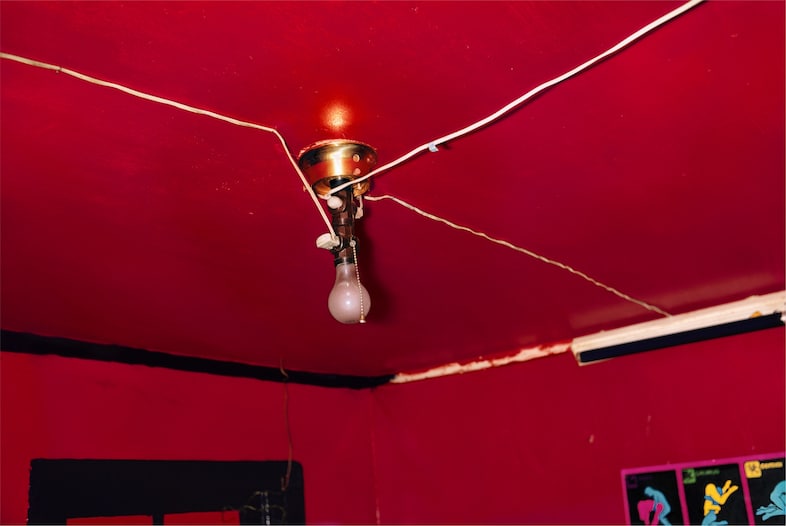 Untitled, Greenwood, Mississippi, 1973,From the Wilson Centre for Photography © Eggleston Artistic Trust, courtesy of the Eggleston Artistic Trust and David Zwirner
Q IS FOR QUIRK
Eggleston has always had a knack for quirk. Abandoned shopping carts and sun-faded billboards crop up throughout his photographs, treated with the same easy regard as anything else in frame. As for the man himself, his Savile Row suits, loosened bow ties and devil-may-care attitude have long earned him a reputation as an eccentric.
R IS FOR RED CEILING
Arguably one of Eggleston’s most iconic works, few images embody his mastery of colour quite like Greenwood, Mississippi (1973). Taken in the guest room of his friend TC Boring’s house, a bare light bulb dangles from a lacquer-red ceiling as three white cables sprawl tendril-like across the surface. Possessing a lurid, almost pornographic intensity, it appears both visually striking and vaguely menacing. Immortalised as the cover art for Big Star’s 1974 album Radio City and credited as inspiration for Stanley Kubrick’s films, the image has since taken on a life and meaning of its own. As Eggleston observes in his monograph Ancient and Modern (1992), “[The Red Ceiling] is so powerful that I’ve never seen it reproduced on the page to my satisfaction…like red blood that’s wet on the wall…it shocks you every time.”
S IS FOR STRANDED IN CANTON
Shot in 1973–74 but released only decades later, Stranded in Canton marks Eggleston’s sole foray into film. Amassing thirty hours of black-and-white footage on his Sony Portapak, he followed a motley crew of artists, drunks and misfits through the nocturnal underbelly of the South. A heady concoction of debauchery and tenderness, the loose, close-up camerawork places Eggleston right in the fray – more willing accomplice than innocent bystander. Part record of an era, part fever dream, the film remains an ode to the glorious folly of human existence.
T IS FOR THE LAST DYES
In the early 1990s, Kodak discontinued the materials needed for the dye-transfer printing process that gave Eggleston’s photographs their extraordinary chromatic depth. He stockpiled what remained, while his printers Guy Stricherz and Irene Malli agreed to work exclusively for him. David Zwirner’s exhibition The Last Dyes, which travelled from Los Angeles in 2024 to New York in 2026, presents the final major batch of photographs produced using this process. Sombre yet triumphant, each print serves as a vestige of a bygone era.

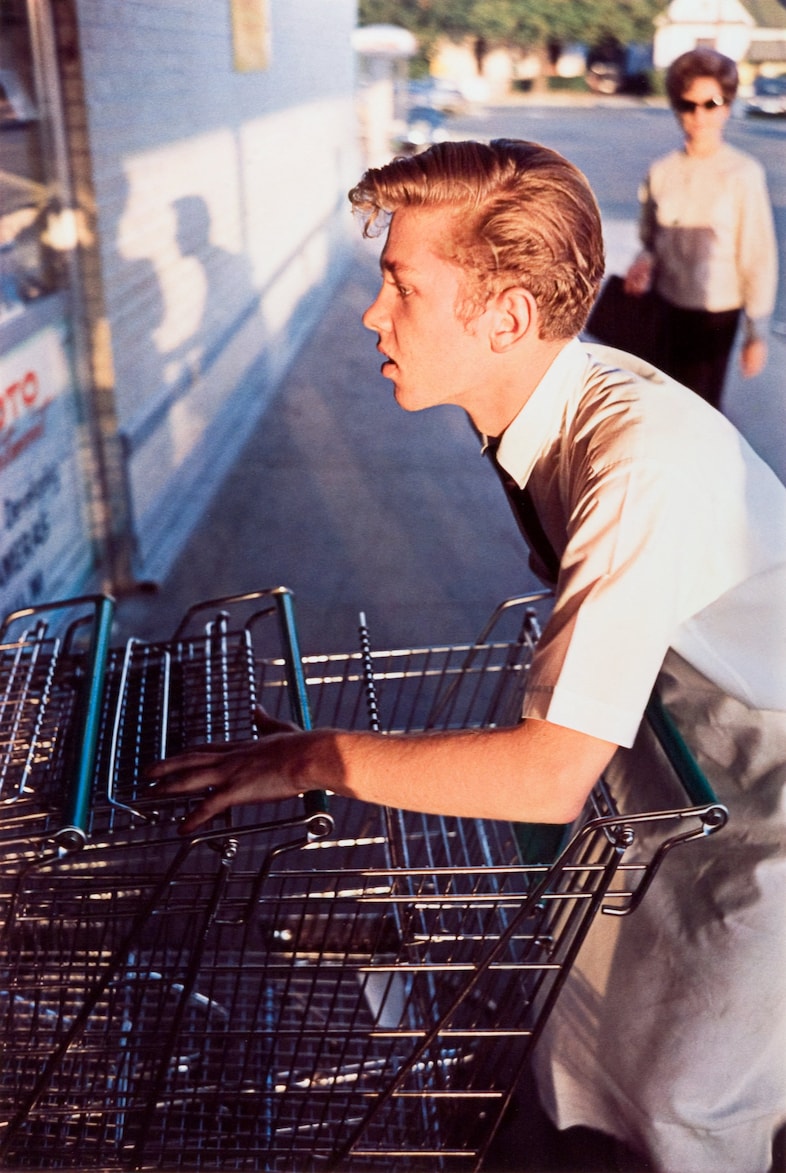 Untitled, Memphis, from the series Los Alamos, 1965From the Wilson Centre for Photography © Eggleston Artistic Trust, courtesy of the Eggleston Artistic Trust and David Zwirner
U IS FOR UGLY
New York may be the mecca of street photography, but Eggleston’s South gives it a run for its money. Frustrated early on by the lack of inspiration in Memphis, he was encouraged by a friend to photograph the “ugly stuff” – a nugget of advice that would shape his artistic outlook for decades to come.
V IS FOR VILIFIED
No stranger to controversy, Eggleston’s 1976 MoMA exhibition was met with almost universally hostile reactions. New York Times art critic Hilton Kramer dismissed it as “perfectly banal”. Yet, as Eggleston later told The Guardian, all the uproar “did not bother [me] one bit”, staying true to his sensibilities and paying little attention to the opinions of others. Indeed, few artists have travelled such a distance from establishment pariah to canonical figure.
W IS FOR WAR WITH THE OBVIOUS
In conversation with editor Mark Holborn for the afterword to The Democratic Forest, Eggleston declared: “I am at war with the obvious.” A concise artist’s manifesto, it encapsulates his ongoing curiosity for the minutiae of day-to-day life.
X IS FOR (E)XISTENTIAL
Eggleston’s photographs never explain themselves or ask for anything in return. Without hero or moral, they provide only the plain fact of being somewhere, somehow: a bedroom, a diner, a grocery store. In curator John Szarkowski’s 1976 press release, he remarked that colour is “existential and descriptive” for an incoming generation of image-makers, prized for its ability to create “photographs of experience”.
Y IS FOR YOUTH
Eggleston’s childhood was, by his own account, idyllic. Born into a cotton-growing dynasty, he spent hours sketching and clipping pages from magazines – pursuits far removed from the typical hunting and sporting rites of Southern boyhood. Six years at a military academy, Vanderbilt University and the University of Mississippi yielded no degree, but something of these early periods seems to linger, his portraits so vividly evoking youth in all its awkwardness, fragility and innocence.
Z IS FOR ZENITH
During a 1978 road trip from Georgia to Tennessee, Eggleston glanced out of his car window, saw the rolling clouds and pointed his Polaroid towards the heavens. The next day, he lay flat on his back and continued to shoot straight up. The resulting Wedgwood Blue series made quiet, ethereal studies of the sky, like panels from a Renaissance ceiling. Gagosian’s 2013 exhibition At Zenith brought together a selection of these prints, offering a contemplative departure from Eggleston’s usual haunts.
William Eggleston: All that goes unnoticed is running at The Photographers’ Gallery from 14 October 2026 to 21 February 2027.