
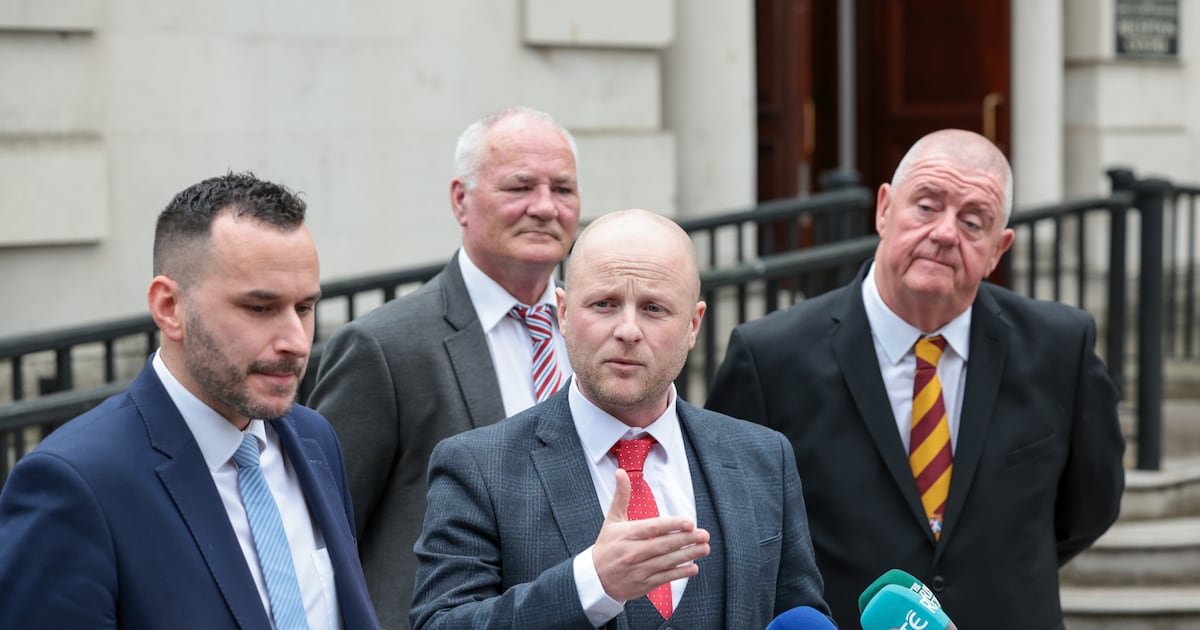
A solicitor for Garvaghy Road residents has rejected claims by loyalist Jamie Bryson that an appeal court ruling linked to the Drumcree dispute clears the way for Orangemen to march other contentious “traditional routes”.
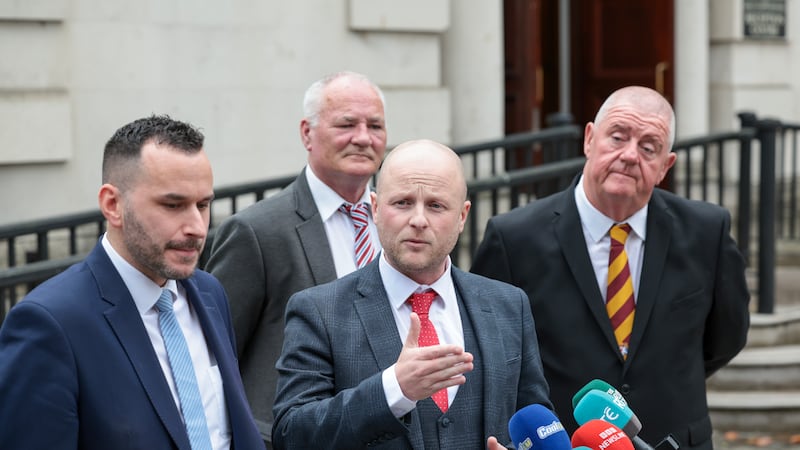
Mr Bryson, who is described as a legal advisor to Portadown Orangemen, was speaking after the Appeal Court said the Parades Commission properly dealt with a police assessment on the potential risk of disorder in its controversial determination last month.
The parade, which was to involve 35 Orange Order members walking along the route, was banned by Secretary of State Chris Bryant after PSNI Chief Constable Jon Boutcher requested a review of the commission’s decision.
Last week representatives from nationalist residents’ groups linked to parading flashpoints across the north, met on the Garvaghy Road.
They included Springfield Road Residents Action Group, Bogside Residents Association, Lower Ormeau Concerned Community and Short Strand Residents Association.
The groups had previously issued a joint statement expressing concern at the impact of the recent Drumcree stand-off on agreements in other areas, saying accommodation “could unravel if the Orange Order continues to insist on parading down the Garvaghy Road”.
Speaking outside court on Monday, Mr Bryson claimed the Court of Appeal ruling “groundbreaking”.
“The Court of Appeal has now embedded under Article 11, the starting point and the presumption that traditional parades, if it’s crucial to the individual applying, start from the point that they should go ahead and it’s up for those opposed to them to reach the very high threshold of interference,” he said.
“That is a fundamental departure of the last 28 years, where both sides started at an equal position, and the commission weighed it up.
“Now, those organising traditional parades start from the presumption that they go ahead, and that is seismic, as one senior counsel described to me on the way out.
“It is groundbreaking in Article 11 terms and for parading in Northern Ireland.”
He also referenced other contentious areas and insisted the Orange Order will now march through these districts.
“So, for all the people who were issuing threats,” he said.
“For those 11 residents groups dug up from the 1990s to threaten parades, go ahead, open them all up.
“But you see after the Court of Appeal decision today, we are going to be walking all of those traditional routes again.
“So, everything you thought you had gained over the last 28 years, everything you thought you had achieved in doing away with these traditional parades, go and read the Court of Appeal judgment today, everything has changed.”
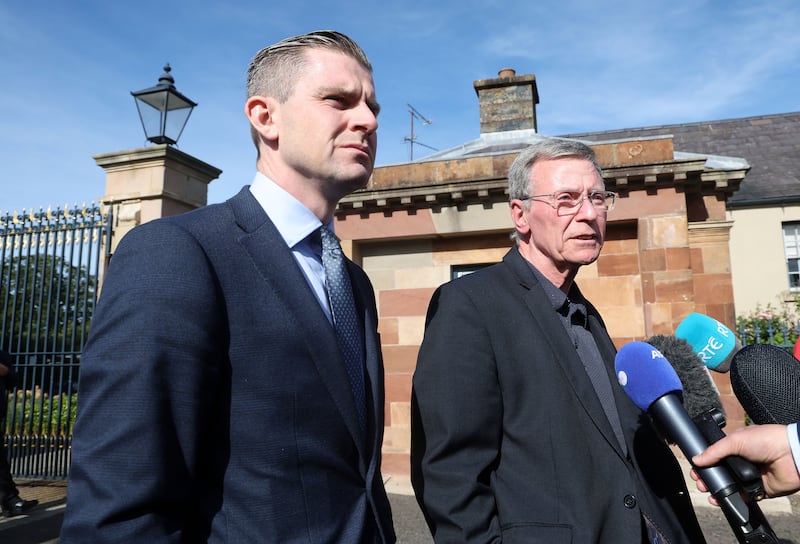 Solicitor Darragh Mackin and Breandán Mac Cionnaith. PICTURE: MAL MCCANN
Garvaghy Road residents’ solicitor Darragh Mackin, of Phoenix Law, argued the legal ruling did not set a precedent.
“It is important to note what this decision is, and what it is not,” he said.
“It is not an invitation or precedent on how parades should now be approached.
“It is simply a review of the parades commission decision in this case.”
Mr Mackin said the court, “having looked at all of the factors, determined that the parades commission acted within its margin of appreciation.
“To translate such a judicial review decision into anything more is, would be to misunderstand the judicial review process,” he added.
Garvaghy Road residents spokesman Breandán Mac Cionnaith said the judgment was “academic” given that the Secretary of State had already banned the march.
“The ban is in place, that’s what we sought,” he said.