
“Vibe Coding” plugins have both good and bad sides; they’re changing the market and significantly impacting my daily news coverage.
2026 isn’t over yet—there are still a little over three months left—but it’s already among the years with the most plugin and app releases. Plugin numbers are skyrocketing this year, with no end in sight.
The global audio plugin market size was recorded at $1.26 billion in 2025. According to an audio plugins market research report, the sector growth is projected to reach $2.51bn by 2033. It’s not because everyone suddenly took a crash course in coding.
This plugin and app flood is down to two letters that form a world-changing word: AI, short for artificial intelligence. It has taken the world by storm, and the music tech software world hasn’t been spared.
Index
The old plugin way
Waves released the first-ever audio plugin in 1992 for Digidesign’s Sound Tools/Pro Tools platform. In 1996, Hamburg-based company Steinberg, now owned by Yamaha, followed with Virtual Studio Technology (VST), which became the standard for plugins.
Other formats such as AU, AAX, CLAP, LV2, and AUv3 followed later. To turn an idea into a reality (plugin/app), you need solid expertise in several areas: audio, programming (C++, etc.), digital signal processing, mathematics, audio frameworks, and more.
The internal workings are one aspect. The second is the user experience—how your plugin/app is operated. This involves the design of the user interface: the layout, controls like knobs and/or faders, menus, and more. Created either in-house or by a third party.
Turning a plugin concept—starting from a sketch—into reality takes a lot of know-how, time, and money. It’s a craft like any other. A carpenter or ironworker knows how to work with hardware; a coder knows how to build software from many lines of code.
First Non-Coder Tools & World-Changing Turn Of Events
These barriers to entry have steadily lowered over time. SynthEdit and FlowStone pioneered in the 2000s what is possible today, letting non-coders build plugins by drag-and-drop audio and synthesis modules together.
This new capability led to a flood of plugins that brought us some gems but also many buggy, amateurish tools. It was hot stuff at first, but interest in one’s own plugins quickly fizzled out.
That was likely because the tools hit their limits and weren’t maintained enough to keep pace with technological evolution (Synthedit didn’t get full macOS support until 2026).
Alongside Synthedit and similar programs, visual programming languages/environments like Reaktor, Pure Data, and SuperCollider have contributed to this development.
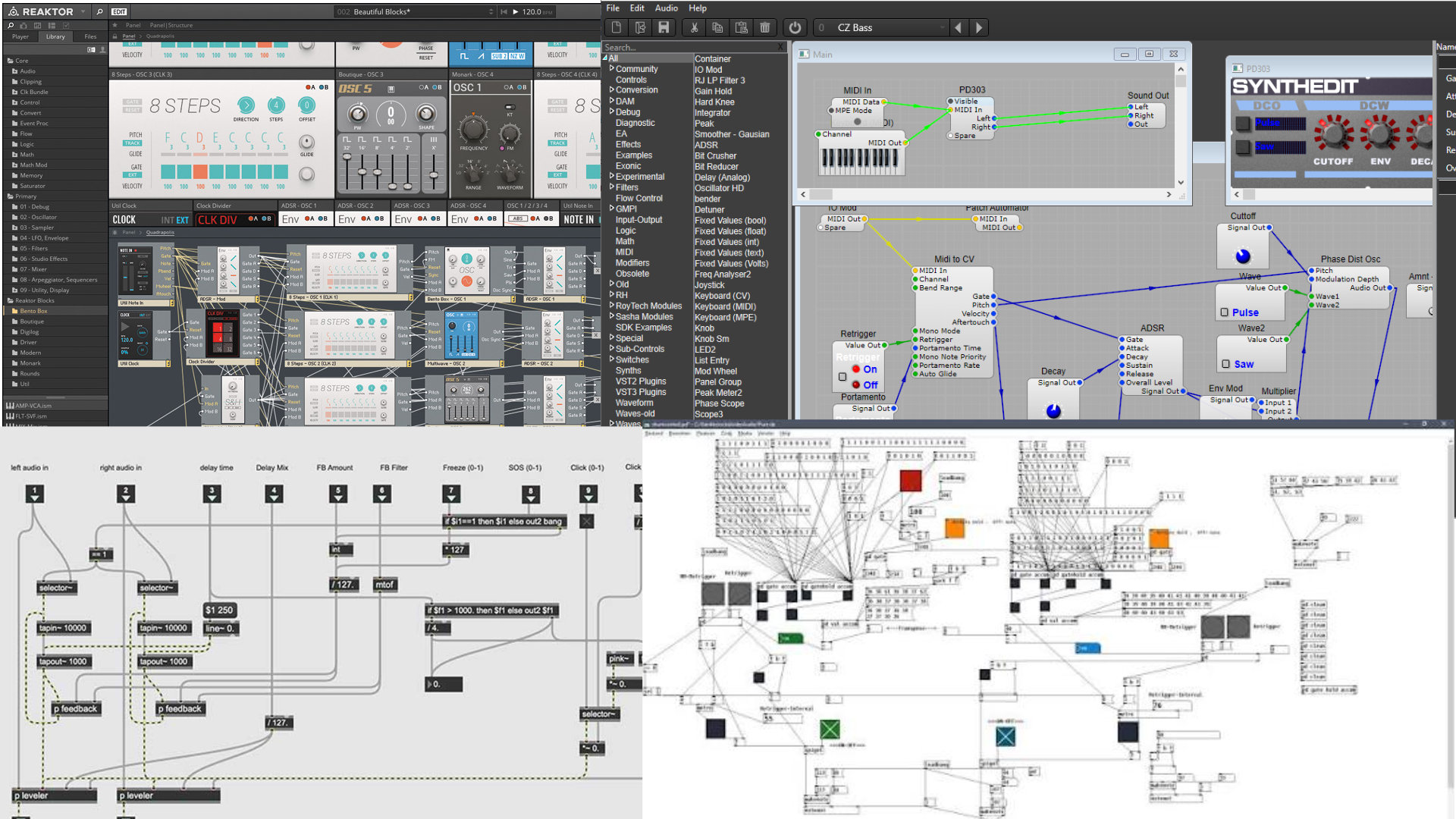
While not VSTs, they let musicians build their own software tools without coding and share them with others. Today, add-ons like RNBO let you turn Max patches into plugins. Many traditional developers also used existing libraries.
And now, we have AI across all sectors since around 2025. Also in music production and plugin/app development. The barriers to entry for developing plugins have dropped to an unprecedented low. Some might call it the democratization of plugin development.
With AI and agents like ChatGPT or Claude, you can develop software applications like music apps or audio plugins through prompts. The term “vibe coding” was coined and has since circulated on forums and websites.
Difference Between Vibe Coding and AI-Assisted Plugins?
AI is a powerful, revolutionary tool with almost unlimited capabilities. That means many possibilities. In plugin development, you can use it in diverse ways. From optimizing workflow, research, and documentation to developing your entire modular synth plugin.
People often talk about two concepts: AI-assisted development and vibe coding. IBM describes the latter this way: “It’s a fresh take on coding where users express their intention using plain speech and the AI transforms the thinking into executable code.”
AI-assisted development refers to using available AI tools to optimize and speed up tasks. From personal conversations, forums, and interviews, you can hear that AI has arrived in the realm of human-developed audio plugins, too
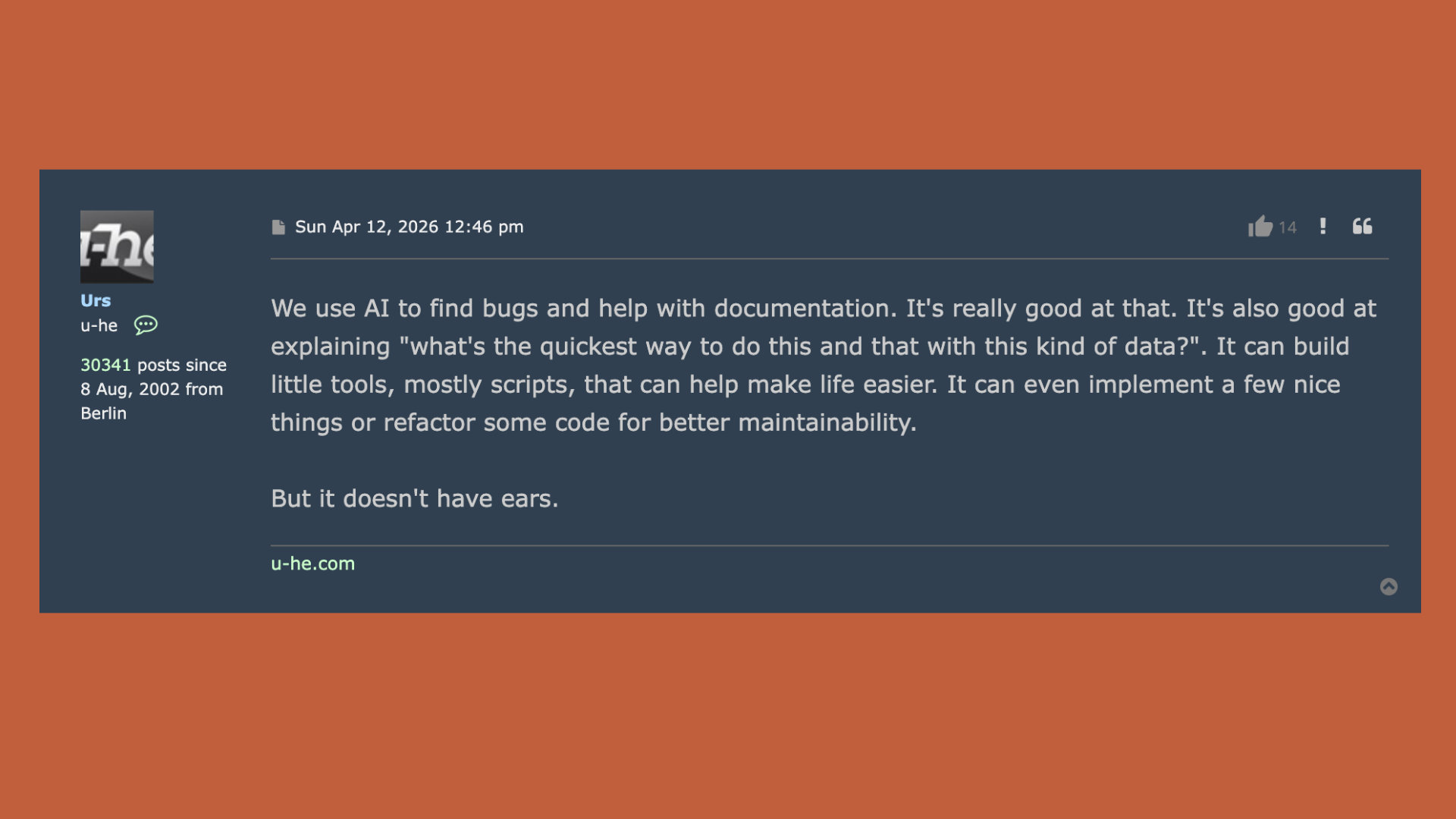
Urs Heckmann from u-he, for example, wrote on the KVR forum that AI is used to identify bugs in plugins because it works really well.
Brad Holland, the man behind Isla Electronics, revealed in an interview on the Pro Synth Network podcast that he also uses AI tools to speed up development of his new Andromeda emulation, ASYX.
However, AI-assisted development and “vibe coding” are not the same thing. Vibe coding is an approach where you use natural-language prompts to tell an AI what you want to build, letting it write, modify, and debug the code for you. Sounds like the same?
The core difference is whether an experienced human developer maintains control, reviews the code, and follows a structured process. If someone who used to be a gardener, a waiter, or a music producer—without any knowledge of code, DSP, etc.— does this, then we’re often talking about vibe coders.
Pushing plugins to market without coding expertise is a gift for many who have always wanted to do so. However, it also entails many risks and problems.
Vibe Coding All Day Long
You, me, your neighbor—anyone can now build plugins. No audio background is required. AI does the heavy lifting, and you can find instructions online for the rest. It’s never been easier to bring an idea for an instrument, effect, or other tool to life.
This unprecedented freedom is clear in today’s music tech software landscape; new companies are springing up like mushrooms after rain. Everyone wants to get in on the action, experimenting with AI and launching tools.
Many YouTubers love using it. Chris Bryant, better known as S1gns Of L1fe, is a YouTuber and ambient musician who has disclosed on the KVR Audio forum using AI without coding experience. He has released eight plugins and apps in just a few months, something that would be impossible to do by hand.
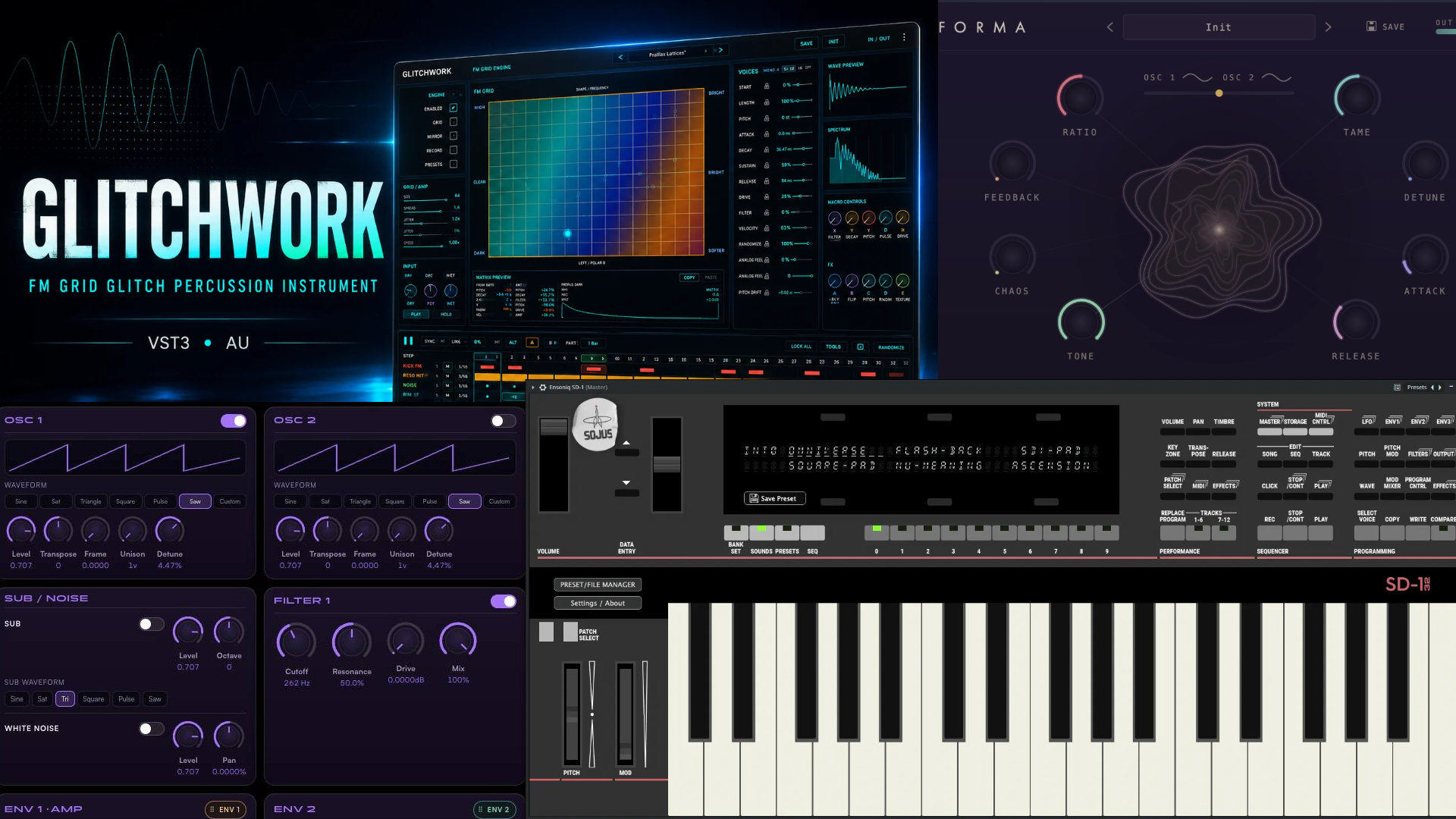
Where courses or patch libraries used to be the norm, creators now offer their own plugins, boasting features never seen before (if you hide all the other plugins you already have).
“Vibe coding” can also play a role when you want to prototype something quickly. Now, someone with an innovative idea can put together a pitch prototype, or even build out the whole thing. Tasks that used to take weeks/months can now take a few hours, or a few days if it’s more complex.
AI-assisted coding—or “vibe coding”—can also offer long-term advantages, particularly regarding the plugins currently being released. They should benefit from long-term support, more frequent updates, and easier integration of new features, since maintenance has become easier and more efficient.
Talking of maintenance. Vibe-Coding can also breathe new life into legacy software from companies that no longer exist or no longer provide maintenance. This raises legal concerns about whether it is lawful or falls into a gray area. Look at the current wave of emulation and custom hardware firmware. Olé vibe coding plugins and software.
The Open-Source Problem
Yes, Pandora’s box of plugins and apps has been opened, and, as Greek mythology tells us, this unleashes great calamity, problems, or chaos. The world won’t end because of this, and nobody will die—well, maybe a computer or iPad might crash from too many plugins.
However, some aspects do fit the “vibe coding” era. Let’s start right at the beginning: the self-generating birth of a plugin.
Unlike a traditional developer who writes original code, AI agents draw on code they have learned beforehand. These agents were trained on massive amounts of open-source code—without the companies behind it seeking permission. It’s code theft!
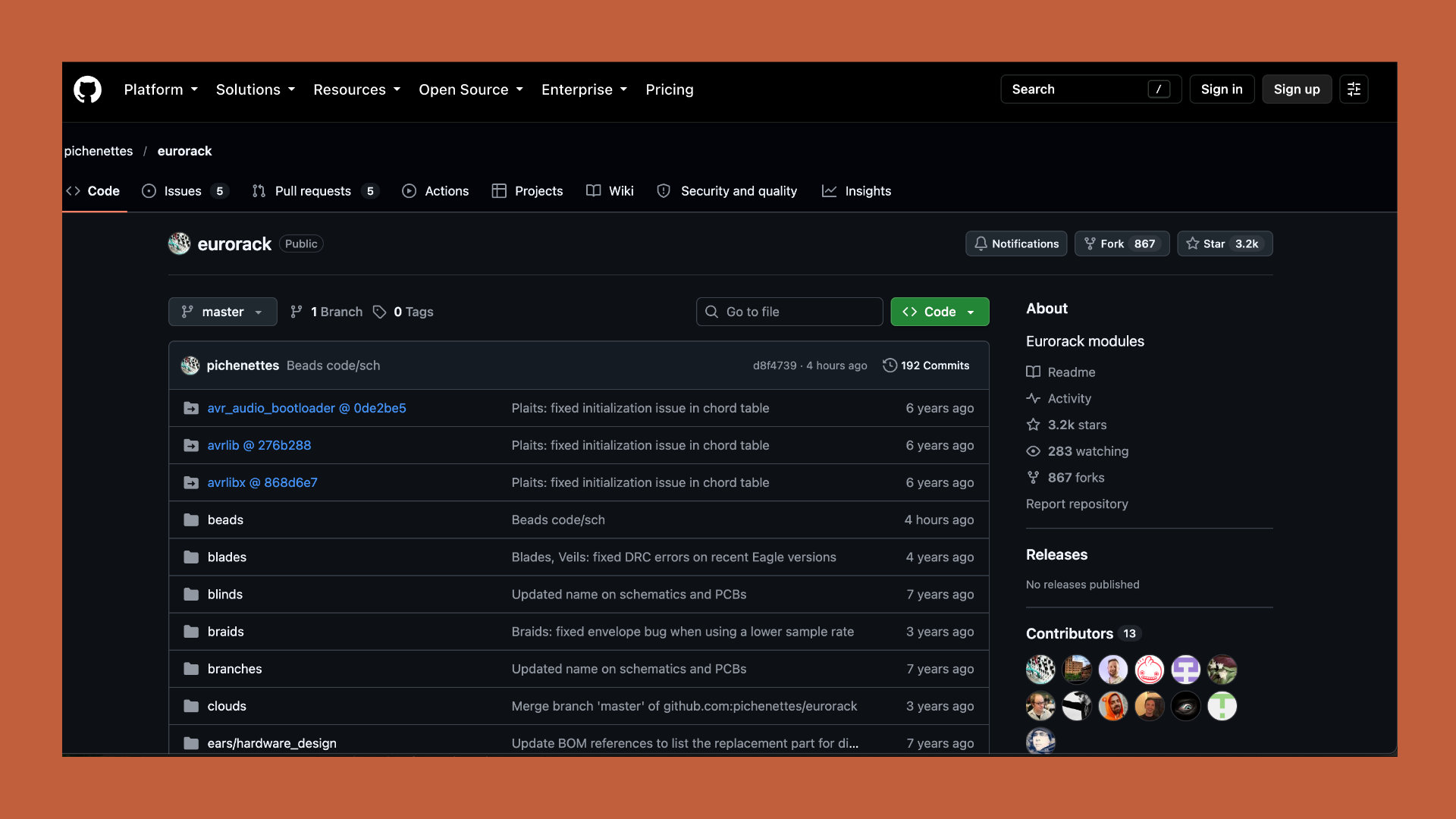 Mutable Instruments Code: open-sourced once and reused thousands of times – both legally and illegally
They then apply this trained code in different forms across the myriad new plugins. They might look different in the interface and do different things, but deep down, all these plugins are somehow related. Code recycling “par excellence”.
We demonize platforms like SUNO that steal our music to train their AI. Yet when it comes to new AI-generated plugins, many see code theft as perfectly fine. In this case, curiosity and the urge to hoard plugins likely outweigh any moral consideration.
For this reason, I strongly advocate for a mandatory disclosure requirement. Otherwise, you end up buying the same over and over again—just in a different guise—even though it should be open-source and free to stay true to its origins.
The Dark Side Of Vibe-Coding Plugins
Not all code is the same. A classic developer team is a team of digital architects. They maintain a complete overview and know exactly what they wrote, from the first line of code to the last. They know what is inside their Synthesizer, effect, or mastering utility.
With companies vibe-coding their plugins, that is not the case; they rely entirely on output generated by Claude, ChatGPT, or other agents. If your digital friends do something questionable, and it isn’t immediately visible or even audible, it goes unnoticed and can cause problems later.
All these surprises entail risks for which the “vibe coder” is unprepared. This can be plugin issues like performance spikes or security risks like communication outside your system, malware, etc.
The AI agent, in turn, has to fix it – but who’s to say it won’t happen again, even in the same update? If it isn’t open-source, that remains a mystery.
Security & Future-Proof?
One, two, three, four… plugins are often used in large sessions. To ensure a single plugin doesn’t negatively impact the entire system, developers prioritize efficiency and stability and ensure tools also perform well under high load
Here, a developer can apply years of accumulated knowledge, tuning the right parameters to keep the framework running stably. AI does what you prompt it to do. The question is whether the plugin actually improves as a result. I downloaded a few AI plugins out of curiosity; some were fine, others struggled.
When you buy a plugin, you expect updates. A human developer can always provide them—unless he or the company abandons the project, as we’ve seen with LinPlug, Camel Audio, and others. That happens rather rarely, though.
But what happens if AI costs skyrocket and companies like Anthropic start charging the actual market rates for their services to finally make money? Will that trigger a massive collapse, leaving us looking at a graveyard of defunct plugins and apps?
The risk is high because, in this scenario, they have to recoup update costs through new sales. And today, it’s hard to regenerate the level of interest that existed at launch. It is usually a one-off event—unless you are a plugin like Pigments or Valhalla DSP, which manage to reignite that excitement every time.
“Vibe-Coding” Plugins Are Taking Over
2026 has been anything but a normal year for the plugin and app world so far. In more than ten years of doing this, I have never seen this many new releases in one year. A veritable plugin and app flood.
The majority come from new developers who appeared out of nowhere. You can tell quickly that they went the cheaper, quicker generative route. The first thing I always do is visit the companies’ websites – the calling card of every company.
Where companies once put great effort into being unique and standing out, today one sees a lot of cookie-cutter uniformity. You often see the recurring design elements familiar from the Claude repertoire. I don’t want to list how many times I’ve seen the same tile design and layout. Just thinking about them gives me a headache.
AI can write code, but it still can’t create an outstanding user interface. A look at plugin/app releases from the last six months makes that clear. Many share the same patterns or even look lifeless to me, reminiscent of early SynthEdit.
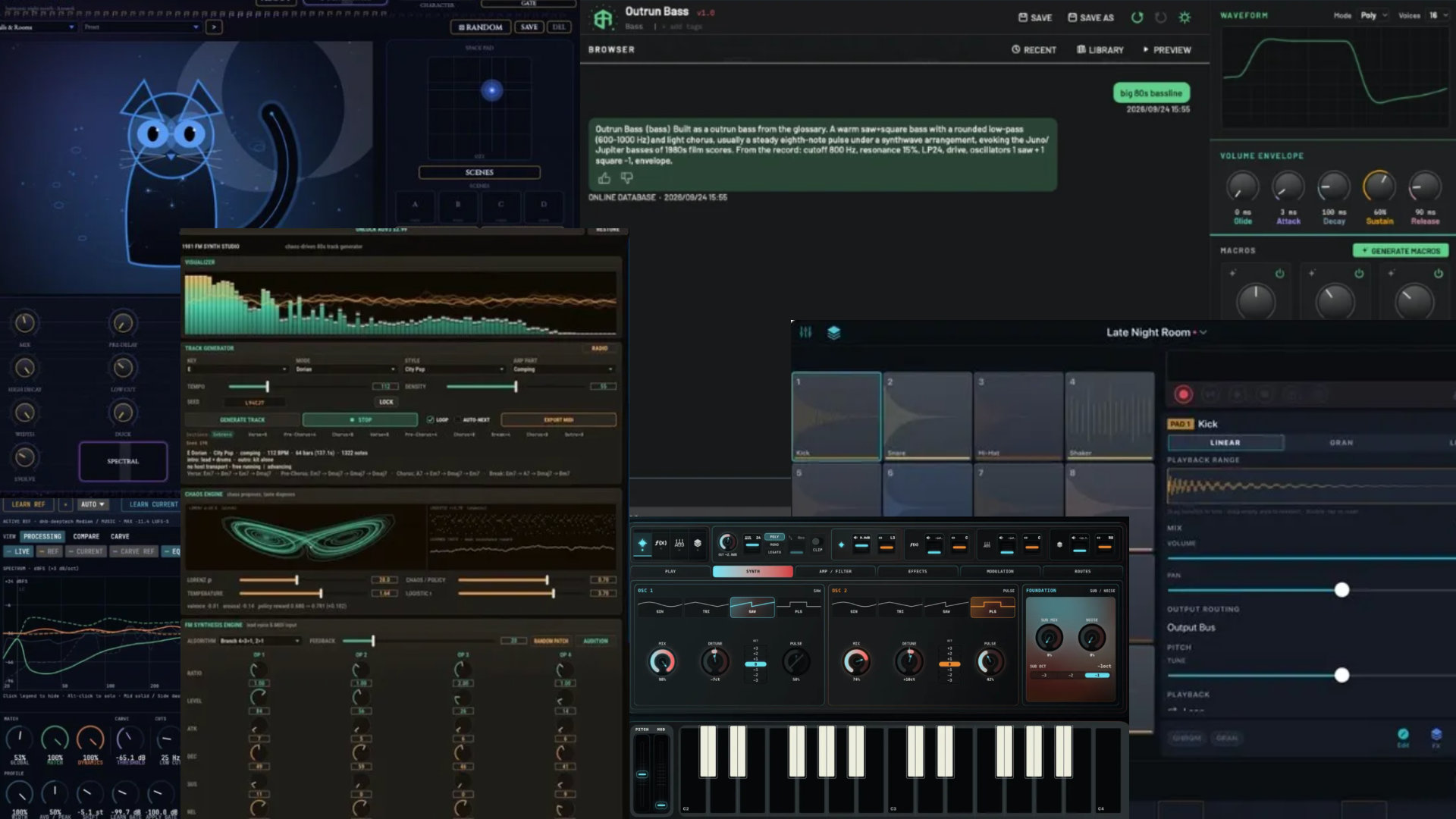
Where companies used to commission graphic designers like Papernoise Design (Patterning 3, Mutable Instruments…), now newcomers often slap a few UI elements together in JUICE and call it a user interface. This, combined with Claude Opus’s bluish-purple color palette and the vibe-coded plugin, is ready.
There are a few exceptions where you learn—through conversation—that the creators are graphic designers themselves or have commissioned the work. Take Hügelton Instruments, for example: he openly says he uses AI, yet humans design his UIs. You can really tell the difference.
When apps or plugins have been out for a while, you can tell AI is involved if major updates drop within a few days; the traditional approach would take weeks.
The Consequences For The Others: Visibility
On average, I estimate 20–30 new plugins or apps enter the music tech market from newcomers every day—whether open-source and free or commercial.
On top of that, established developers also release plugins and apps they planned well in advance. This sheer volume of new releases brings many problems. Firstly, it has become very crowded and overwhelming.
Where previously only one or five developers released something at a time, today nine others have the same idea. The sheer volume collides with our fast-paced times and insatiable curiosity.
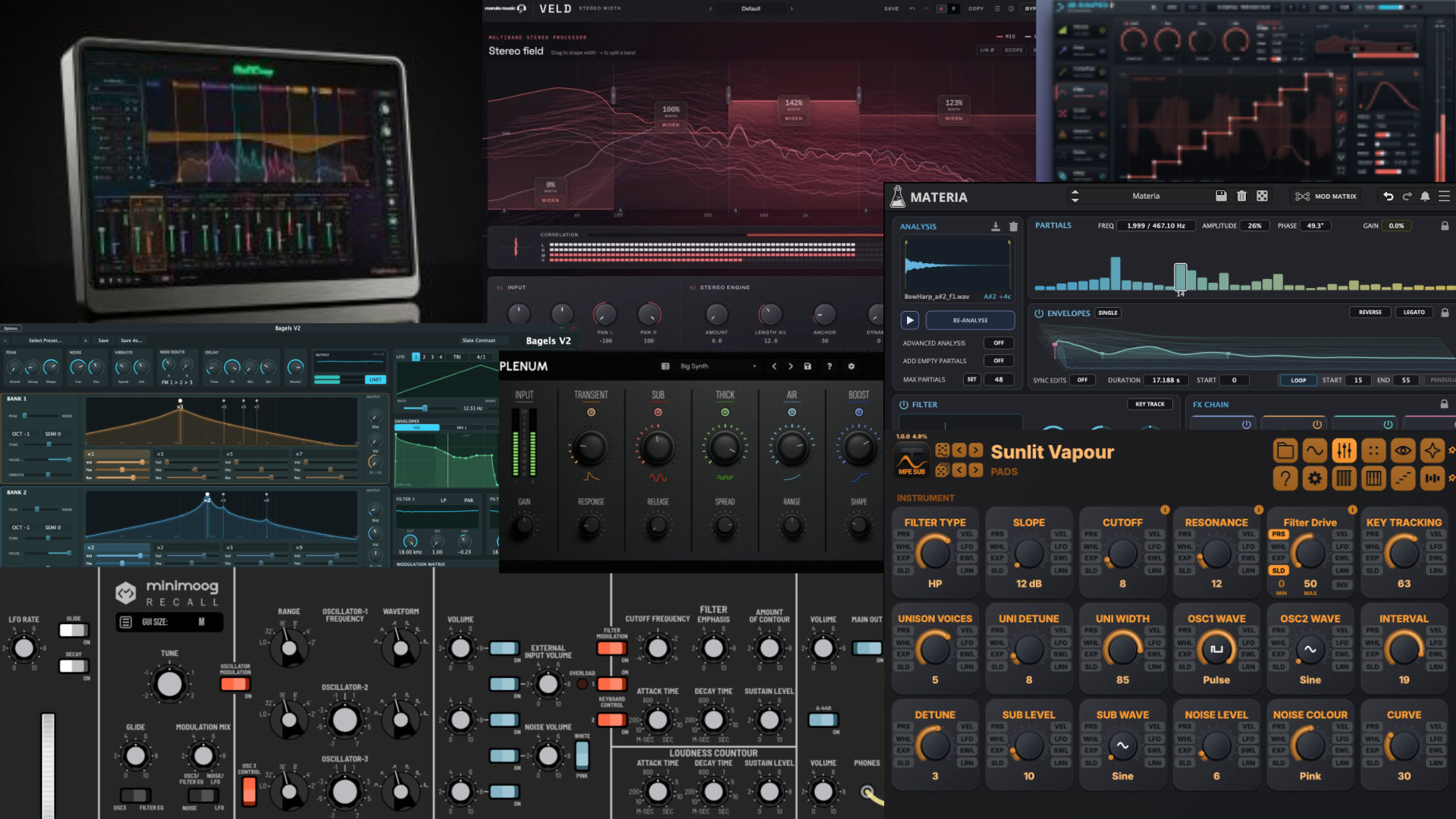 One part of the releases on Monday, October 12, 2026
People rarely engage with a single release, especially bloggers like me; instead, they want to know what the other nine have to offer. As a result, people often forget the first ones almost as soon as they see them.
Fortunately, information remains available online, but who is actively looking for what happened in the last two weeks? To stay in the public eye today, developers have to invest far more in attention and advertising—something not everyone can afford, mainly small indie brands or app developers.
This situation has existed for a long time, but it has worsened drastically with the advent of AI. And I haven’t even touched on the fact that everyone currently has less disposable income to buy new tools. That’s on top of everything else. Who is supposed to buy all this?
More of the same
New plugins and apps everywhere you look. We are currently being absolutely buried in them—literally shat upon, even though our plugin arsenals/app folders have been overflowing for years.
Only a fraction of these newcomer products are innovative, or at least offer new capabilities. Many of these tools are built not only on recycled, stolen open-source code but also on recycled ideas countless other companies already offer.
How many new virtual analog, FM, or modular synths with similar feature sets do we need? How many more reverbs, delays, and so on? Where do we draw the line? Check your plugin folder; you have wonderful tools. And don’t forget: AI can code, but it can’t hear. That talent belongs only to humans, for now.
Well, these releases are new and trigger GAS, something older software no longer does. What I find more problematic are the prices charged for what are often “Frankenstein” plugins or apps.
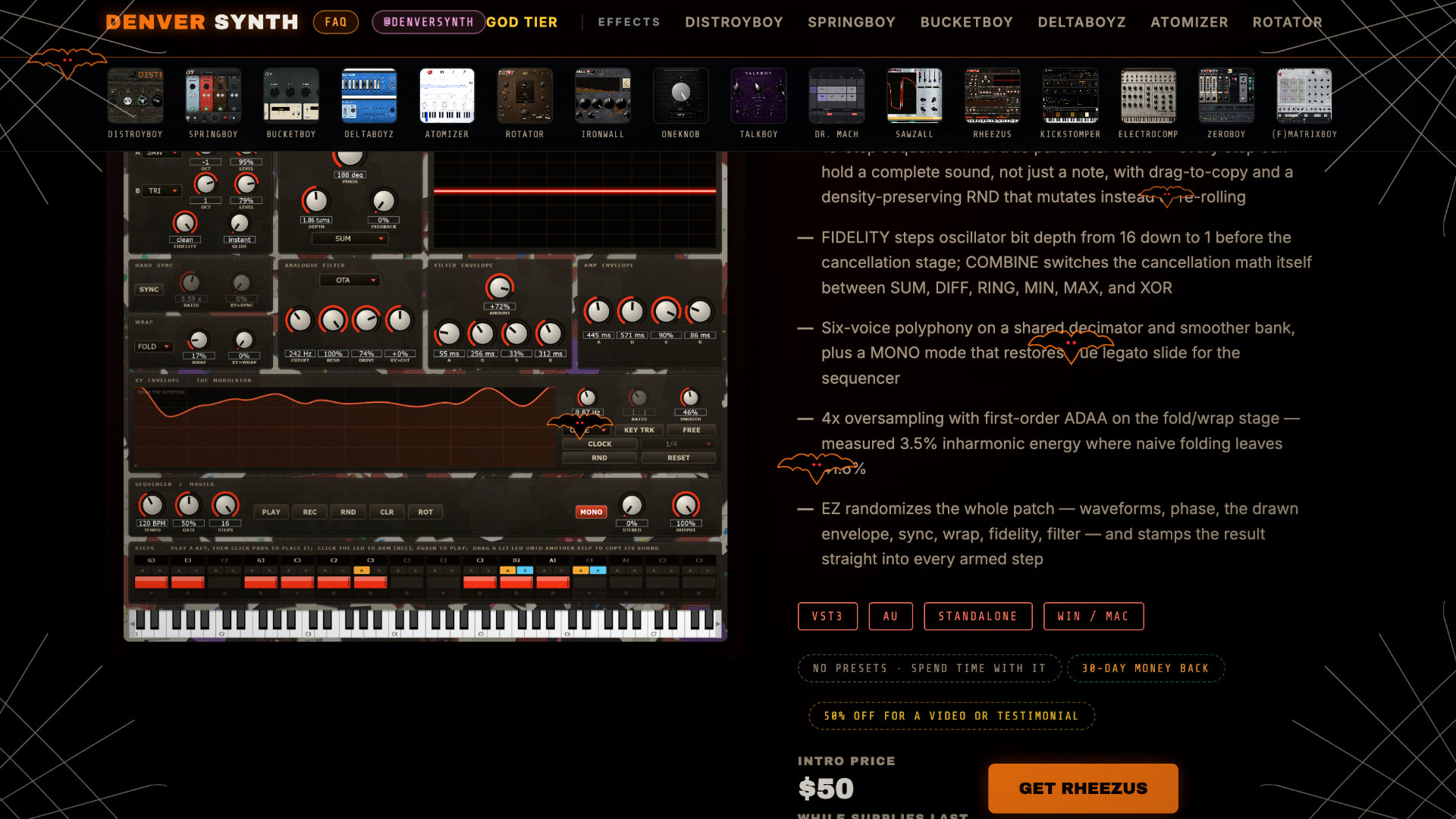 Denver Synth: 40+ plugins in no time, each for $50
The Consequences For The Others: Prices
They cite prices like $50, $69, $99, 19,99€, or 24,99€ for an app, prices typical of products from long-established companies with bigger teams, hand-coding, and extensive support. Even here, prices are trending down because sales are declining.
“Vibe coders” have to pay for their agents and tokens. However, equating their creations with hand-coded ones is problematic, especially given the code’s origin. For fair play and ethical reasons, all AI-generated outputs should be free and open-source.
But that is only the minority. Each developer sets their own prices. There is no minimum or maximum. Customers decide whether the price is reasonable or too high.
With the flood of “vibe-coded” plugins, it’s worth thinking twice or more about whether the tool is truly worth it—or if you already have something similar in your arsenal under a different guise.
Keep in mind: “Vibe coding” is modern tech that lets you not only quickly generate ideas but also quickly cash out on them, on the backs of GAS-driven people.
In the past, people made a living from music; today, they do it from AI creations. I’m surprised there isn’t an online course yet that sells people on getting rich by building AI plugins. With many new releases, I get the feeling they attended exactly one of those.
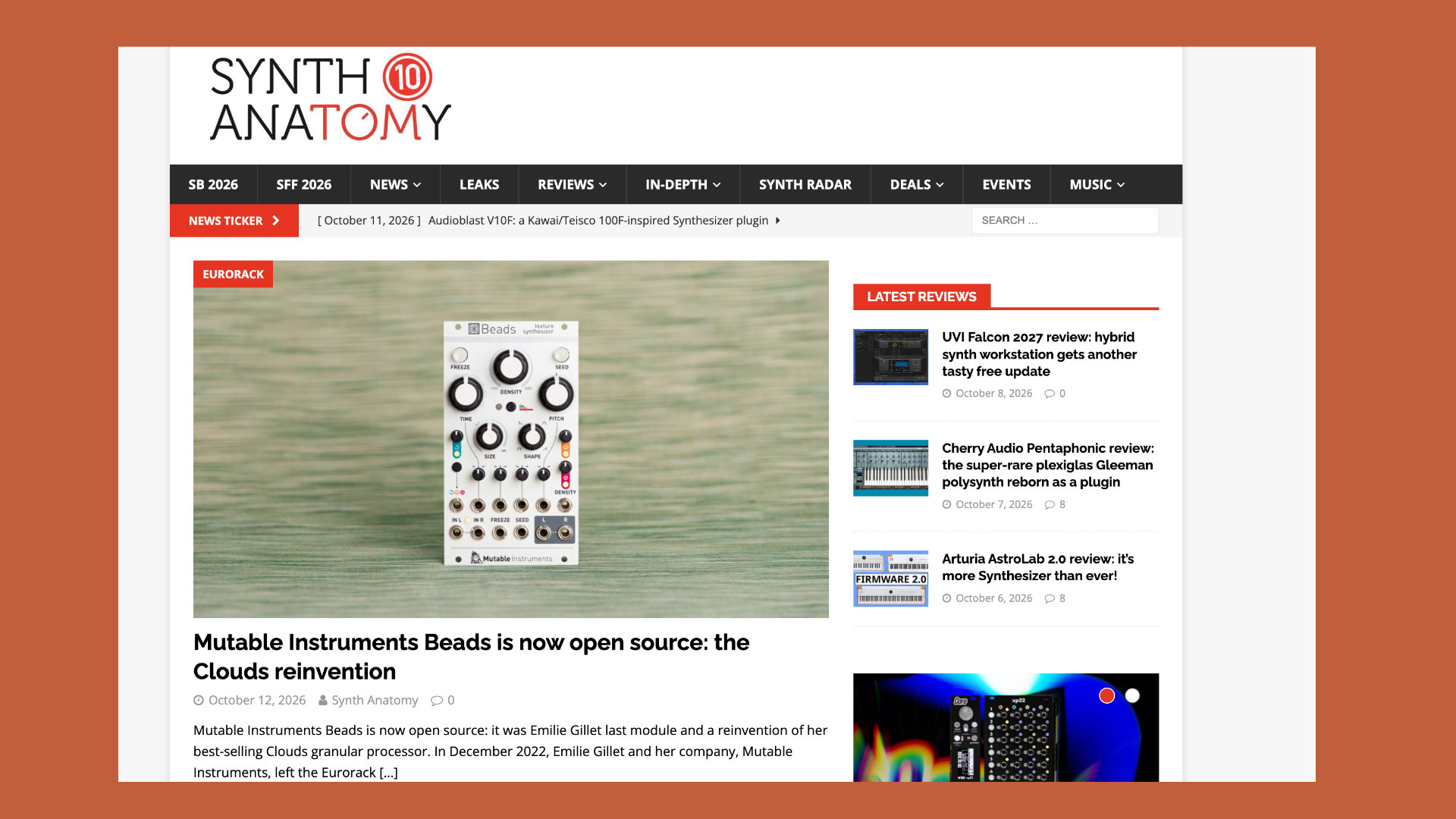
My Coverage
For the past 10+ years, I’ve brought you the hottest plugin news. Even before AI, I didn’t cover everything because there was simply too much.
One main reason is that I write everything myself (not AI), rather than serving as a PR copy-and-paste distribution service for developers. The volume of new releases is absurd tbh. Plus, new hardware tools, mods, sound libraries, and more.
The world is changing faster than ever, and so am I. One thing is sure: I won’t report on every new release anymore, because it isn’t feasible—especially given how long these articles take to write.
The plan is to set up a live blog or ticker where I can post quicker news on things that don’t get full-length articles, so I can at least cover them.
I will continue to mention in articles whenever I feel something is “vibe-coded.” That is fair to the readers. If the developer can prove otherwise (open-source the code, etc.), they are welcome to get in touch with me. We need a disclaimer that clearly distinguishes between human-made and heavily AI-made.
The Conclusion
We are currently in the early stages of AI and “vibe coding.” Yes, this is just the beginning. Give it another year or two, and the plugins will be at a completely different level— technically and sonically.
It’s the new reality, and as sad as it may sound for developers doing human-generated software. Anyone who completely demonizes AI is ignoring the world we live in today and the technology with all its negative impact we have. They might still be living in the early 2000s.
I am certain—as are many others—that manual coding will become a relic over the years, and AI will become the standard. One way or another, AI—with both its positive and negative aspects—remains a topic on this and all other sites. You can’t escape it anywhere, on any music tech website. And yes, vibe-coding plugins will stay.
As beautiful as the flood of many releases may currently be for some, for many it will be an unstoppable nightmare. If you know your favorite developers are still following the traditional path, help them stand out of the crowd.
Thanks for reading my thoughts. I’ve disabled comments because AI tends to lead to hate, personal attacks, and the like. I want to spend my free time on positive things. Cheers and more AI (actual intelligence) than AI (artificial intelligence).