

Guilfoyle controversy raised wider questions inside Greece about US influencepublished at 15:57 BST
15:57 BST
 Nikos Papanikolaou
BBC News
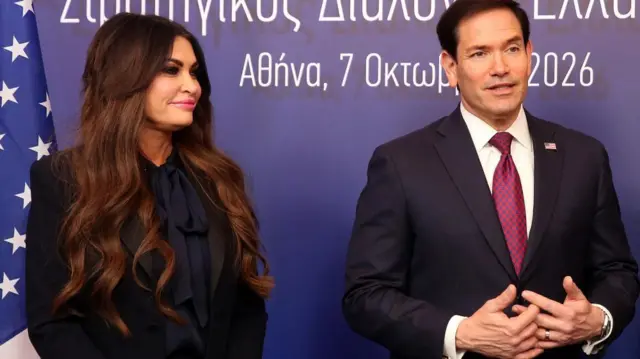 Image source, ReutersImage caption,
Kimberly Guilfoyle is seen with US Secretary of State Marco Rubio earlier this month at an event in Athens, Greece
Kimberly Guilfoyle had already faced political criticism in Greece following a Wall Street Journal report in September that prompted several opposition parties to demand explanations from the government.
The newspaper reported that, during a dinner in Athens in March, Guilfoyle allegedly suggested the US could bring down governments – including Greece’s.
“We can do that to any country we want. We can do that here,” she reportedly said, referring to the prospect of the Romanian government’s collapse.
Greece’s Energy Minister Stavros Papastavrou reportedly challenged her remarks, arguing that the US could not replace a democratically elected Greek government.
Guilfoyle’s lawyer has disputed the Wall Street Journal’s characterisation of the exchange.
The report prompted criticism from opposition parties, and many of them demanded explanations from Prime Minister Kyriakos Mitsotakis’s government.
Opposition parties also raised concerns about Guilfoyle’s reported involvement in promoting American liquefied natural gas (LNG) exports through Greece and the wider Balkan region.
The Greek government subsequently denied that any threat had been made.
Government spokesman Pavlos Marinakis said there had never been an issue of the Greek government being threatened, while Foreign Minister Giorgos Gerapetritis rejected calls to summon Guilfoyle to the foreign ministry over the incident.
The controversy raised wider questions among opposition parties about American diplomatic influence in Greece and the government’s relationship with Washington.