
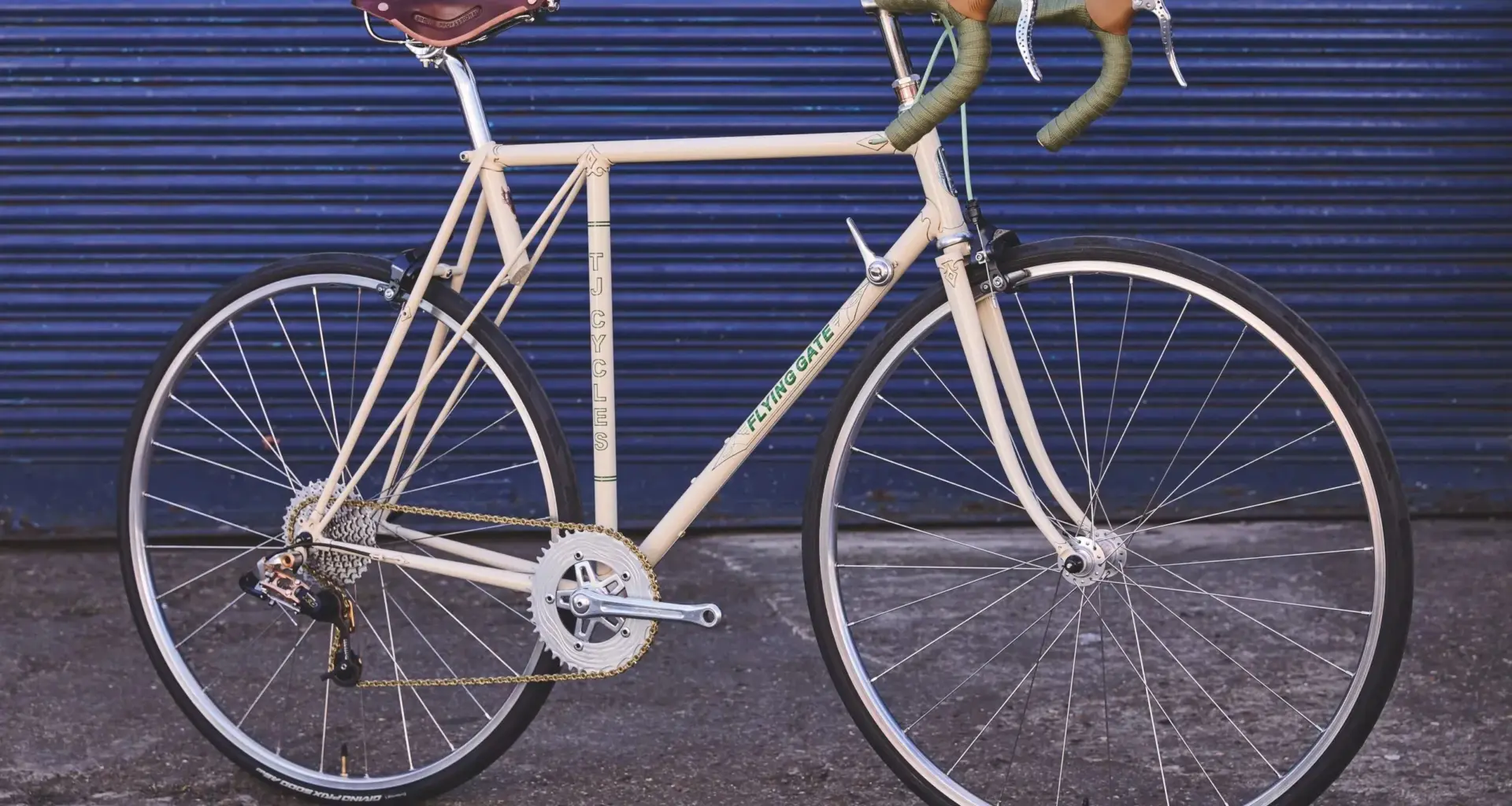
‘The ride feel is what gets most people,’ says Chris Yeomans, current steward of the iconic Flying Gate marque. ‘I often get comments along the lines of, “I feel like I am being pushed uphill,” or, “It’s like the wind is always behind me.”’
Yeomans is fresh back from touring the east coast of Ireland with his wife, Dawn. For the trip, they each rode slightly different versions of what some might say is one of British cycling’s great engineering curiosities.
 Juan Trujillo Andrades / Cyclist
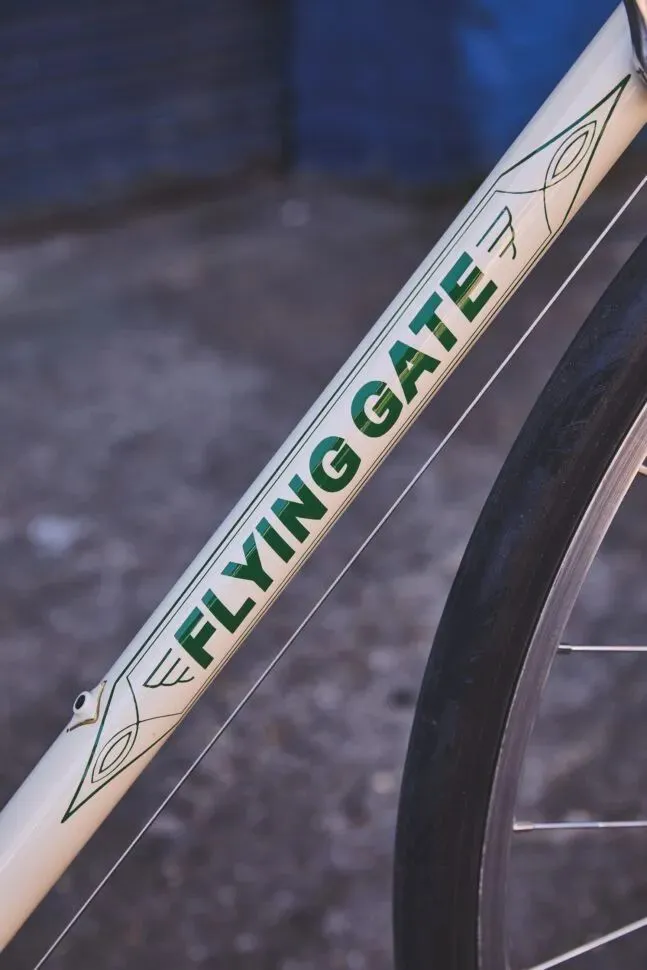
Conceived in the 1930s – an era when time-trialling dominated the domestic racing scene – the Flying Gate was originally known by its creators as the VS37 and commercially as the International TT. Its unconventional frame, with its cut-off seat tube, double sets of seatstays and additional vertical tube, created a gate-like silhouette, while its short wheelbase and stiffness made it ride like a spooked cat. It didn’t take long for its nickname to eclipse the official title, and it has stuck ever since.
Yeomans is the latest in a succession of custodians who, over the decades, have committed themselves to keeping the Flying Gate from drifting into obscurity. Originally designed and built by Bill and Reg Baines of the Baines Company in Bradford, the Gate went out of production in 1954 and remained in a state of dormancy until it was resurrected by framebuilder Trevor Jarvis of TJ Cycles in 1979.