
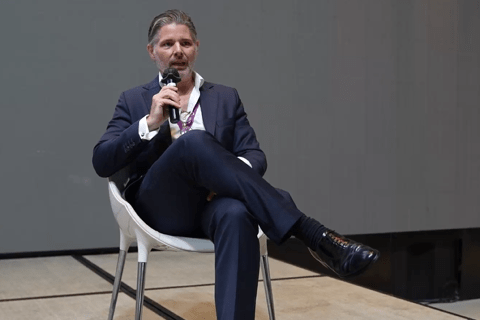
Diversification also involves deciding where assets are held and through which institutions clients can access them. At the Hubbis Investment Forum – Singapore 2026, Oliver Ansingh, Chief Executive Officer of Picard Angst MEA, used his In The Hubbis Hot Seat session to argue that the United Arab Emirates deserves consideration alongside established international booking centres.
Ansingh presented the UAE as an additional option for families seeking to diversify custody and jurisdictional exposure. His firm’s proposition combines a Dubai booking centre with Swiss investment expertise and international market access, serving high-net-worth clients, family offices and external asset managers.
Key Takeaways
Diversification Extends to Custody: Ansingh urged wealth managers to consider institutional and jurisdictional diversification.
The UAE Adds an Option: He presented it as one possible booking centre within a broader international arrangement.
Local Custody Can Serve Global Portfolios: Picard Angst MEA combines UAE custody and execution capabilities with access to international markets.
Location Has Practical Implications: Connectivity with Asia, it’s neutrality, as well as residency and structuring options form part of Ansingh’s case for examining the UAE.
What Diversification Means for Access to Wealth
Ansingh traced the argument through several episodes in financial history. Modern portfolio theory established the importance of diversifying investments; the 2008 financial crisis demonstrated why exposure to financial institutions also matters. He then pointed to 2022 as a reminder that geopolitics can restrict access to booking centers overnight
The resulting question is how a family preserves options across institutions and jurisdictions. “What we’re talking about really is optionality,” he said. That does not require transferring an entire portfolio to one new location. Ansingh explicitly advocated diversifying a portion of the arrangement where doing so serves the client’s circumstances.
Switzerland, the United Kingdom and the United States remained among the centres he identified. His argument was that the UAE should also be evaluated when clients and their advisers consider where to hold wealth.
A Dubai Booking Centre With International Capabilities
Ansingh described a gap between the UAE’s onshore commercial banking market and the international institutions operating in the Dubai International Financial Centre (DIFC) and Abu Dhabi Global Market (ADGM). In his view, clients seeking UAE custody together with an international standard of investment service are uniquely served by the broker-dealer model.
Picard Angst MEA operates from the DIFC and holds a Category 2 licence from the Dubai Financial Services Authority. Ansingh highlighted its custody and execution services and put assets under management at approximately USD1.5 billion at the time of the session.
The intended users include private clients and families as well as external asset managers seeking a place to book their clients’ assets. The proposition is to hold assets through their DIFC booking centre while retaining the investment capabilities and global access associated with an international wealth-management relationship.
Why the UAE Enters the Conversation
Ansingh highlighted proximity and connectivity to Asia, whilst sitting in a different geopolitical sphere. He also referred to the UAE’s approach to neutrality, presenting it as part of his assessment of jurisdictional diversification.
Residency and structuring programmes were another consideration. He argued that these can support broader wealth and tax planning, making the choice of booking centre part of a family’s overall arrangements. The usefulness of any particular programme depends on the client’s residence, obligations and structure.
Ansingh closed with “UAE custody, Swiss expertise, global market access”. His case was for providing another credible route through which clients can hold and manage assets, with the choice made as part of a considered distribution of institutional and geographical exposure.