
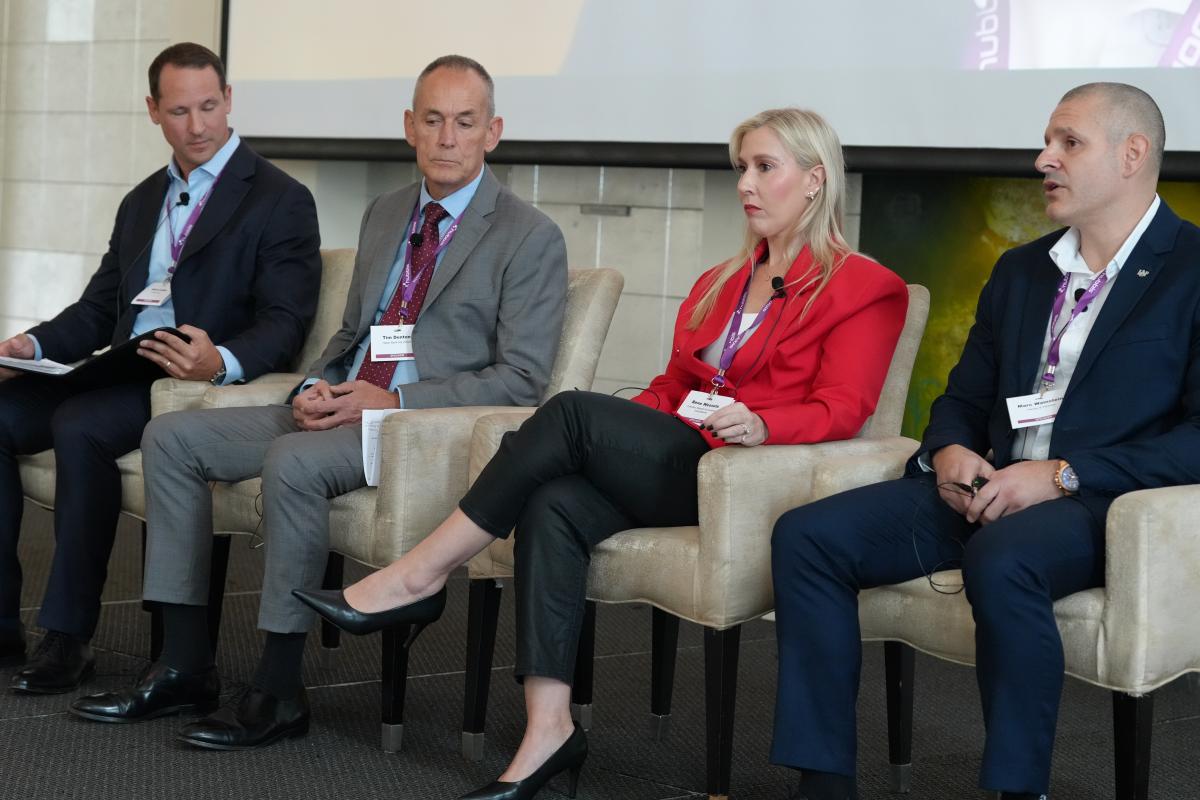
International families choosing the United Arab Emirates (UAE) are bringing more than investment portfolios. Their decisions involve schools, businesses, future residence and the prospects of the next generation, creating demand for advice that connects those priorities across borders. The opening panel at the Hubbis Wealth Planning & Structuring Forum – Dubai 2026 examined what the market needs to turn its recent growth into an enduring position as a global wealth hub.
The discussion brought together perspectives from private banking, private client advisory, fiduciary services and investment migration. Panellists considered the relationship between Dubai and Abu Dhabi, the responsibilities that accompany the expansion of foundations, and the investment in people and technology needed to sustain client relationships. Confidence in the UAE’s prospects was accompanied by a practical challenge: the quality of implementation and continuing advice must keep pace with the growth in demand.
Chair: Dave Lange, Managing Director & Senior Executive Officer, Trident Trust
Speakers
Tim Denton, SEO DIFC & Group Head of Wealth Structuring, Habib Bank AG Zurich
Rene Wessels, Senior Executive, Private Clients, Investec Wealth & Investment International
Marc Wainstein, Associate Director, Henley & Partners
Key Takeaways
Families are increasingly choosing the UAE as a long-term home. Education, healthcare, community and access to international business opportunities influence that commitment alongside tax considerations.
Dubai and Abu Dhabi offer complementary choices. Competition between their financial centres can support innovation and give families and firms more options.
Better coordination matters as much as the availability of individual services. International families need bankers, lawyers, tax advisers and fiduciaries to work around the same objectives.
Establishing a foundation is only the beginning. Providers and clients need to understand its governance, administration and continuing obligations.
Continuity of advisers helps build trust. Attracting experienced professionals needs to be matched by retaining them and supporting lasting client relationships.
Technology investment should support the people delivering advice. Artificial intelligence creates opportunities for efficiency, while the discussion retained a central role for human judgement.
Families Are Putting Down Roots
The panel described a change in the nature of wealth migration to the UAE. Families are looking beyond a place to transact or maintain a presence and considering whether they can build a life there. One panellist captured that shift by saying that families were “planting their roots here”. The distinction matters for advisers: a family making a long-term commitment brings questions about its future, rather than a single immediate investment or residence requirement.
Security, stability and confidence in the country’s direction featured prominently in that decision. A participant described families considering plans over 10, 20 or 30 years. The UAE’s connectivity to Africa, Asia and Europe also creates opportunities for internationally mobile entrepreneurs who want to develop businesses and investments across several markets.
Schools, healthcare and a sense of community were equally important. The next generation needs to see a future in the place the family chooses, particularly if that choice is intended to last. Panellists saw those everyday considerations as part of the explanation for Dubai becoming a home, rather than simply a jurisdiction to which a family has access.
Two Financial Centres Broaden the Choice
The discussion challenged the idea that the Dubai International Financial Centre (DIFC) and Abu Dhabi Global Market (ADGM) must be assessed primarily as rivals. One participant described “a healthy competition”, while arguing that the centres complement one another within the wider UAE proposition. Their coexistence gives businesses and individuals a choice about where and how to operate.
Competition was also seen as a source of practical benefits. When one centre develops a new approach, the other has a reason to respond. Panellists associated that process with continuing innovation and pressure to keep costs sensible. The argument was for room for both centres to develop, with each contributing to the country’s overall capability.
The broader positioning question was how the UAE could establish its own identity among international wealth hubs. A participant favoured presenting it as a new generation wealth centre, drawing on its connectivity, responsiveness and access to growing markets. That proposition depends on the services available to families after they arrive, as well as the initial reasons for choosing the country.
Advisers Need to Connect the Services
The panel’s assessment of the wealth ecosystem focused on how its parts work together. Private banks, lawyers, fiduciaries and family offices may each have considerable expertise, but an international family’s affairs do not fall neatly within one provider’s remit. Assets, residence and beneficiaries can sit in different jurisdictions, requiring a coordinated response.
One panellist described the task as helping professionals to “connect the dots a little bit better”. The emphasis was on bringing the relevant advisers around the client relationship and understanding what the family is trying to achieve. A sophisticated market needs that collaboration to translate its range of services into coherent advice.
The same issue arose in the discussion of fiduciary structures. Where a family needs meaningful separation from assets, whether for tax or other reasons, the governance arrangements must support that objective. A foundation run entirely by its founder may raise different questions from an arrangement involving independent fiduciary decision-making. The panel identified scope for developing that professional support further.
Foundations Require Continuing Responsibility
The growth of UAE foundations has changed the structuring conversation, giving families additional ways to organise ownership and succession. Panellists nevertheless warned that some providers approach a foundation as another entity to incorporate and hand over. That leaves a gap between creating the structure and ensuring that it functions as intended.
The discussion placed responsibility on providers to understand the nature of the arrangement and explain it to clients. Governance, record-keeping and applicable filing requirements continue after establishment. A participant anticipated more problems where those obligations were neglected, including potential penalties, and argued for stronger understanding of fiduciary responsibilities across the service-provider market.
One panellist described requiring new foundation clients to take a corporate secretarial and fiduciary support package during the first year. The example illustrated an effort to make ongoing administration part of the initial engagement. The panel also raised the question of whether authorities should place greater emphasis on the knowledge and capability of firms offering foundation services.
Client Trust Depends on Continuity
As families become more sophisticated, expectations of advisers rise. Panellists argued that technical competence needs to be accompanied by continuity, transparency and a clear understanding of why a particular arrangement is being used. Clients need confidence in the people responsible for their affairs over time.
A participant highlighted the frustration of engaging a professional only to deal with a replacement six to eight months later. Frequent changes interrupt the relationship and require the family to explain its circumstances again. Retaining people therefore forms part of the service proposition, particularly where the objective is to support long-term planning.
Growth in demand also requires firms to build capacity carefully. The discussion included expanding relationship-management teams and giving clients accurate information about their options. The starting point remained the family’s goals: additional staff and broader services are useful when they improve the firm’s ability to understand and serve those goals.
People and Technology Need Investment Together
The closing discussion returned to the priorities for firms preparing for the next phase of growth. Panellists identified people, advice and technology as connected areas of investment. Wealth management remains a relationship business, but technology can make the work behind that relationship more productive.
Artificial intelligence was treated as an area that firms could not afford to overlook, even while its best applications were still being explored. One participant warned that competitors would find effective ways to use it. Another stressed the need to support good advisers with tools that make their working lives easier, while preserving human judgement in the advice itself.
Across the session, the test of maturity was whether the UAE’s expanding capabilities could deliver dependable relationships and well-run structures. Families putting down roots create the opportunity for that development. The industry’s task is to provide the coordination, professional responsibility and continuity that make those families willing to stay.
**
Disclaimer: This article summarises a panel discussion and reflects information available as at 7 October 2026. It is for general information only and is not tax, legal, financial, investment or other professional advice or a recommendation. Its contents may not apply to individual circumstances, products or jurisdictions. Hubbis accepts no responsibility or liability for actions taken or omitted in reliance on it. Readers should obtain independent advice from qualified professionals before making any decision.