
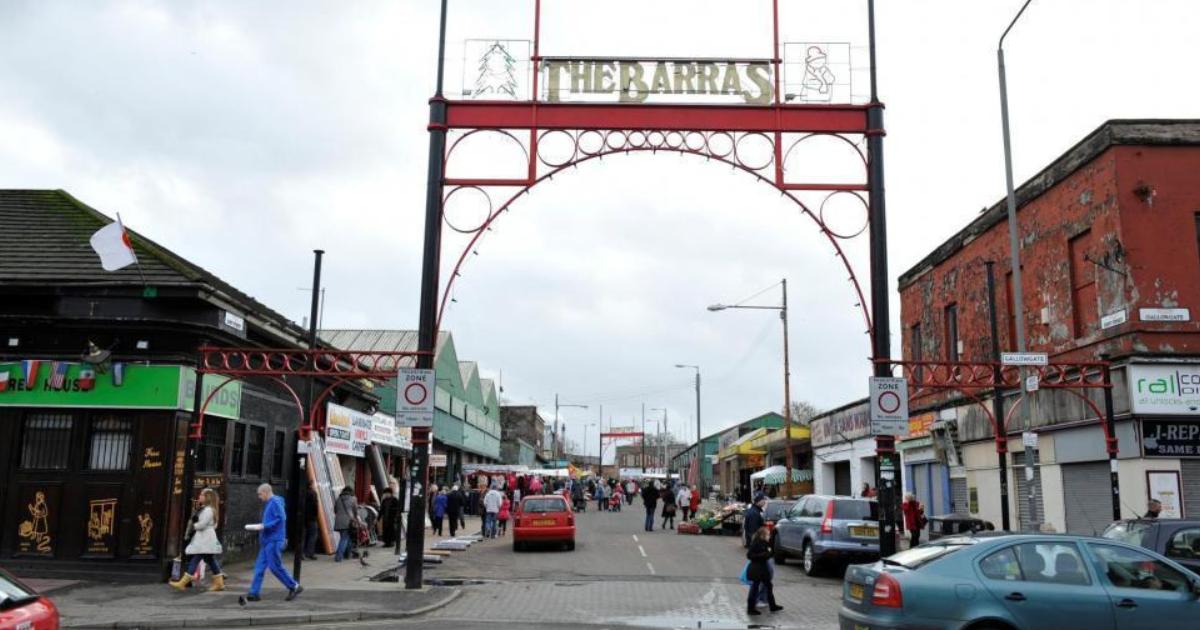
The Fall and Rise of The Barras tells the story “close to the heart” of director Gavin Lundy, who wanted to showcase the “complicated history” of the famous market and how it left its mark on Glasgow’s ever-changing cultural identity.
The 40-minute documentary, created by Ossian, looks at how the Barras, located in the east end of the city, has become a generationally important part of Glasgow’s life over the decades.
Lundy told The National that he was inspired to explore the cultural hub after becoming fed up with constant negative stories about the city.
READ MORE: Scottish theatre secures new home after forced closure for student flats
“I was just sick fed up of hearing stories about how Glasgow’s a dump and everything’s going to hell,” he said.
“I just thought na our city is pretty great and I think the Barras is a really good example of how things are going quite well and there’s a lot of things to be excited about.”
In what he called Ossian’s “most ambitious project yet,” Lundy explained that he, along with the film’s producer Callum Brown, cinematographer Gavin Hopkins and editor Bonnie Sanderson, started filming in the summer of 2024 until the same season of 2025.
The team went on to interview “Barras legends,” old and new, and were able to “capture a moment of change”.
The Fall and Rise of The Barras (Image: The Fall and Rise of The Barras)
“Ever since we finished wrapping the film, the place is very different,” Lundy said.
The filmmaker said that he decided to start filming after a conversation with Brown about how the Barras legacy is something that resonates with so many in the city, but it had seemingly gone through a period of hardship.
“I started to notice about 10 years ago that it started to struggle. It just felt like it was dying,” he said.
READ MORE: Sam Heughan blasts plans for ‘world’s biggest AI data centre’ in Scotland
“During Covid there was a bit of chat about it permanently closing and then they got a new team in and stuff like that and then it started to have a bit of a resurgence.”
However, during filming Lundy said: “I found it to be an interesting microcosm of Scottish culture, I suppose, where you get like a lot of young queer working class people kind of reclaiming the space and making it their own.”
Lundy went on to explain that the Barras had always been a “bohemian place” and that it was a safe haven for “people that are a bit different”.
The Fall and Rise of The Barras (Image: The Fall and Rise of The Barras)
“We spoke to a lot of people about what it means to be working class and creative,” he said.
Lundy went on to say that the Barras is a “generational story” as he grew up with fond memories of his dad taking him to the markets when he was a kid and added that it is “laughable” when people try to “push narratives” that Glasgow is more dangerous now than it’s ever been.
“My dad left Glasgow because the council was demolishing a lot of the city and cleaning people out and moving them out to new towns.
“The stories that I grew up with, him telling me about the East End in the 60s and 70s.
READ MORE: Reform UK candidate launches scathing attack on Scottish party over ‘bullying’ claims
“The level of organised crime, the level of sectarian violence, all these issues.
“I think that’s really laughable when you get people pushing these narratives that Glasgow now is more dangerous than it’s ever been, when actually loads of areas in this city are now doing better than they were for probably decades.
“The Barras and the East End is a really nice place to spend time, and it’s the kind of story I think that we don’t, we don’t talk about enough.
The Fall and Rise of The Barras (Image: The Fall and Rise of The Barras)
“We felt it was a good thing to be like, let’s actually recognise that this is a really vibrant cool thing happening in the city.”
The documentary received an overwhelmingly positive reception at its sold-out screening in September at MONO, Glasgow, according to Lundy.
You can watch The Fall and Rise of The Barras here.