
When importing a work of art for an exhibition, a gun import license isn’t usually a concern, but the National Gallery had to consider it for its latest show.

The exhibition puts a Gainsborough painting from around 1750 in conversation with a contemporary sculpture made in 1998, inspired by it.
Thomas Gainsborough’s Mr and Mrs Andrews shows the landlords lording it over their estate in Sudbury, Suffolk, where Gainsborough House is now a museum.
The painting is unusual for the time, as most “landed gentry in countryside” portraits focused more on the person with an often idealised landscape as a secondary background. Here, Gainsborough shifted the couple to the side and painted a largely accurate portrait of the farm they owned.

The painting spent much of its life being overlooked until it was displayed at Gainsborough’s 200th anniversary exhibition, where it was re-appraised as a masterpiece of his early work. It’s one of those paintings with hidden meanings, like the slightly haughty look on Mrs Andrews’ face and the unfinished item in her lap. But also notice the absence of any workers on the farm – the landlords didn’t want to be seen with their servants.
Now, for Gainsborough’s 300th anniversary, the painting is on display in a room that also houses a contemporary sculpture it inspired.
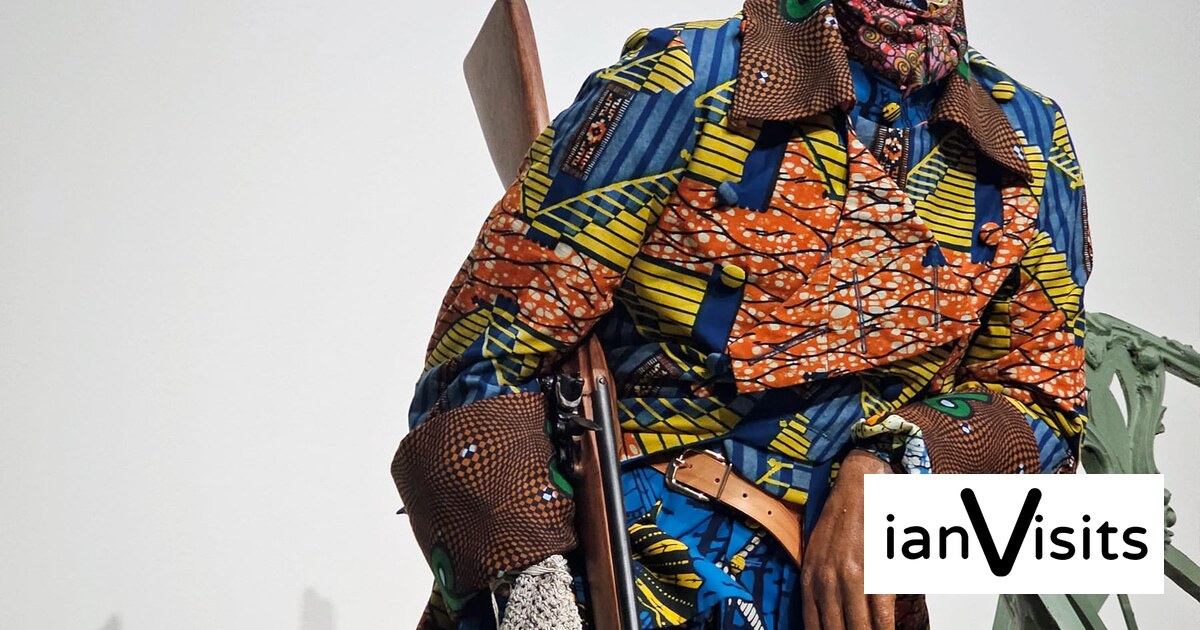
Yinka Shonibare’s Mr. and Mrs. Andrews without their Heads is a reaction to the landed gentry, here shown shorn of their heads as if the French Revolution had become a bit too British. He had also swapped the gentle pastel colours of the original clothing with African print Dutch wax cotton.
The African print is deliberate. People often celebrate it as a West African design, but it was actually imported from the Netherlands when Dutch merchants, trying to displace Asian silks, failed and sold their clothes in West Africa instead. Over time, West Africans adopted the Dutch designs, which the artist has observed shows how ideas flowed across colonial countries.
The couple also stand on a deliberately plain background, in contrast to the original’s English farmland scene.

The National Gallery of Canada owns the sculpture, and shipping it to London posed a problem. As Rab MacGibbon, Bernays Associate Curator of British Paintings, told me at the preview, one of the first things they had to consider was the gun. In the painting, Mr Andrews holds a hunting rifle, and Shonibare’s sculpture includes one as well.
Fortunately, it’s a replica, but they still needed clear labelling and paperwork to make that obvious. The last thing they wanted was customs at Heathrow Airport unpacking the crates on the tarmac after scanners detected what might look like gun smuggling going on.
The cargo arrived safely.
And you can now see both the painting and the sculpture together for the very first time.
The exhibition, Yinka Shonibare and Thomas Gainsborough: A Conversation, is at the National Gallery until 7th February 2027 and is free to visit.
You can find it in Room 1, next to the portico exit.
Details here.
If you pop along to Room 34, you can see a series of Gainsborough family portraits, including the only known self-portrait, which might look rather familiar.
