
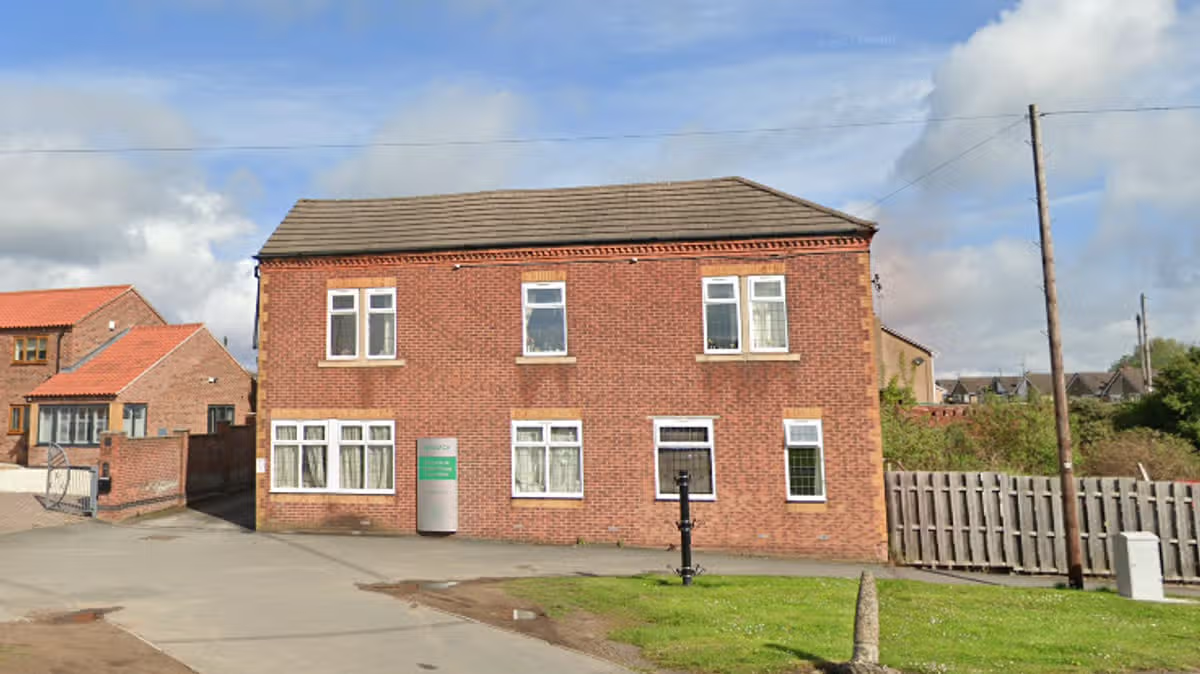
A Derbyshire nursing home has been placed in special measures in order to keep residents safe – but bosses have contested the inspectors’ findings.
A team from the Care Quality Commission (CQC) visited Haddon House Nursing Home, in Clowne near Chesterfield, in August and downgraded it from a previous “good” rating – the second highest – to “inadequate” – the lowest possible mark.
Issues noted included the failure to reposition someone with a bed sore often enough, staff being late in giving time-critical medicine, and a choke-risk patient not being given modified food.
The nursing home, run by Monarch Consultants Limited, can support up to 40 people, including older people and those with dementia or a mental health diagnosis.
A total of 33 people were living at the home at the time of the inspection, which was carried out because of concerns shared by partner organisations and as part of its ongoing monitoring of services.
Inspectors identified breaches of regulation relating to safe care and treatment and the overall management of the service.
CQC has downgraded the ratings for how safe, effective and well-led the home is from “good” to “inadequate”, and how caring and responsive it is from “good” to “requires improvement”.
It has placed the service into special measures, which involves close monitoring to ensure people are safe while they make improvements.
Special measures also provides a structured timeframe so services understand when they need to make improvements by, and what action CQC will take if this doesn’t happen.
CQC has also begun the process of taking further regulatory action to address the concerns, which Haddon House Nursing Home has the right to appeal.
Greg Rielly, CQC’s East Midlands deputy director of adult social care, said: “During our inspection of Haddon House Nursing Home, we found a service where leaders didn’t monitor the risks people faced closely enough.
“They lacked effective systems to monitor people’s care, and staff didn’t identify or act on issues with aspects of support, including wound care and medicines, quickly enough.
“For example, inspectors found that records didn’t demonstrate that staff had repositioned someone with a pressure sore often enough, with gaps of up to 10 hours in records.
“Staff were also late giving a dose of one person’s time-critical medicine and another person hadn’t received meals which were modified in line with their care plan to keep them safe from the risk of choking.
“It was only after we stepped in and asked staff to act that they sought healthcare advice to check these people were safe. The service had already ordered the medication and staff administered it later that day, and received assurance from healthcare professionals.”
Mr Rielly said it was also disappointing “to find that staff didn’t always share important information about people’s care with each other, which meant some people didn’t get support that matched their needs”.
He added: “Families also told us they struggled to contact managers and felt communication needed to improve.
“Staff were clearly warm, treated people with kindness and supported them to stay in touch with loved ones. However, the home failed to meet expected standards of care.
“We were encouraged that leaders had recruited a new regional manager and clinical lead before our assessment, while committing to being more present in the service.
“We have set out clearly where improvements are needed, and we’ll continue to monitor the home closely to make sure people stay safe while this happens.”
Inspectors found:Staff told inspectors they lacked confidence in management, and some felt leaders weren’t visible enough to understand what was happening day-to-day.Staff sometimes left medicine cupboards unlocked and didn’t dispose of out-of-date medicines safely, increasing the risk of people receiving the wrong medicine.Inspectors identified urgent risks and concerns around the management of skin integrity issues. Leaders told us they had completed a full wound audit but couldn’t produce it or confirm how many people had wounds, which demonstrated a lack of oversight and assurance.The home hadn’t investigated a care record that referred to an unauthorised restriction on a person’s freedom, putting them at risk of being unlawfully restricted.However, staff knew people’s personal backgrounds well and ensured personalised touches like photos and keepsakes were in place to help people feel at home.
A spokesperson for Monarch Consultants Ltd said that they were “deeply disappointed by the overall tone and conclusions of CQC’s report” and said they had disputed a number of findings and the way some evidence had been presented in the report.
The nursing home’s full response:
DerbyshireLive asked Monarch Consultants Limited if it wished to comment on the findings of the report and chief executive Rosie Howell supplied the following statement:
“We are deeply disappointed by the overall tone and conclusions of CQC’s report, which we do not believe provide a balanced, proportionate or fully accurate reflection of Haddon House at the time of the assessment.
“We accept that improvements were required in some areas, particularly in relation to documentation, medicines management and governance. We had identified a number of these issues before CQC’s visit and had already taken action, including recruiting additional regional and clinical leadership. These appointments were made before the assessment, with the individuals commencing shortly afterwards upon completion of their contractual notice periods.
“We have continued to make significant improvements. These include strengthening clinical oversight, auditing care documentation and medicines management, improving incident investigation and root cause analysis, reviewing nutritional and pressure-care records, providing additional staff training and increasing senior leadership support within the home.
“However, we have disputed a number of findings and the way some evidence has been presented in the report. CQC accepted several of our factual accuracy challenges, including that a time-critical medicine was administered late rather than missed, that records did not demonstrate repositioning rather than proving care had not taken place, and that leadership changes were already under way at the time of the assessment. Also, the reference to leadership lack of openness and honesty was also accepted by CQC as an inaccurate finding.
“Despite CQC accepting these findings were incorrect, these findings remain elsewhere in the final report and have only partially been covered in their media press release. We are also concerned that individual documentation issues have been repeated across several areas of the report, creating an impression of multiple separate failures and giving insufficient recognition to the immediate action already taken by the provider.
“It is also important that the positive findings recorded by CQC are included to provide a balanced and accurate representation of the home. It was pleasing and unsurprising to be informed by CQC that inspectors observed staff treating residents warmly, kindly and respectfully.
“They found that staff sought consent, promoted people’s dignity and understood the individual residents they supported.
“Residents had access to meaningful activities, the home was clean, infection-control practice was positive, appropriate recruitment checks were completed, and inspectors identified examples of detailed and appropriate clinical care planning.
“These findings reflect the compassion and commitment of the staff working at Haddon House, who have continued to support residents throughout a challenging period. We are not complacent, and we fully recognise our responsibility to make and sustain the improvements required.
“However, regulatory reporting must also be accurate, balanced and proportionate. Unfortunately, we do not believe the final report consistently meets that standard.
“We are however keen to move forward in our journey of improvement. At all times, the safety, dignity and wellbeing of our residents remain our overriding priorities. We will continue working openly with residents, relatives, staff, commissioners and other professionals while ensuring the improvements already made are embedded and sustained.”
In response to the statement, a CQC spokesman said: “Before any report is finalised, providers have the opportunity to clarify/highlight evidence on points which can result in some amendments being made, which is what would have happened here (although some of the changes they’ve mentioned are more nuanced and aren’t quite as straightforward).
“However the final report is an accurate reflection that has been through our quality assurance processes, and we disagree on the use of individual statements repeated to create an impression, as they have been used to evidence different quality statements.
“We are aware of the provider’s concerns and have noted these but we are confident the report is an accurate reflection of our findings.”