
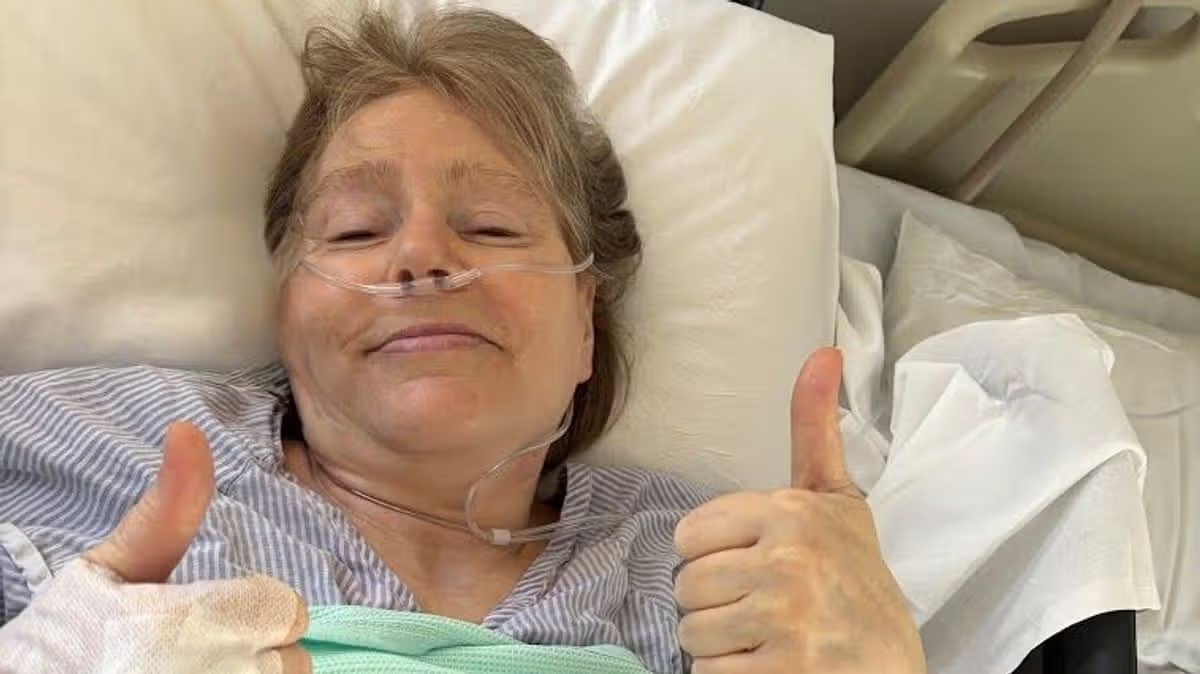
Maria Bailey’s symptoms started off with utter exhaustion and continued to develop
03:56, 17 Oct 2026Updated 16:39, 17 Oct 2026
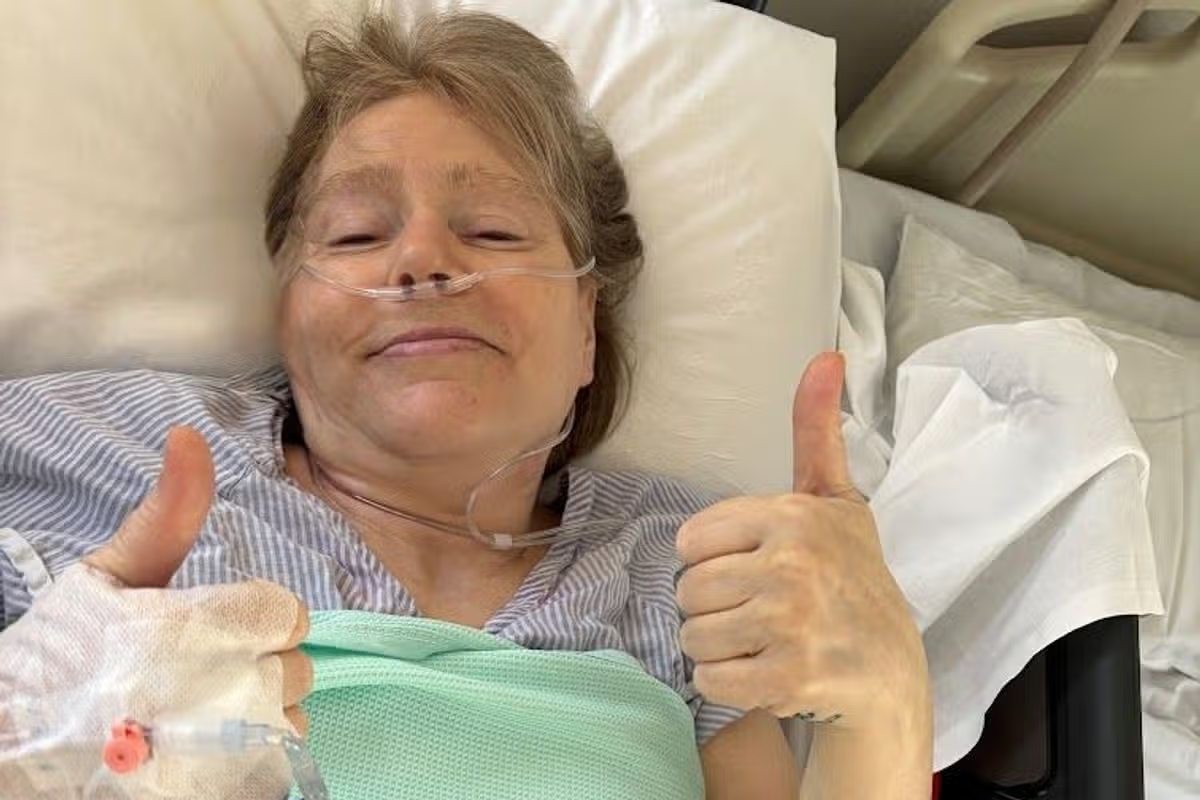
Maria Bailey was diagnosed with cervical cancer earlier this year(Image: Maria Bailey)
When Maria Bailey began experiencing unusual symptoms she initially thought they were simply part of menopause. However after a life-changing diagnosis the 55-year-old from Pencoed found herself on a journey that would inspire her to help others facing similar challenges.
One moment Maria would feel wide awake. The next she would find herself fast asleep. At first, she thought her sudden bouts of exhaustion were simply the result of the extra hours she had decided to take on at the electrical company where she worked.
“My other half was like: ‘What’s the matter with you?'” Maria recalled. “I didn’t have a clue. It wasn’t like me – I like to think I am quite active. I was part of a walking football team and had decided to take on some more shifts at work too, so I just thought it was down to that.”
But as the months passed other symptoms began to emerge. From July 2025 Maria experienced hot flushes and spotting, which she initially believed were connected to the menopause.
“I went to my GP at the new surgery in Pencoed. We thought it was just related to my menopause. The doctor was amazing – she put me on the patches and tablets. So that seemed okay.”
However, towards the end of the year and into the beginning of 2026, the bleeding returned. Her GP changed her hormone treatment so that she no longer needed to take the tablet but Maria soon began experiencing what she described as “horrendous” bleeding.
“I was losing so much blood that I was turning a shade whiter than Caspar,” she said.
The blood clots were so large that Maria struggled to find the words to describe them. “They were alien to me,” she added. “I referred to them as little baby seals because of the size of them.”
Although Maria was due to have a smear test in May she decided not to wait and returned to her GP in February. “I just knew something wasn’t right,” she said. “It was sort of a gut feeling. I’ve never had any issues like that before and, just by the way they looked, I knew something was amiss but I just didn’t know what.”
Maria believes it can be easy for women to dismiss changes in their bodies as simply another part of the menopause or what she described as “women’s problems”.
“With these types of symptoms I think it’s easy to sweep it down to ‘women’s problems’,” she said. “Either because you’re coming to the end of your period cycle or you’re starting menopause. You just have to trust your instincts.”
Taking photographs of the blood clots to show her doctor helped explain what she had been experiencing. It also prompted a series of investigations including a biopsy, MRI scan and PET-CT scan.
Throughout this period Maria kept her situation largely to herself, choosing not to tell her family or friends, including her twin sister, about the scans until she knew more.
“I just didn’t want to worry them,” she said. “I didn’t want to tell them about the scans in case they were nothing, and worrying would have been pointless.”
But nothing could have prepared her for the diagnosis that followed. Stay informed on the latest health news by signing up to our newsletter here.
Maria did not tell her twin sister Tracy about her scans, not wanting to worry her(Image: Maria Bailey)
On April 22 Maria was driving home from work along the M4 during rush hour when she received a phone call from her doctor.
“I remember him asking me if I could talk and I said: ‘I am just driving home now.’ He asked if I could pull over but I said that would be difficult as I was on the motorway and I would probably struggle getting back on as it was peak traffic so he said he would ring me once I got home.”
When Maria arrived home the doctor called again. With her partner at her side she was told it was not good news. Scans had revealed a 4cm cancerous tumour. Maria had cervical cancer and doctors confirmed the disease had spread locally, although it had not reached her vital organs.
“I remember telling him: ‘It’s not your fault’ because he was so apologetic,” Maria recalled. “Then I asked: ‘What do I need to do?’ I just wanted to get the ball rolling.”
Cervical cancer is a cancer found anywhere in the cervix. According to the NHS it can occur at any age, although it is most common in women aged between 30 and 35.
For Maria one question loomed over her first specialist appointment in Swansea. “Honestly, all I remember was sitting there and taking it all in. I just wanted to know: was I going to die? Was it life-threatening?
“Once the specialist said ‘no’ that was a massive moment for me. When you hear the word ‘cancer’ you just automatically think: ‘That’s it’. But, luckily enough, it was treatable.”
While Maria tried to process the news her partner was also struggling to come to terms with the diagnosis. “He didn’t speak about it,” she said. “It is hard for partners because you can’t do anything. There’s nothing they can do to help.
“But after a couple of days I just said to him: ‘Look, you know, we need to speak about it because it helps me.’ In fairness, then, he was more open from that point. He came with me to Swansea for my first meeting to discuss the diagnosis and has been really supportive throughout it all.”
Breaking the news to her wider family and friends was another difficult step. Maria had kept the scans private because she did not want to cause unnecessary worry, meaning the eventual diagnosis came as a shock to those closest to her.
“My mum, my aunties, my best friends – they were all so shocked when I finally told them. Initially they were very upset, but so, so supportive. I think my twin sister, Tracy, was the worst one who took the news.”
Maria decided to visit her sister in person to tell her what had happened. “I actually went down to her house to tell her because I didn’t tell her about all the scans.”
Tracy was overcome with emotion but an unexpected intervention from Maria’s chihuahua, Lady, soon brought a moment of laughter.
“My sister, she just burst out crying. But, lucky enough, I took my chihuahua Lady with me. And when I was giving my sister a hug and telling her everything was going to be okay Lady popped up in between the two of us and started licking my sister’s face, so we just burst out laughing then.
“Lady did lighten the mood and I’m so glad I took her. She was like a little therapy dog for my sister.”
These moments of levity became crucial in how Maria moved forward. She even gave her tumour a nickname.
“It was the size of a walnut so I gave it the nickname ‘Winnie the Walnut’,” she said with a laugh. “It was just so much better referring to it as ‘Winnie’ rather than ‘the tumour’. That word scared me.”
What followed was an intensive treatment programme involving 25 sessions of radiotherapy over five weeks, weekly chemotherapy, and brachytherapy, which is a specialist form of internal radiotherapy carried out under anaesthetic.
Treatment required frequent journeys between her home and hospitals in Swansea and Cardiff, often resulting in long days away from home. Yet, amid the physical demands and emotional weight of treatment, Maria found comfort in the people caring for her.
“It wasn’t all doom and gloom because of the team who supported me throughout. When I would go in I would be dishing out pear drops so I think the nurses and doctors looked forward to me going.
“They are such lovely, lovely people. How they can do that day in, day out, I don’t know but they’re really helping people, always such a laugh.”
The support she received helped Maria maintain a sense of normality and remain focused on getting through each appointment. “It helped me keep positive and that is what gets through. Without it I think if I’d have had that dark cloud over me and just curled up in a little ball I probably wouldn’t have gotten myself out of the house to go to treatment.
“But I never missed a day of treatment no matter how ill I was feeling.”
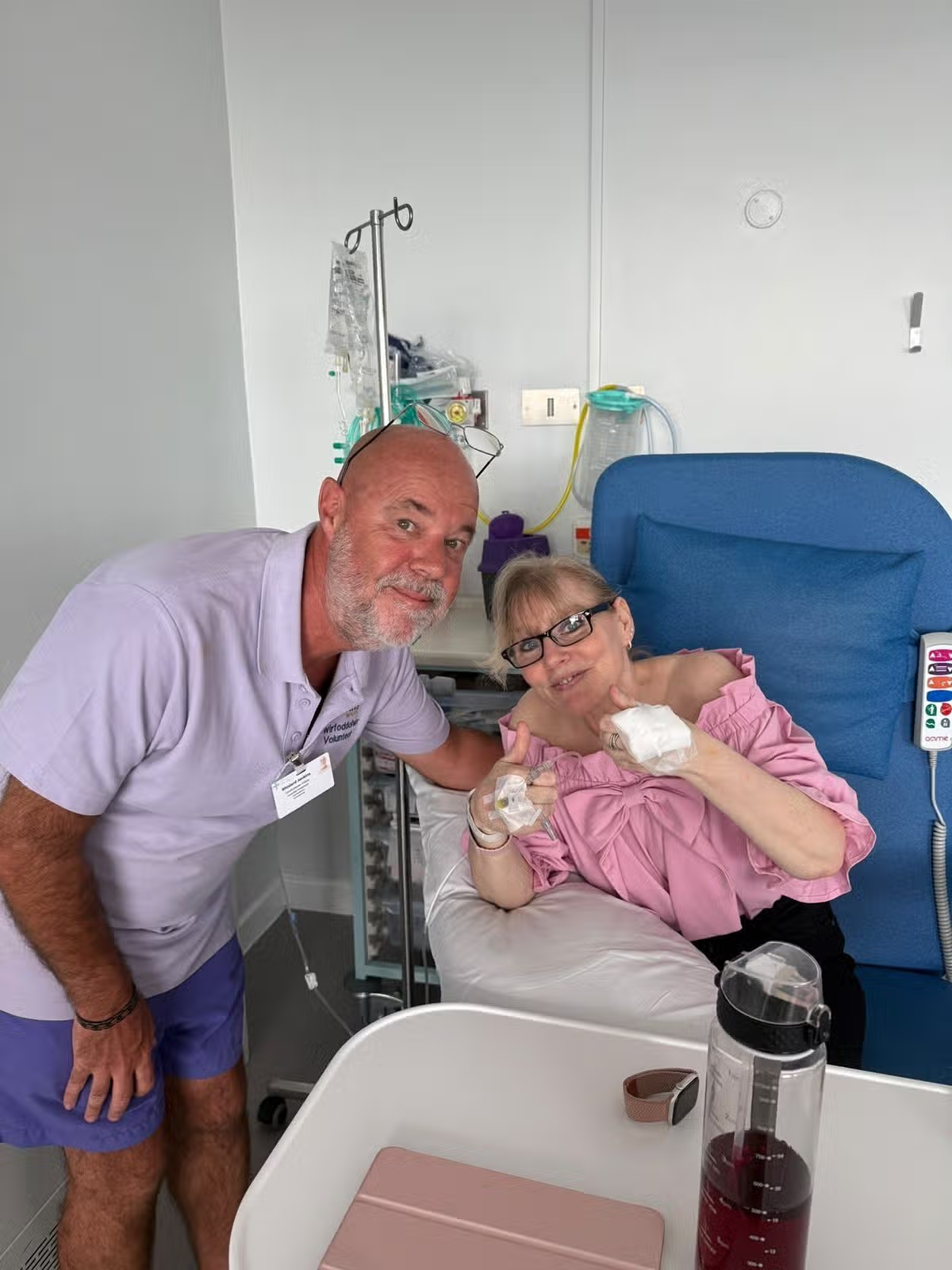
Maria with Rhisiard Jenkins, a volunteer who helps feed and water patients(Image: Maria Bailey)
However there was something else that helped Maria through the most difficult of times. Just one week into treatment Maria came up with the idea for Bailey’s Bags – an initiative designed to make the experience of cancer treatment a little easier for other patients.
Before her first chemotherapy appointment Maria had only a short time to prepare. She struggled to find practical information about what she should take with her to hospital, leaving her to work out what she might need herself.
“I didn’t know what to take with me and couldn’t find much information online,” she said.
Maria spent around £100 buying supplies for her own appointments. Initially she considered donating the items afterwards but soon realised she could use her experience to help more than one person.
“I just want to make it easier for other people. It’s one less thing for somebody to worry about when they’re already facing so much.”
The bags contain a range of practical items intended to make long treatment sessions more comfortable. These include a fleece blanket, ginger tea, a neck pillow, pear drops, a large water bottle to help patients meet hydration requirements, a backpack capable of charging devices using a power bank, a medicine organiser box, and a fold-up portable fan.
The contents have been shaped by feedback from cancer patients undergoing treatment at Singleton Hospital in Swansea, helping Maria identify the items that could make a difference during long days in hospital.
To get the initiative off the ground Maria invested the first £500 from her own money. As she was on a career break she subsequently launched a GoFundMe campaign to help cover further costs.
Her initial fundraising target was £500 – enough to put together five bags. But support from friends, family, and members of the public quickly exceeded expectations.
Donations have now surpassed £3,500, with money continuing to arrive from people Maria has never met. The GoFundMe is still open to donations and can be found here.
“People have been so generous,” she said. “There are people donating now that I don’t even know. I think people have really taken the idea to heart because they know what a difference it could make.”
In between treatment appointments, and now through her recovery, Maria spends hours sitting on her dining room floor putting the bags together. So far she has donated 20 bags to Swansea Bay Health Charity and 20 to Velindre Cancer Centre.
For Maria, hearing from the people who have received the bags has been one of the most rewarding parts of the experience. One recipient in particular has stayed with her: a patient undergoing treatment at Velindre who received the very first Bailey’s Bag.
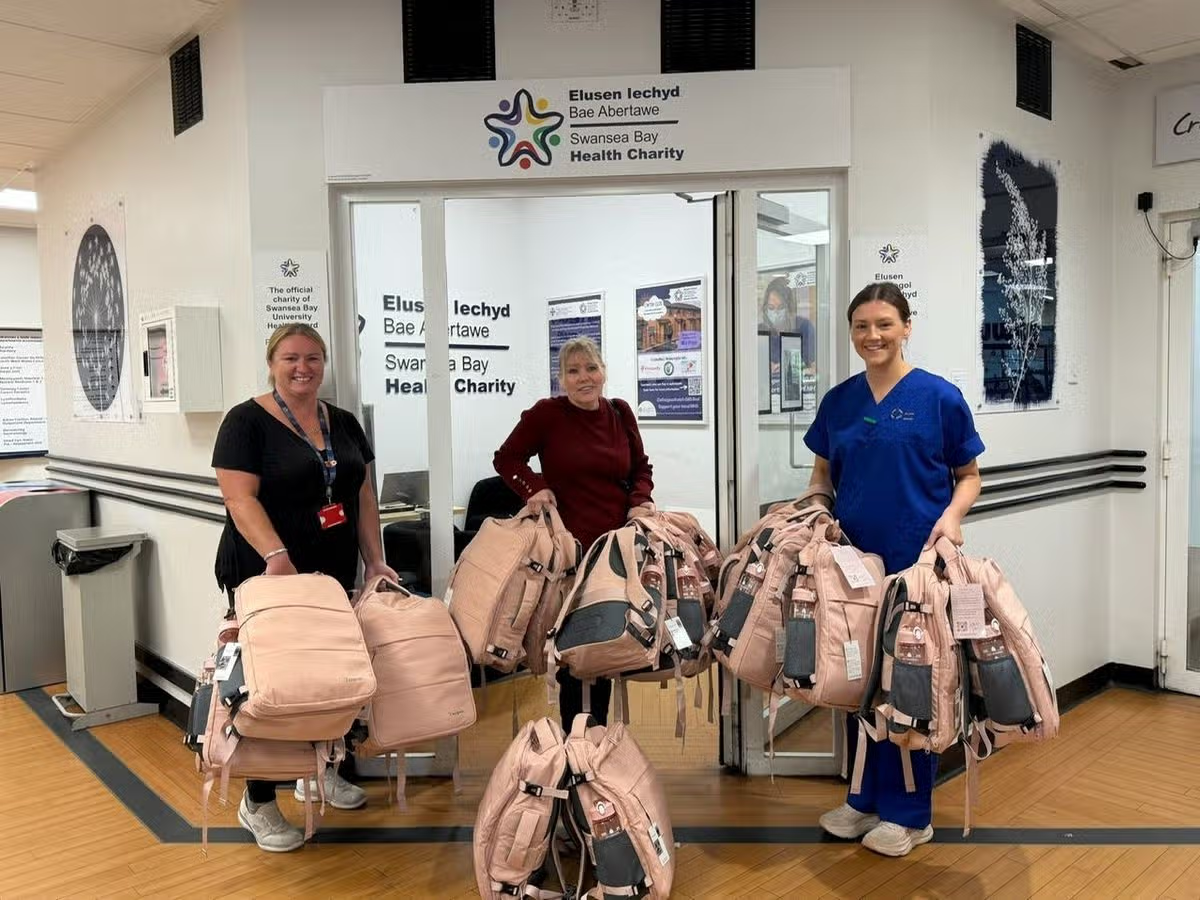
Maria Bailey has donated 20 bags to Swansea Bay Health Charity and Velindre, respectively(Image: Swansea Bay Health Charity)
“It has been so rewarding, hearing the feedback,” Maria said. “There is this lovely lady who is currently undergoing treatment in Velindre. She was issued the very first Bailey’s bag and her daughter text me to say thank you – she was over the moon. That meant the world.”
The response has reinforced Maria’s belief that even small gestures can make a difference to people facing a frightening and uncertain time. While a care package cannot remove the fear surrounding a cancer diagnosis or the physical effects of treatment it can provide practical support and reassurance when patients are already dealing with so much.
For now Bailey’s Bags focuses on supporting women diagnosed with cervical cancer. However Maria has ambitions to expand the initiative so that it can reach anyone undergoing chemotherapy, regardless of their gender or where they live.
“At the moment it’s for women diagnosed with cervical cancer but eventually I want anyone having chemotherapy, women and men, to be able to have a bag,” she said. “Not just in Wales but across the UK. I want every person starting treatment to know they’re not facing it alone.”
Maria is now awaiting follow-up appointments and scans later this year to determine how successful her treatment has been and whether any further intervention will be necessary. Doctors have already told her that the tumour has shrunk, offering an encouraging sign as she continues her recovery.
Although there is still uncertainty ahead Maria remains focused on growing Bailey’s Bags and supporting others at one of the most challenging moments of their lives.
Her experience has also strengthened her belief in the importance of listening to your body and seeking medical advice when something does not feel right.
Looking back Maria hopes sharing her story will encourage other women not to dismiss unusual symptoms or feel embarrassed about seeking help.
“Just listen to your body,” she said. “If something’s not right go to your doctors and be persistent. I didn’t have to be persistent, I was really lucky with my doctor, but I know other surgeries’ doctors are up against it.
“Keep on if you feel something’s not right, and never ever miss your smear test. It is uncomfortable, it is embarrassing, but, you know, they’ve seen one, they’ve seen them all. Your health is the most important thing.”
For Maria the experience of cancer has brought fear, difficult conversations, and months of demanding treatment. But it has also inspired something she hopes will continue long after her own hospital appointments come to an end.
And while Maria waits to discover what the next stage of her recovery will bring she is determined to make the beginning of somebody else’s treatment journey a little less daunting.
“When you’re told you need chemotherapy your world turns upside-down,” she said. “If Bailey’s Bags can make that first step a little easier then it’s all been worth it.”