
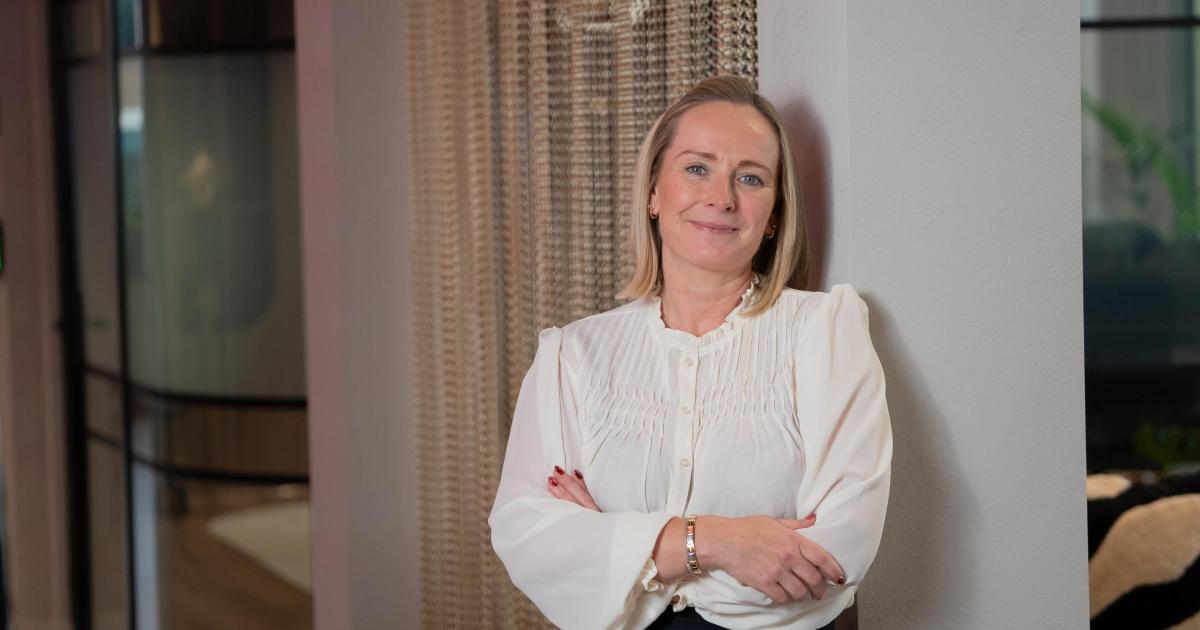
Elaine has lived in Warrington since she was 10, went to Penketh High School and Priestley College.
She talks to the Warrington Guardian about growing up in the town, what inspired the founding of AskRose and why getting pensioners the money they are owed has become a race against time.
You have lived in Warrington for most of your life. What does the town mean to you?
I moved to Warrington when I was 10, and I’ve been here ever since, apart from three years at university.
I went to Penketh High School and then Priestley College, bought my first house here and now my children go to the same high school I went to.
When I moved here, the American air base was still there and Chapelford didn’t exist.
I remember going on to the air base for Independence Day and thinking it was the coolest place in the world because they had things like bowling alleys that we didn’t have in Warrington at the time.
It’s changed massively since then but I’ve always felt that Warrington is a town of opportunity.
Opportunity is probably the word I’d most associate with Warrington.
My dad would say the reason we moved here was because there were better opportunities for me, my brother and my sister.
I think that still applies today.
There are lots of businesses here, good transport links, and you’re within easy reach of Manchester, Liverpool and other major cities.
For anyone who doesn’t know AskRose, what does the business do?
AskRose helps people recover money and entitlements they are owed, with a particular focus on pension recovery.
The business came about because my colleague Natalie’s grandmother asked her for help because she wasn’t receiving the full state pension she believed she was entitled to.
When Natalie started looking into it, we realised there was a much bigger problem.
That led us to look at Home Responsibilities Protection, or HRP, and the impact that missing credits can have on women’s state pensions.
The important thing is that these are credits people should have received for periods when they were at home looking after their children.
They shouldn’t have to become experts in National Insurance records or pension legislation to find out whether something has gone wrong.
That’s where we come in.
Pension legislation isn’t exactly the most exciting subject. How do you get people to care about it?
You don’t start by talking about Home Responsibilities Protection.
If you start talking about pension legislation and National Insurance credits, people’s eyes glaze over.
Instead, you ask a really simple question: did you take time out of work to look after your children?
Did you have one of those paper family allowance books that you took to the post office to get signed off?
The office in Altrincham (Image: Jon Parker Lee)
If the answer is yes, that’s when you can start explaining that there may be a problem with their National Insurance record.
It’s about making something complicated human.
People remember those things.
They remember being sent to the post office with the family allowance book.
They remember what life was like when they were bringing up their children.
Once you’ve explained it in those terms, people understand why it might matter to them.
What do you wish more people understood about the state pension system?
Don’t automatically assume that because something is held by the government, HMRC or the DWP, it must be correct.
I always assumed that if HMRC had a record of something, it was going to be more accurate than anything I could remember because I hadn’t kept records of my whole working life.
But that’s not necessarily the case.
There are women whose HRP credits haven’t been correctly recorded and that can affect their state pension.
It’s important that people understand they are allowed to question what is on their record.
Why is the human side of the business so important?
Trust is everything.
The average age of our clients is 76 and a lot of them aren’t comfortable doing things online.
They don’t necessarily want to navigate a portal or fill in complicated forms themselves.
They want to pick up the phone and speak to somebody.
So we’ve deliberately built a UK-based team where people can actually talk to another human being.
We don’t want somebody sitting there for half an hour trying to work out which box to tick on a website.
Sometimes that phone call might be the only conversation that person has had that day, so how you speak to them matters.
You need patience and empathy.
You need to be able to explain something more than once without making somebody feel stupid for not understanding it.
That’s a really important part of what AskRose is about.
What has surprised you most about dealing with clients?
The emotion.
The average age of our clients is 76 and you hear their stories.
They tell you about giving up their careers to look after their children, losing partners and the financial pressures they’ve faced.
Then they find out that something may have gone wrong with their pension record and that they have to go through another process to put it right.
Staff looking at applications (Image: Jon Parker Lee)
For some people this isn’t a small amount of money.
Missing HRP credits can mean missing out on hundreds of pounds a month.
For somebody living on a pension, that can make a real difference to whether they can afford their heating, manage their household bills or simply have a little more security.
So this isn’t just about filling in a form and getting a claim processed.
There is a real person at the other end of it.
What is next for AskRose?
The immediate focus is making sure that people know about the issue and helping as many eligible people as possible.
There are more than 100,000 people already signed up and waiting, so there is a huge amount of work to do.
The frustrating thing is that the process has been slowed by bureaucracy and red tape when, for many of the people we’re helping, time is not something they have in unlimited supply.
Some of our clients are elderly or vulnerable.
People can become ill and, sadly, some will die before they receive money they should have had years ago.
So there is a real race against time.
Longer term, we want to build on what we’ve learned and look at other areas where people may not be receiving what they’re entitled to.
The ambition is to become the UK’s most trusted expert for pension recovery, but that only works if people trust us to look after them properly.
For us, that means combining the legal expertise with the human side of what we do and making complicated systems easier for ordinary people to understand.
AskRose has grown quickly. What have you learned about running a bigger business?
What works for a small team doesn’t necessarily work for a big team.
When we started, everybody was sitting together and you knew what was happening because you were involved in every conversation.
As we’ve grown, communication has become much more important.
Staff looking at applications (Image: Jon Parker Lee)
When you’re dealing with something as complicated as HMRC and DWP processes, people need to know what has changed, what they need to do and what we’re telling clients.
We’ve also grown because we need enough people to provide the level of service our clients expect.
If we’re saying we’re there for people, we have to actually be there when they pick up the phone.
What do you look for when you’re recruiting?
Attitude.
You can teach somebody how to do a job.
You can’t teach somebody to be kind and patient.
We’ve had people join us who haven’t necessarily known everything on day one, but they’ve had incredible empathy with clients and have been brilliant at communicating with them.
That’s much more important to me than somebody walking through the door knowing every part of the process.
We’re dealing with people who can be confused, worried or frustrated.
You need people who understand that and don’t make them feel worse.
You are a lawyer. Does that make a difference to how AskRose approaches these cases?
Absolutely.
The legal knowledge is important because these are complicated systems and people need somebody who understands the rules and can advocate for them.
But legal knowledge on its own isn’t enough.
You have to be able to explain what you’re doing in ordinary language and you have to understand the person you’re dealing with.
Our clients have often spent years caring for children, giving up careers or making sacrifices for their families.
Then, in retirement, they discover they may have to fight to have credits applied that should have been recorded in the first place.
That’s why I think the combination of legal expertise and human support is so important.