

Want to bookmark your favourite articles and stories to read or reference later? Start your Independent Membership today.
Already a member?
Log in
Never predict anything, especially the future,” the film producer Sam Goldwyn famously said as a joke, but with wisdom behind it.
Future gazing has, for thousands of years, been based on informed imagination, a spot of intuition, and a lack of data. Even professional future prediction for business usually involves a large measure of inspired guesswork.
Along with almost everything else in the world, all that changed dramatically three years ago with the emergence of generative AI.
AI is now used for serious, heavyweight data-driven future prediction, and in this market, one of the leading companies in the world serving corporations and governments is an 11-person British startup, Cassi, co-founded by Dr Keith Dear, a former military intelligence officer, and consistently beating Anthropic, Google, Elon Musk’s xAI, Meta and others in industry-wide AI rankings.
Cassi uses a constantly evolving cast of three top-level AI models working together, in concert with a mathematical secret sauce so good that wealthy companies are paying six-figure annual fees for its futurology services.
So what, we asked Cassi this week, are six significant things that might amaze us 2026 people if we could fast-forward to 40 years from now, when The Independent is 80?
Overall, Cassi’s super-brain concludes that the next 40 years could bring transformative, positive changes in geopolitics, demographics, climate, and technology, as well as AI.
After asking Cassi about the likely surprises coming by 2066, I also did a spot of manual, non-AI crystal ball gazing.
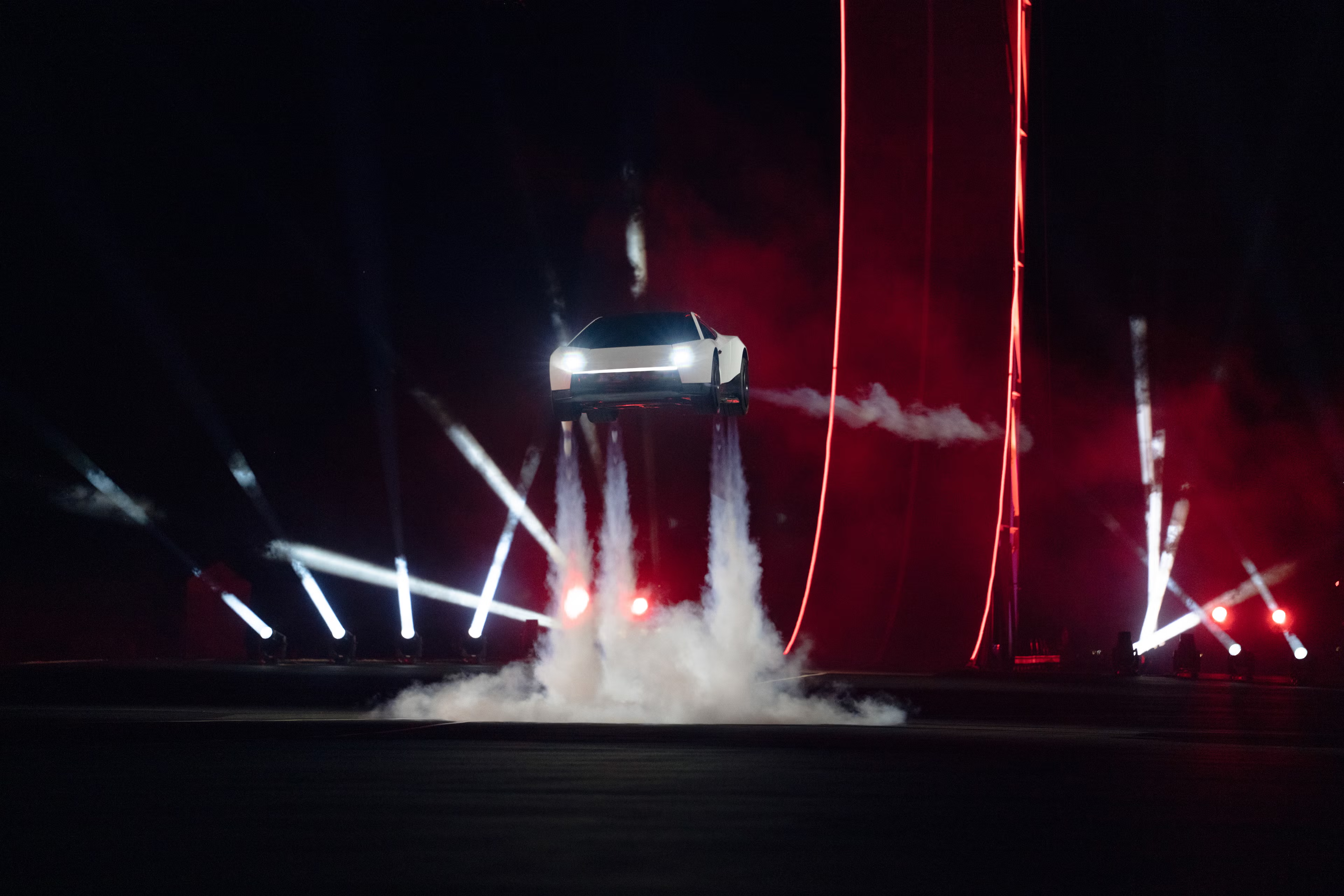 Tesla may have given a look into a possible future just this week – but Margolis thinks owning a car in the city will be kaput in 40 years time (Tesla)
I’ve been writing about serious future prediction (as opposed to psychic options) for 30 years. My book A Brief History of Tomorrow came out at the beginning of 2000 and examined thousands of years of attempts to predict the future – ending with a few informed guesses of my own.
I got a few more or less on target – the rise of Islamism and the probability of an unprecedentedly extreme terrorist incident; the isolating effect of the internet on people and the need to re-learn how to socialise and have conversations; the revived interest in old-fashioned analogue technologies, from vinyl to cassettes to film cameras.
Cassi’s predictions for 2066, with a calculated probability for each
The planet will be wearing shades. Some form of sunshade will protect Earth by reducing the amount of solar energy absorbed at a climatically significant scale.
Likelihood: 20 per cent
The Benjamin Button effect. A major health regulator will approve a therapy explicitly targeting biological ageing. But such advances in “geroscience” are more likely to happen in Japan or China, where there will be higher regulatory flexibility.
Likelihood: 21 per cent
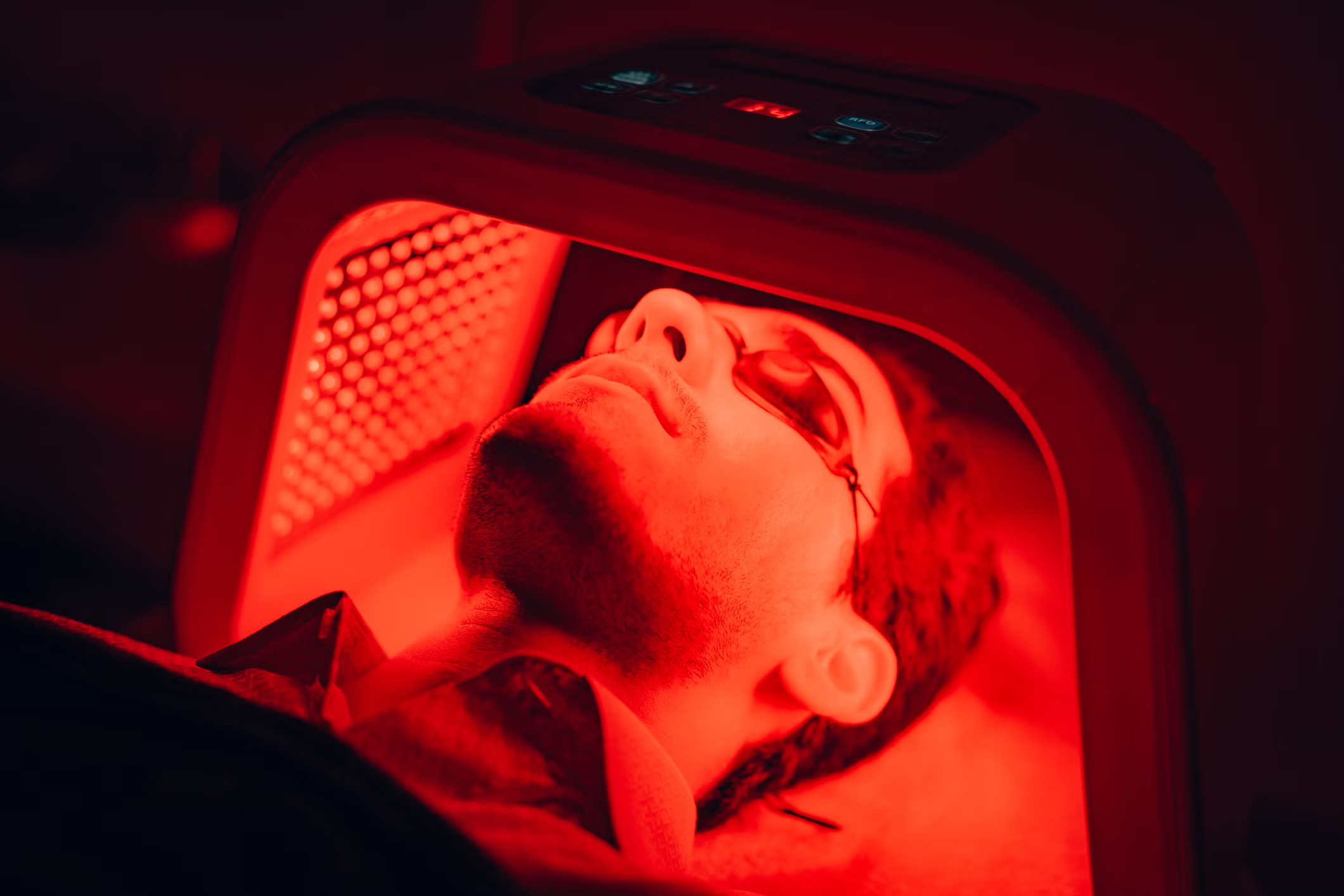 Seeing red: technology could make light work of many aspects of the ageing process (Getty)
The age of shape-shifting furniture – substantial, human-scale things that switch automatically between at least two distinct functions “through distributed material deformation or internal reconfiguration”. Cassi explains this doesn’t mean ordinary hinged sofa beds, reclining chairs and adjustable desks, but that in 40 years, material science and programmable structures could progress from laboratory experiments to real products. They may not quite be in IKEA yet, though. “Achieving a 10 per cent regular household penetration rate in the UK requires transition from niche luxury products to mass consumer adoption.”
Likelihood: 14 per cent
News media like The Independent will no longer be human-led. The good news is that original journalism and human oversight remain probable.
Likelihood: 54 per cent
Thought transference. At least 10 per cent of UK adults will be able to compose and silently transmit messages directly from the brain using implants or minimally invasive adaptations rather than existing methods such as eye-tracking.
Likelihood: 15 per cent
We’re going to live forever. Well, longer, anyway. Maybe. It’s just about possible, Cassi calculates, that average or typical life expectancy will exceed 100 by 2066. But 90- to 95-year lifespans are more likely.
Likelihood for 100 years: 9 per cent
Jonathan Margolis’s predictions, done without AI
Democracy will be abandoned, mostly to stop extreme populists gaining power, but really to make way for benevolent autocracies, mostly run by AI.
Likelihood: 20 per cent
Universal benefit, under which everyone is entitled to a decent living wage regardless of whether they work, will be adopted due to AI fulfilling so many of the jobs currently done by humans.
Likelihood: 50 per cent
People will pray to AI deities because, unlike gods, they may answer their prayers.
Likelihood: 65 per cent

There will be a global shortage of children, since better economic conditions globally will lead to smaller families. But there will be a huge population of healthy older people up to and over 100.
Likelihood: 70 per cent
China will be the most significant nation. The US will still be the wealthiest nation, but will never recover its international prestige post-Trump. If there is a post-Trump and Barron becomes President for life.
Likelihood: 80 per cent
A current Premier League football club will be struggling down in League 2; a currently struggling League 2 club will be in the top flight.
Likelihood: 90 per cent
Printers will still jam up and be generally awful.
Likelihood: 99 per cent
There will be a surfeit of plumbers, people who trained as craftspeople in their late twenties and thirties to futureproof their work. The problem will be that there are now so many, they will have to compete on price.
Likelihood: 60 per cent
The supposedly woke generation, now in their sixties, will be embarrassed about much of what they believed in 2026, while young people will have found new concerns – one possibly being that an AI friend or romantic partner should have the rights of a human being.
Likelihood: 65 per cent
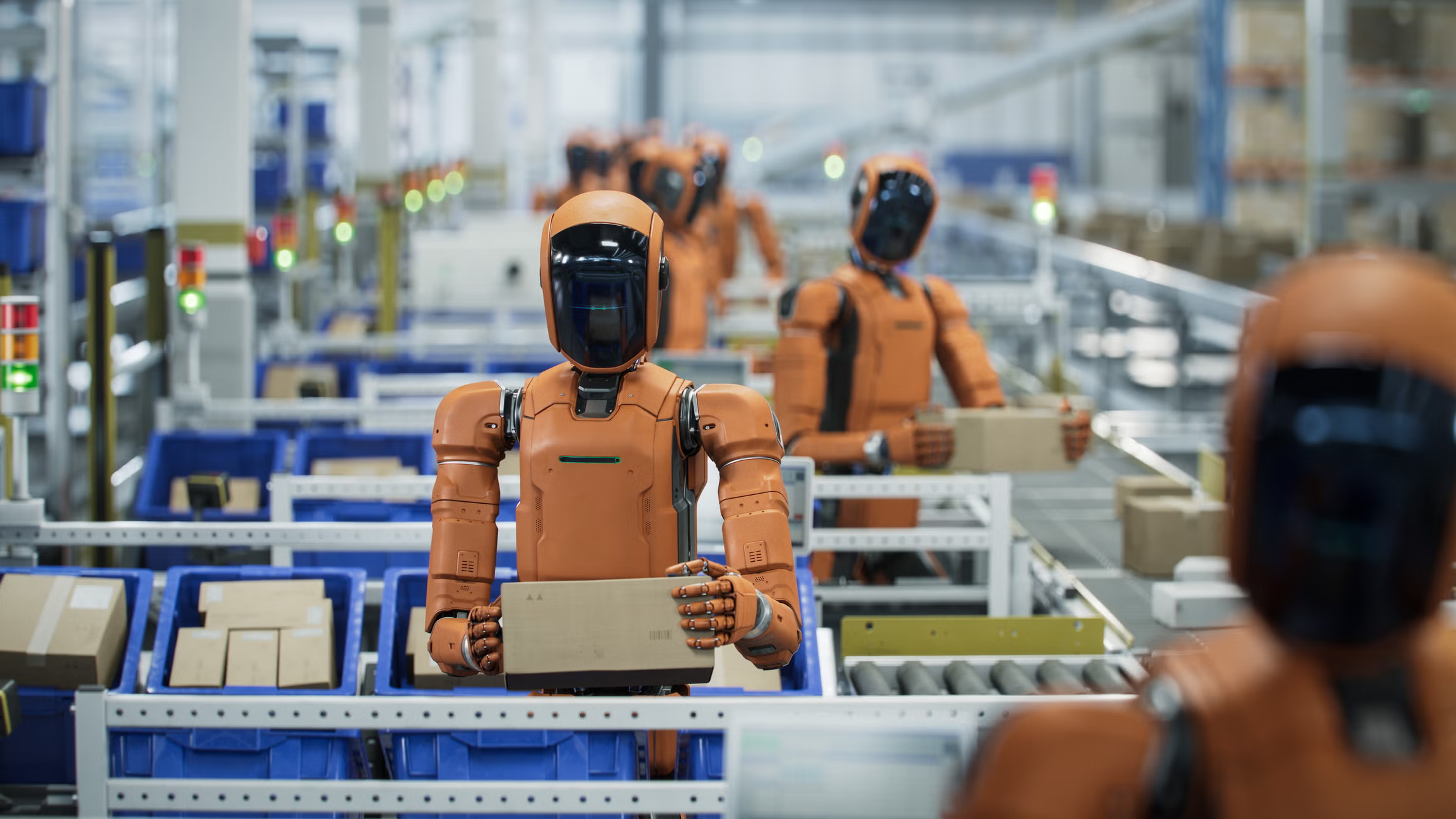 Jonathan says that robots will be great delivery people – but don’t trust them with your brew (Getty)
Humanoid robots will still be unable to carry a cup of tea upstairs without spilling it – but will be doing a great deal of work like delivering parcels.
Likelihood: 90 per cent
Car ownership will be almost unknown in cities, which will be served by 24-hour free self-driven pods. In the countryside, however, cars, some still petrol-powered, will still be essential.
Likelihood: 80 per cent