
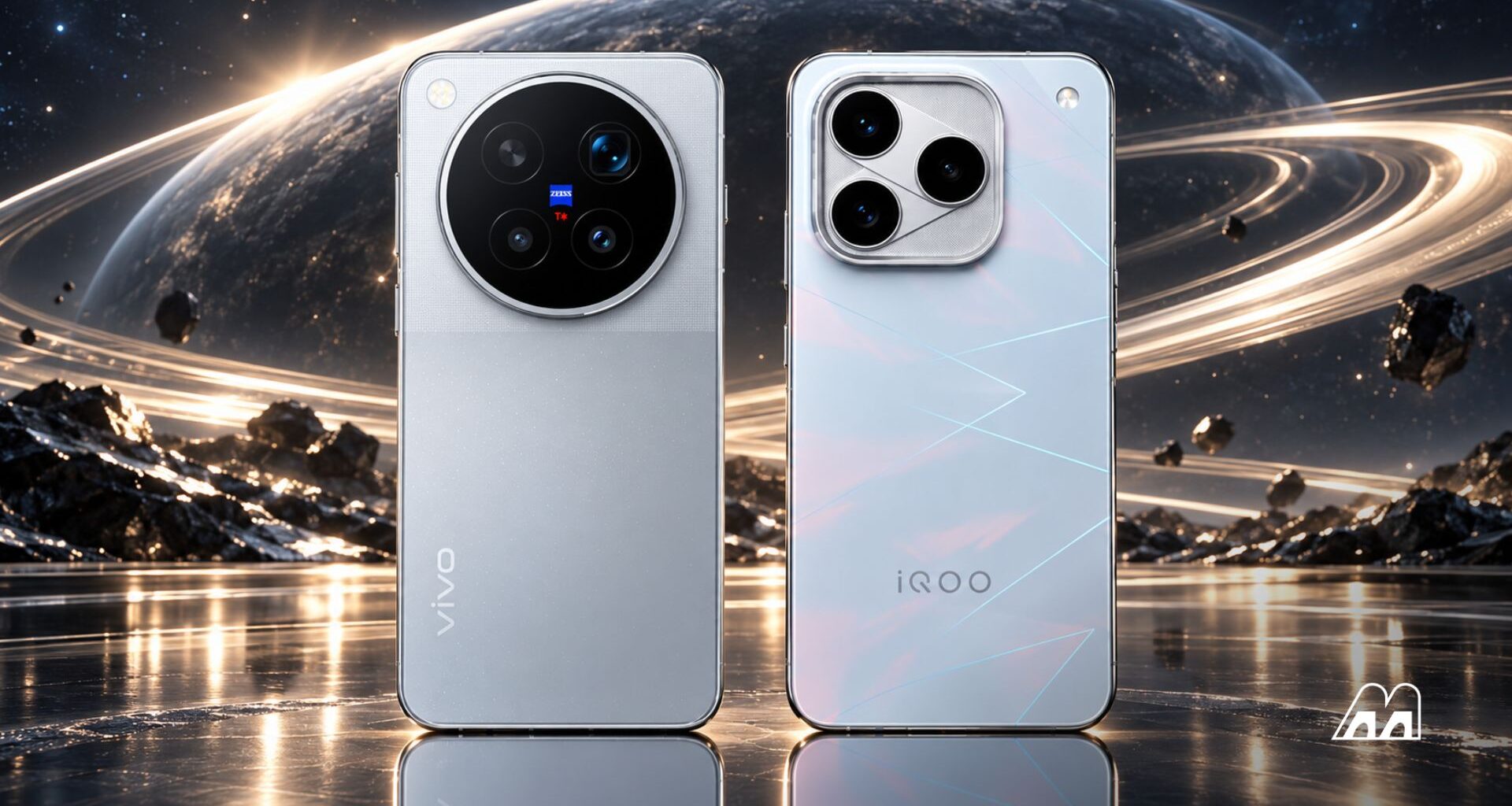
The iQOO 16 and the Vivo X500 Pro Max come from the same company, run the same software, and were launched just eight days apart in China, yet one costs CNY 1,000 (~$149) more. That matters right now because the X500 Pro Max goes global on October 27 and the iQOO 16 is confirmed for India, so a lot of you will soon pick between them with your own money. Here’s how they compare across seven rounds, and who should spend the extra.
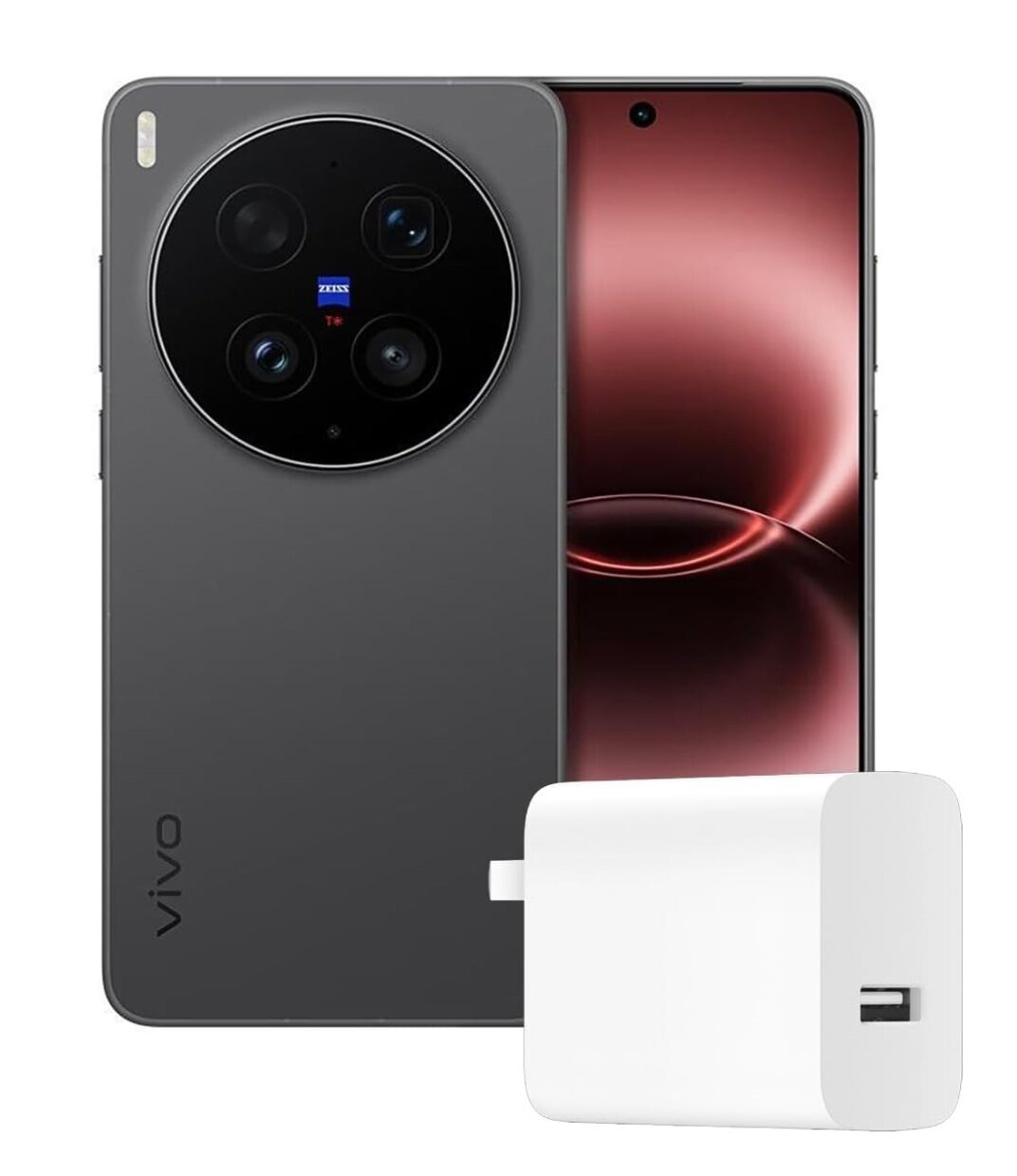 Best Choice
VIVO X300 Ultra 5G
Overview
6.82-inch AMOLED display with smooth 120Hz refreshFlagship chipset delivers powerful performance and efficiencyAdvanced ZEISS cameras capture stunning professional-grade photos CHECK PRICE
See latest price on Amazon
Why These Two Phones Are Basically Siblings
First, a quick family tree. iQOO is a sub-brand of vivo, the way a carmaker might sell a sporty badge next to its luxury line. That’s why both phones run OriginOS 7 on Android 17, share the same 6.85-inch screen size, the same 2K resolution (3168 x 1440), and the same IP68 and IP69 ratings.
The split comes from what each team was told to chase. Vivo built the X500 Pro Max around cameras co-branded with Zeiss, the German lens maker. iQOO built the iQOO 16 around gaming speed, cooling and battery life.
Vivo launched the X500 Pro Max on September 21. The iQOO 16 followed on September 29. In our view, that eight-day gap wasn’t an accident: Vivo wanted two clear answers for two kinds of buyers, not one phone that tries to do everything.
Design: Vivo Is Thinner, Both Are Tough
The X500 Pro Max measures 8.1mm thick and weighs 225g. The iQOO 16 sits between 8.3mm and 8.6mm and 222.5g to 229.8g, depending on the finish you pick.
Both carry IP68 and IP69 ratings. IP ratings are dust-and-water scores: IP68 means the phone survives being submerged, and IP69 covers hot, high-pressure water jets. Both also use ultrasonic fingerprint sensors, which read your finger with sound waves, so they work better with wet hands.
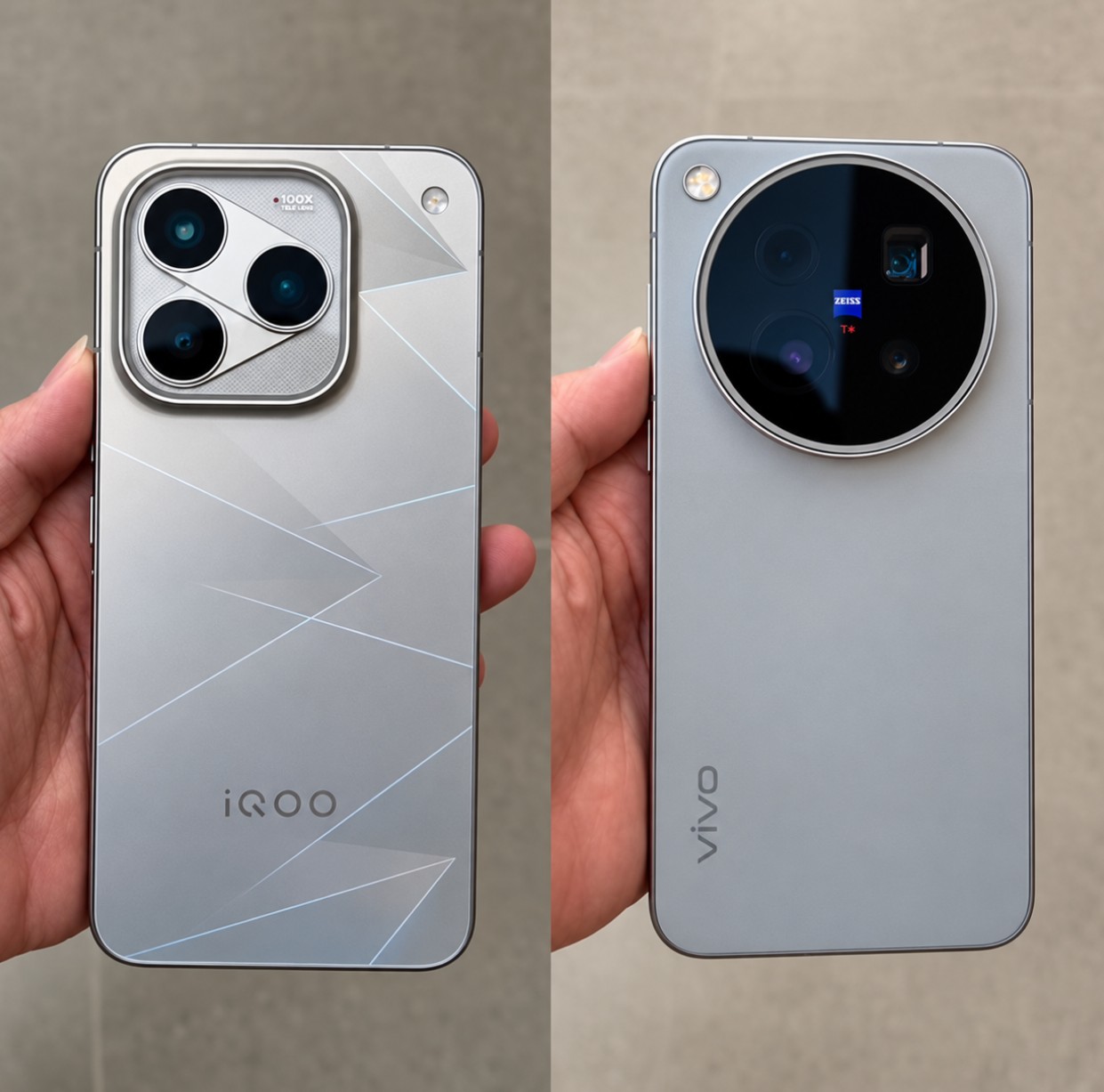
The looks are where they part ways. Vivo goes for a clean, camera-first back with a huge round module. iQOO goes louder with a see-through camera window and a laser-holographic finish on some colors.
Vivo wins narrowly. Half a millimeter doesn’t sound like much, but it’s noticeable in a jeans pocket on a phone this big.
Display: iQOO Is Faster and Brighter Across the Whole Screen
Same size, same resolution, so the fight comes down to speed and brightness.
DisplayVivo X500 Pro MaxiQOO 16Size and resolution6.85″, 3168 x 14406.85″, 3168 x 1440Refresh rateUp to 144Hz, LTPOUp to 165HzFull-screen brightness~2,000 nits (high-brightness mode)Up to 2,800 nitsPeak brightness claim4,400 nits (small area)10,000 nits (tiny spot, video)HDR formatsHDR10+, Dolby VisionHDR
Refresh rate is how many times per second the image updates, so higher means smoother scrolling and gaming. LTPO is a screen tech that can slow the refresh rate down when nothing’s moving, which saves battery. Nits measure brightness.
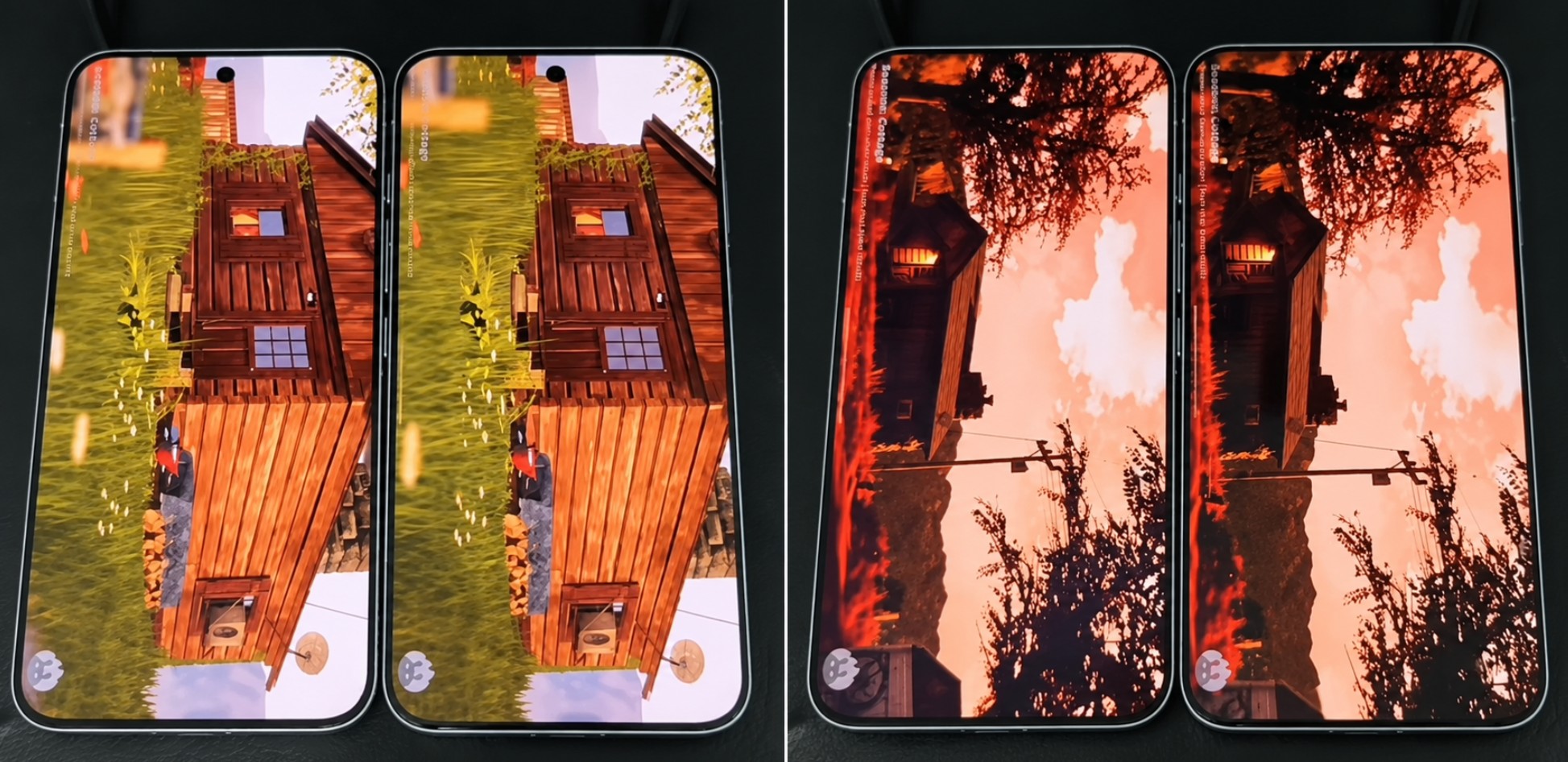
Here’s what we’d focus on. The peak numbers (4,400 and 10,000 nits) only apply to small highlights, so they’re mostly marketing. The full-screen figure is the one you’ll feel reading a map in direct sun, and iQOO’s 2,800 nits is a big lead over Vivo’s roughly 2,000.
iQOO wins. Vivo’s LTPO and Dolby Vision support are real perks if you watch a lot of HDR video, but the iQOO panel is faster and brighter where it counts.
Performance and Gaming: Two 2nm Chips, One Gaming Phone
Both phones use chips built on a 2-nanometer process, the newest and most efficient manufacturing size in phones right now. A smaller process usually means more speed for less heat.
Vivo X500 Pro Max: MediaTek Dimensity 9600 Pro with a Mali-G2-Ultra-NX graphics chipiQOO 16: Qualcomm Snapdragon 8 Elite Extreme Gen 6 with Adreno 850 graphics, plus iQOO’s own Q4 gaming chip
Both top out at 16GB of RAM and 1TB of UFS 4.1 storage, one of the fastest phone storage standards. Raw speed is close enough that you won’t notice a difference opening apps or editing photos.
Gaming is a different story. The Q4 chip handles frame generation, which inserts extra computer-made frames between real ones, so supported games look smoother at up to 165fps. iQOO also pairs it with an 8,500mm² vapor chamber, a flat pocket of liquid that pulls heat away from the chip, and 5,000Hz instant touch sampling, which helps your taps register faster.
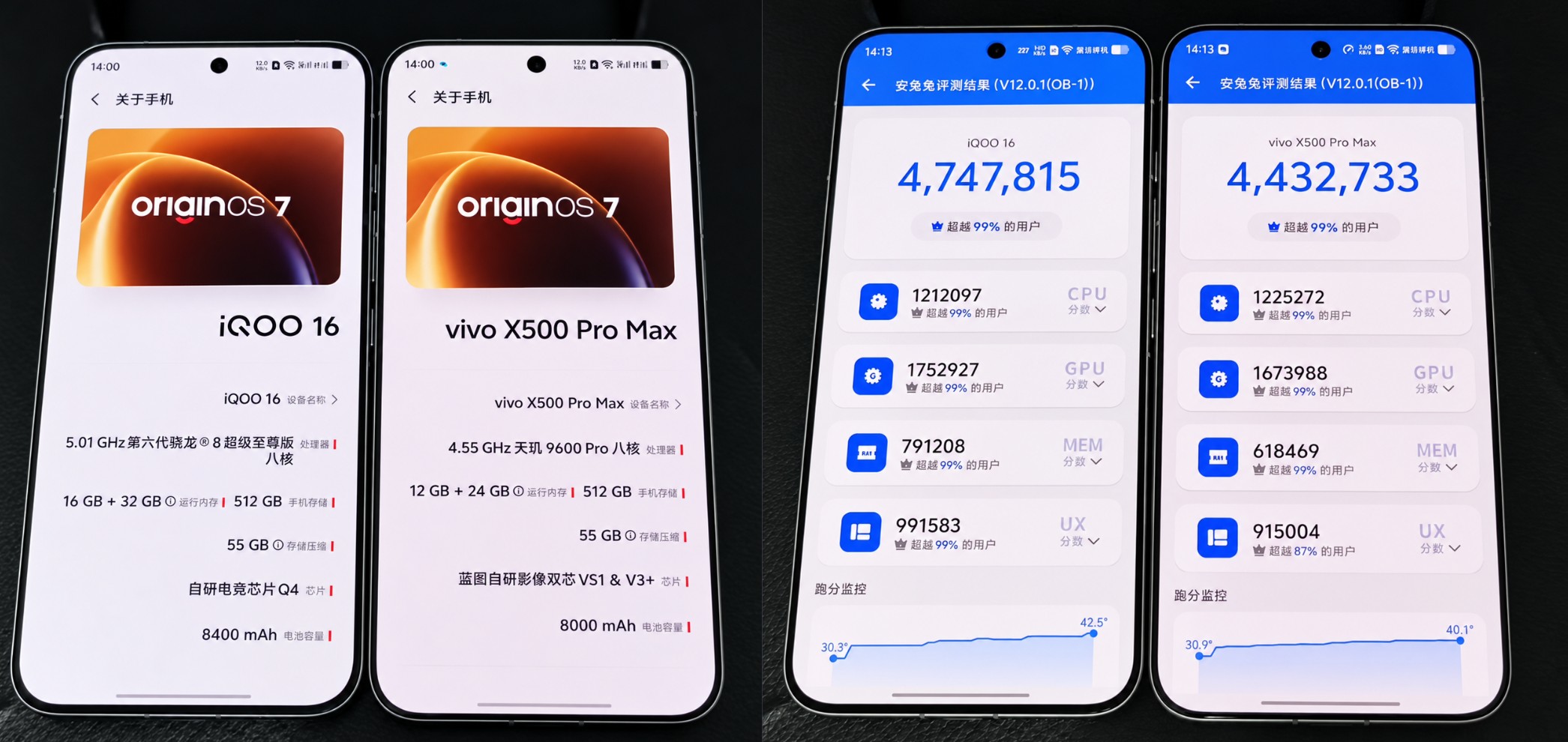
Vivo’s chip is no slouch, but it’s tuned for camera processing, not long gaming sessions. We’ve seen this pattern before: the Dimensity 9600 Pro is shared by three phones, and each brand pushes it in a different direction.
iQOO wins. If you play for more than 20 minutes at a time, the extra cooling and gaming chip are the whole point of this phone.
Cameras: This Is Where Your $149 Goes
This round isn’t close, and it’s the reason the X500 Pro Max costs more.
CameraVivo X500 Pro MaxiQOO 16Main50MP, 1/1.28-inch, f/1.6, OIS50MP, 1/1.3-inch, f/1.68, OISTelephoto200MP periscope, 3.5x, 1/1.4-inch, OIS50MP periscope, 3x, OISUltrawide50MP with autofocus50MPSelfie50MP with autofocus32MPExtrasZeiss optics, laser autofocus, color spectrum sensor—Teleconverter supportYes, 400mm Zeiss lensNo
The main cameras are closer than you’d think. Both use big sensors of about the same size, and a bigger sensor catches more light for cleaner night shots. OIS (optical image stabilization) physically moves parts of the camera to cancel hand shake. For a gaming phone, the iQOO 16’s 1/1.3-inch main sensor is a real step up, and in daylight you’d struggle to tell the two main cameras apart.
The gap is the zoom camera. A periscope lens folds light sideways inside the phone, so it can zoom further without a thick bump. Vivo puts a 200MP sensor behind its 3.5x periscope, which means you can crop deep into a shot and still keep detail. It also focuses as close as about 15cm, so it doubles as a sharp close-up camera.
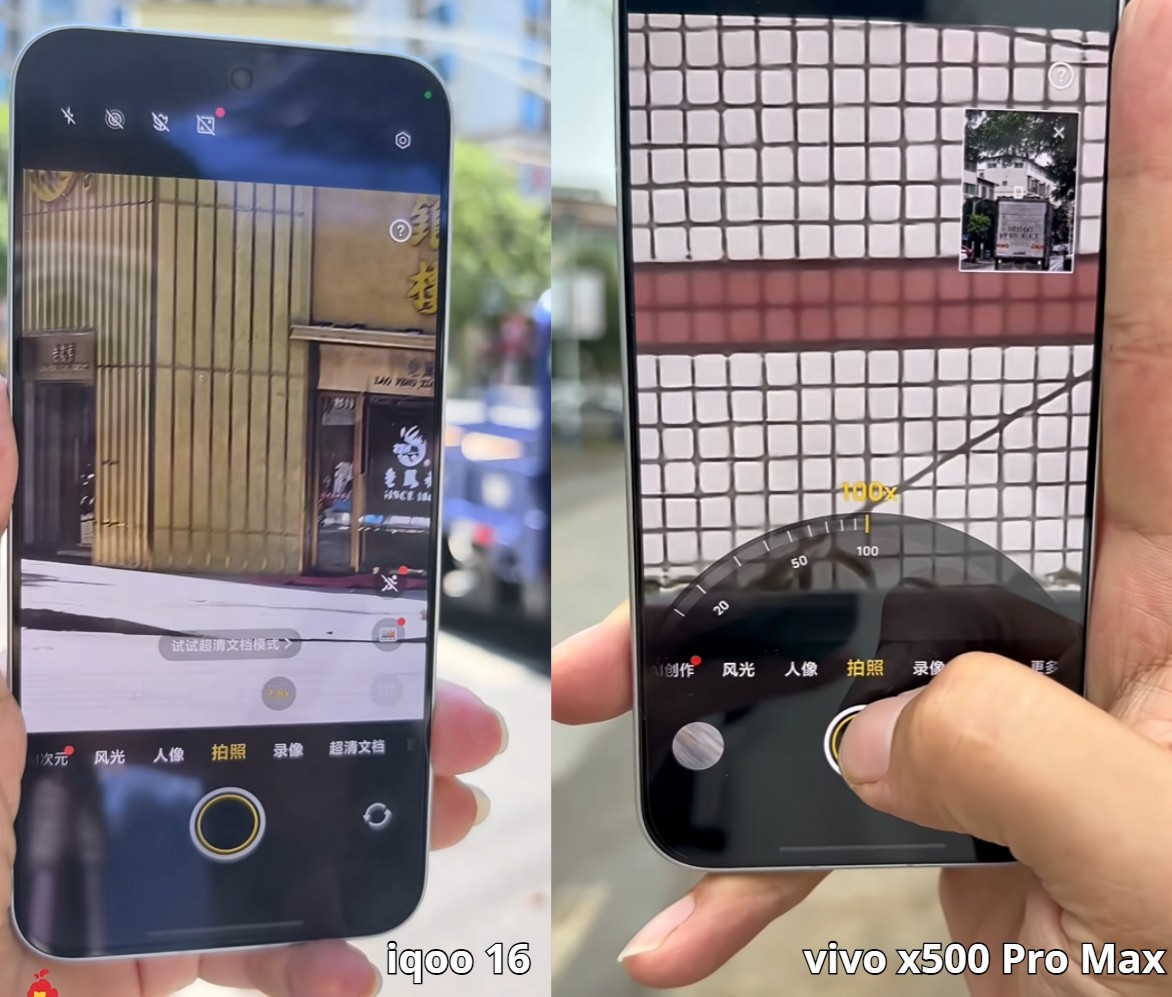
Then there’s the add-on. Vivo sells a clip-on Zeiss teleconverter, an extra lens that sits over the zoom camera and stretches it to a 400mm equivalent. That’s the kind of reach you’d normally need a dedicated camera for, at a concert or a kid’s football match. iQOO doesn’t support anything like it.
Selfies also go to Vivo. A 50MP front camera with autofocus keeps your face sharp even when you hold the phone at odd distances or shoot a group, and it simply resolves more detail than iQOO’s 32MP shooter.
Vivo wins by a mile.
Video: Vivo Shoots More Ways
Both phones record up to 8K at 30fps. Past that, Vivo pulls ahead:
4K at up to 240fps in slow-motion modes on Vivo, versus 4K at 60fps on iQOO4K 120fps with DCG HDR on Vivo, a sensor trick that keeps bright skies and dark shadows in the same clip10-bit Log on Vivo, a flat-looking recording style that gives editors more room to adjust colors later4K 60fps selfie video on both
If you just shoot clips for Instagram, either phone is fine. If you edit your video or want smooth slow-motion, the X500 Pro Max is the one.
Vivo wins.
Battery and Charging: iQOO Has More, and Fills It FasterBatteryVivo X500 Pro MaxiQOO 16Capacity8,000mAh silicon-carbon8,400mAh silicon-carbonWired charging90W100WWireless charging40W (needs Vivo’s stand)40WReverse chargingWired and wirelessNot listedBypass chargingNot listedYes
mAh (milliamp-hours) is how much charge a battery holds. Both use silicon-carbon cells, which pack more energy into the same space than older batteries, and that’s how phones this thin hit 8,000mAh-plus.
The iQOO 16’s battery is 5% bigger by our math, and it charges a little faster. It also supports bypass charging, which feeds power straight to the phone while you game plugged in, so the battery stays cooler and wears out more slowly.
Vivo hits back with reverse wireless charging, so you can lay your earbuds on the back of the phone to top them up. That’s handy, but it doesn’t make up for a smaller tank.
iQOO wins.
Price and Availability: iQOO Is Cheaper, Vivo Is Closer to Your Store
Here’s what both cost in China:
StorageVivo X500 Pro MaxiQOO 1612GB + 256GBCNY 6,999 (~$1,045)CNY 5,999 (~$895)12GB + 512GBCNY 7,999 (~$1,194)CNY 6,799 (~$1,015)16GB + 512GBCNY 8,499 (~$1,269)CNY 7,499 (~$1,119)Top modelCNY 8,999 (~$1,343), 12GB + 1TBCNY 8,499 (~$1,268), 16GB + 1TB
In China, iQOO saves you about $149 at almost every tier, and its 1TB model even comes with more RAM for less money.
Outside China, the picture flips. The X500 Pro Max launches in Europe on October 27, with leaked European pricing of €1,799 (~$2,100) for 12GB/512GB and €1,999 (~$2,340) with the Photographer Kit. That’s a steep markup over China, as usual for imported flagships.
The iQOO 16 is confirmed for India, but there’s no date yet. Reports point to December or early 2027, at a price that could land near Rs 1,00,000 (~$1,050). Neither phone is sold in the US.
iQOO wins on price. Just remember that a phone you can’t buy locally isn’t a deal at all, so check what actually reaches your market.
So, Which One Should You Buy?
Here’s where we landed after going through both spec sheets, prices, and launch plans line by line.
RoundVivo X500 Pro MaxiQOO 16Our pickDesign8.1mm, 225g8.3–8.6mm, 222.5–229.8gVivo (narrowly)Display144Hz LTPO, ~2,000 nits165Hz, 2,800 nitsiQOOPerformance and gamingDimensity 9600 ProSnapdragon + Q4 chipiQOOCameras200MP 3.5x, 400mm add-on50MP 3xVivoVideo4K 240fps, 10-bit Log4K 60fpsVivoBattery and charging8,000mAh, 90W8,400mAh, 100WiQOOPriceFrom ~$1,045From ~$895iQOO
iQOO 16 wins 4 rounds to 3.
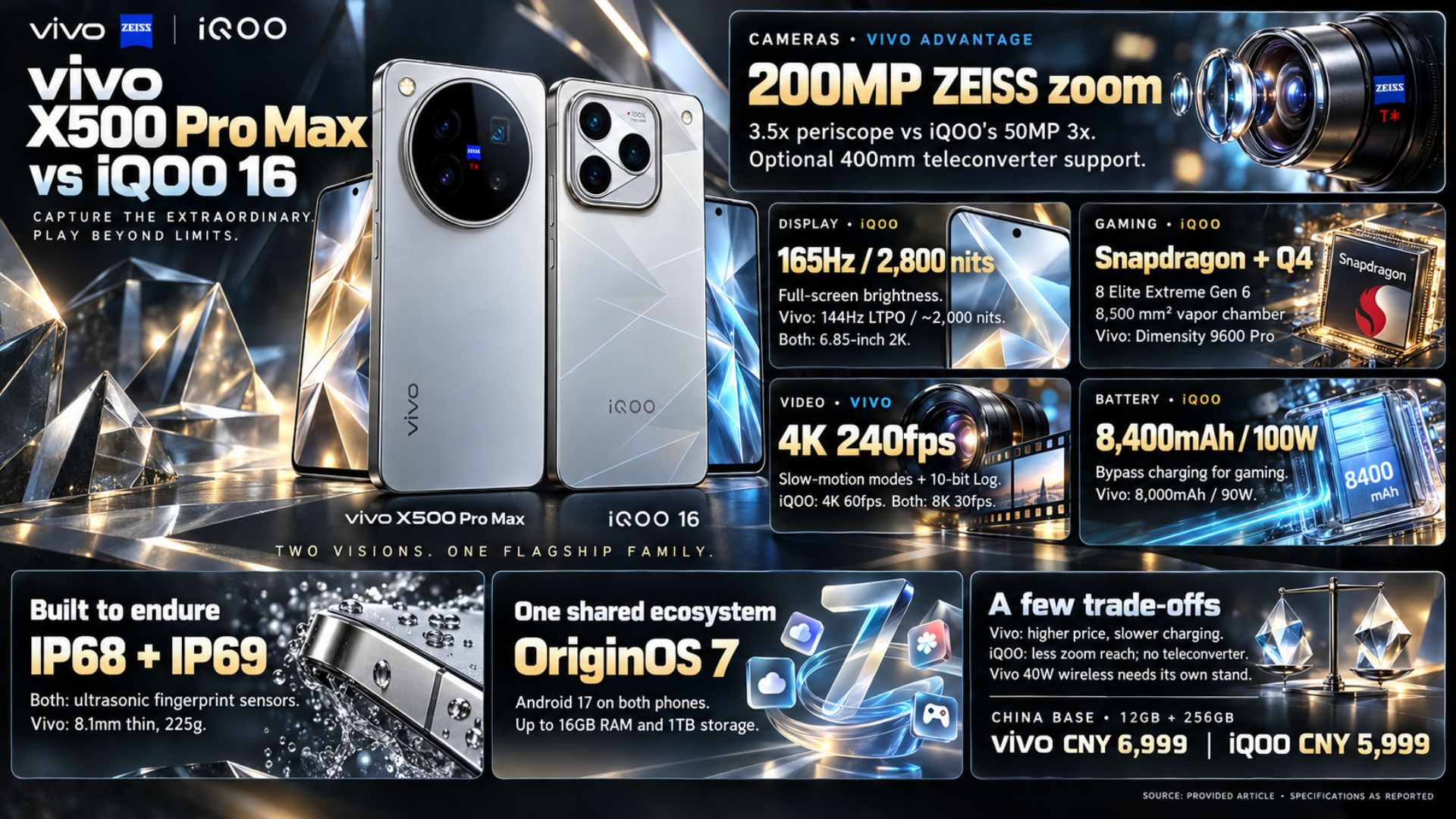
Get the iQOO 16 if you game a lot, want the brightest screen and the longest battery life, or simply want flagship speed for less.
Overview
6.78 inches, LTPO AMOLED, 1B colors,1272 x 2772 pixels512GB Storage, 16GB RAMAndroid 16, OxygenOS 16, Qualcomm SM8850-AC Snapdragon 8 Elite Gen 5 (3 nm) View deal
See latest price on Amazon
Get the Vivo X500 Pro Max if your phone is your main camera, you shoot zoom photos at events or travel, or you edit video.
Best Choice
VIVO X300 Ultra 5G
Overview
6.82-inch AMOLED display with smooth 120Hz refreshFlagship chipset delivers powerful performance and efficiencyAdvanced ZEISS cameras capture stunning professional-grade photos CHECK PRICE
See latest price on Amazon
On paper, the iQOO 16 is the better all-rounder. But $149 for a 200MP zoom camera, a 400mm add-on lens, and autofocus selfies is the cheapest serious camera upgrade on Android this fall. If photos are the reason you upgrade, that’s money well spent. If they aren’t, don’t pay for a camera you won’t use.
FAQsCan the Vivo X500 Pro Max beat the iPhone 18 Pro Max?
On hardware, yes, in most areas. It has a bigger battery, a longer zoom, and faster charging. Apple still leads on video workflow and software support, which is why the X500 Pro Max vs iPhone 18 Pro Max matchup ends closer than the spec sheet suggests.
Is there a cheaper iQOO phone for gaming?
Yes. The iQOO Neo 12 uses last year’s flagship chip, adds a 2K 185Hz screen and a 9,000mAh battery, and should cost well below the iQOO 16. For most mobile games, last year’s top chip is still more than fast enough.
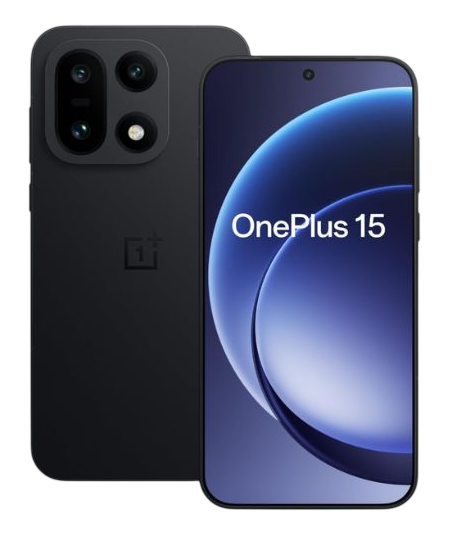
How does the iQOO 16 compare with the OnePlus 16?
They share the same Snapdragon chip and the same CNY 5,999 (~$895) starting price. OnePlus has a bigger 9,000mAh battery and better video, while iQOO has a brighter 2K screen.
What’s the best camera phone if you can’t buy Chinese models?
In the US, your realistic picks are Apple, Samsung, and Google. Samsung’s Ultra is the closest match for long zoom, though it costs more and its sensor is older. We put Vivo’s flagship against the Galaxy S26 Ultra to see where the money goes.
Should you wait for Black Friday to buy a flagship phone?
Usually, yes, if the phone is already on sale in your country. Discounts on Samsung and Google flagships often hit 15% to 25%. Brand-new Chinese flagships rarely get big cuts in their first months, so our Black Friday phone deals list focuses on models that have been out a while.