
She told the BBC that if a mobile testing van like the one that will be in Wolverhampton, which does not require an appointment, can help with access to smear tests, women should take it up.
“Anyone that’s just delayed having their smear because they can’t get out of work, or can’t get to the GP or whatever – I think it’s just one less barrier, isn’t it?”
“There’s so many cancers out there that people get, and they get the diagnosis and they have their treatment and they just have to deal with it.
“Cervical cancer is one of the few that can be screened so early… you can’t do that for other cancers, so it’s just crazy to not take that opportunity to be screened.”
NHS England officially changed the routine screening interval for the 25–49 age bracket to every 5 years, external to align with Scotland and Wales.
Bagnall said after the colposcopy, she was officially diagnosed with cervical cancer. Her daughter was just eight months old at the time.
“All I kept saying and thinking was: ‘I have just become a mum and I have a little baby’.”
“It’s just all I could fathom to say. It was like complete disbelief.”
What followed were countless tests and procedures at New Cross to remove the cancer and as little of her womb as possible in the hopes of conceiving in the future.
Eventually, in 2020, Bagnall had a hysterectomy.
“Everything was taken out to lower the risk of residual, recurrent or secondary cancer,” she said.
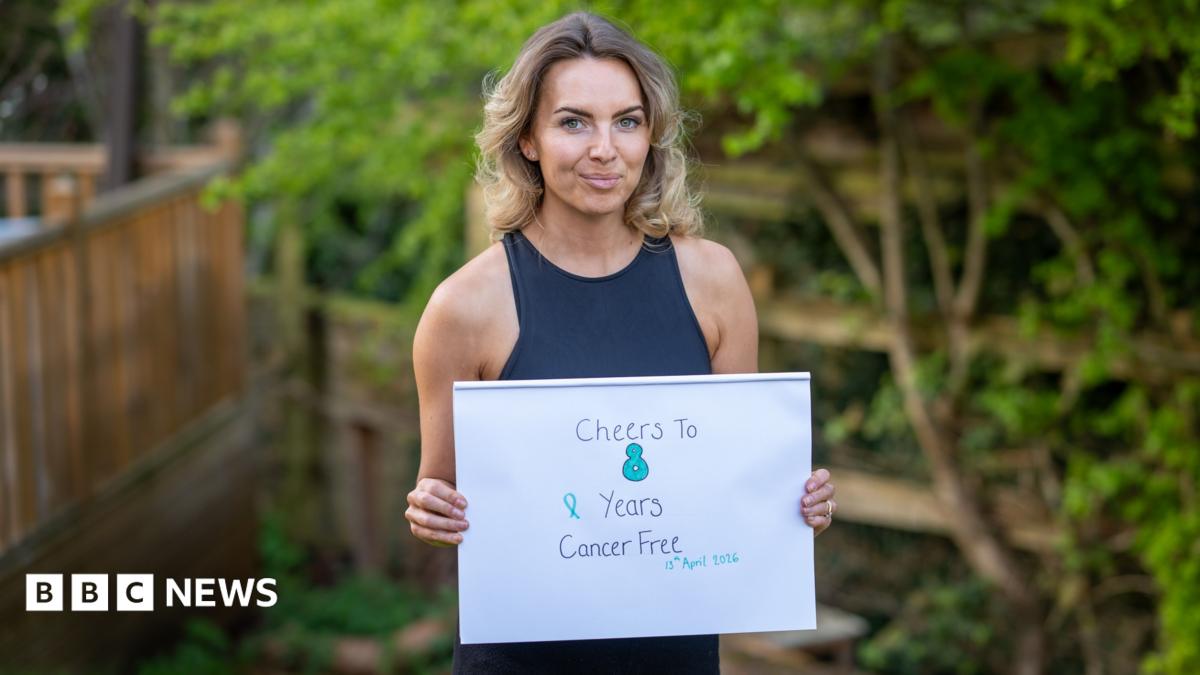
“I’ve been cancer-free for eight years now, so that it is fantastic, I was signed off, so to speak, when I got to between five and six years.
“But then with the hysterectomy and the ovary removal, I went into surgical menopause, so I then started dealing with menopause in my early 30s.”
She added: “Dealing with menopause probably has been just as hard as dealing with the cancer itself.”