
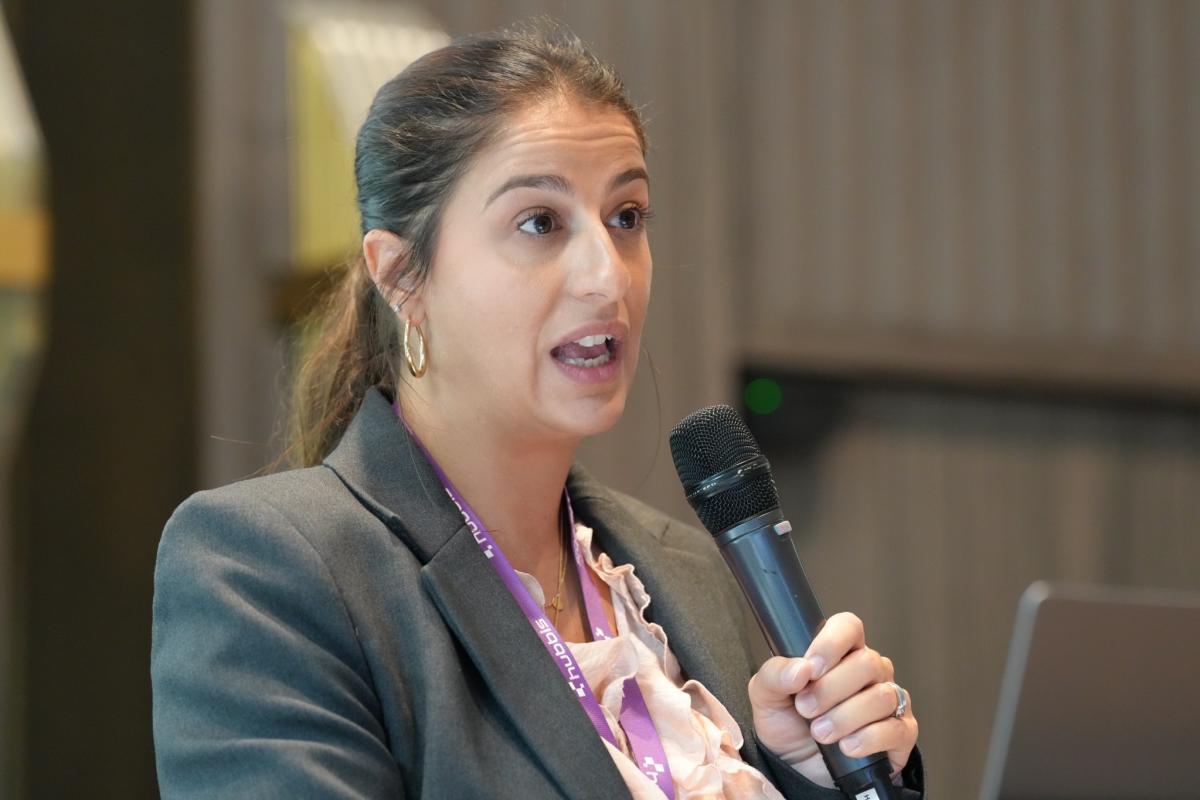
At the Hubbis HNW Insurance Summit – Zurich 2026, Barbara Stel, Senior Case Structuring Officer at WEALINS, explained how the Luxembourg-based insurer approaches complex wealth planning for families whose lives, assets and beneficiaries span several jurisdictions.
Her presentation was organised around three observations: clients no longer spend their lives in one country, tax is only one part of their risk, and the quality of the structuring process matters alongside the solution itself. The emphasis was on understanding a case before subscription and coordinating the specialists needed to make it work.
Barbara’s account placed pre-assessment, governance and digital service within the same proposition. A flexible policy is useful only if it can accommodate the client’s assets, fit the relevant legal and distribution rules, and be implemented through a predictable process.
Key Takeaways
Assess the Family Across Borders: Residence, nationality, future moves and the location of beneficiaries all contribute to the appropriate structure.
Review Existing Arrangements First: Trusts, holding companies and current portfolios need to be considered before deciding how insurance should fit.
Tax Is One Planning Concern: Succession, liquidity, asset protection and investment concentration can be more important than the issue that first brings a client to the discussion.
Investment Flexibility Has Conditions: Private placement life insurance can accommodate a broad investment universe, subject to the market, policy and asset-specific rules.
Distribution Requires Local Assessment: Barbara described the use of internal and external expertise to establish how a solution can be offered compliantly in each jurisdiction.
Governance Supports Complex Cases: Non-standard profiles are reviewed through a pre-acceptance committee involving senior management.
Digital Service Starts Before Subscription: Early reviews and accessible partner tools are intended to identify obstacles and make onboarding more predictable.
Mobility as the Starting Point
Barbara opened with a brief joke about treating the time before lunch as efficiently as a wealth planner treats taxes, then moved to a more substantive observation: international families are no longer a niche category.
Her example was a client living in Dubai, holding assets in France, with children studying in the United Kingdom and plans to retire in Italy. Each location can introduce a different requirement. Parents, beneficiaries and other family decision-makers may also live in separate countries, making a single-residence view of the case incomplete.
WEALINS’ response, she explained, is to assess the profile globally before the policy is subscribed. The objective is to establish an appropriate framework at the outset, with potential future moves considered alongside the client’s current position. A European connection can provide a starting point for an international solution, but it does not remove the need to assess the other jurisdictions involved.
Gathering the Information That Determines the Structure
Barbara outlined the information needed for that assessment: nationality, country of residence, possible future destinations, objectives, the residence of beneficiaries, existing structures and the nature and location of assets. Each element is checked against the others rather than assessed in isolation.
That process can expose practical questions early. A current portfolio may include investments that cannot be transferred into the proposed policy, or a holding structure may need to be retained for a purpose that insurance does not replace. Transferring assets can itself have tax or regulatory consequences.
Barbara described investment flexibility as an important feature of private placement life insurance. Traditional investments, private equity funds and, in certain circumstances, private companies can be considered. Dedicated in-house specialists support the more sophisticated arrangements, with eligibility and implementation assessed under the relevant rules.
Establishing a Compliant Route to the Client
The client’s residence also determines how the solution can be distributed. Barbara described WEALINS as working across 11 markets and more than 20 additional international countries, supported by internal specialists and an external network of legal and tax professionals.
For each case, the assessment includes the local regulatory environment and the basis on which the insurer and its partners can operate. Activity outside the European freedom-to-provide-services framework needs its own analysis.
She highlighted reverse solicitation rules should be strictly respected at all times, particularly where licensing requirements are strict. Its relevance must be established locally; it is not a universal route around regulatory obligations. The practical requirement is to involve partners who understand both the jurisdiction and the proposed distribution activity.
Looking Beyond the First Tax Question
Barbara observed that a business owner preparing for a sale may initially frame the discussion around tax. Further examination can reveal concerns about succession, protecting assets or ensuring that wealth passes smoothly to the next generation.
She identified premature death, succession liquidity, cross-border complexity, family wealth transfer and investment concentration as risks to consider. Once those priorities are clear, the task is to combine an appropriate product with the investment architecture and contractual features needed to support them.
Death cover and the beneficiary clause are part of that design, as are the contract’s ownership arrangements and relationships with the bank, asset manager, legal advisers and broker. Existing trusts, family holding companies or other vehicles may remain relevant. In a complex family, the structure may need to accommodate those entities while addressing beneficiaries in several countries.
The objective was an arrangement capable of remaining relevant as circumstances change. That requires coordination between different areas of expertise, including external stakeholders whose decisions affect the policy’s operation.
Making Service Part of the Structuring Proposition
Barbara’s third theme was service excellence. She described structuring as a coordinated effort rather than the responsibility of a single department. At WEALINS, non-standard profiles and their proposed arrangements are submitted to a pre-acceptance committee composed of senior management, providing oversight of consistency, quality and risk.
Where appropriate, a compliance review can also take place before subscription. That allows potential problems to be identified while the case is still being developed, rather than emerging after the client expects the policy to be ready.
Digital tools support this process. Barbara described a partner platform accessible at any time and a largely digital workflow intended to improve communication and shorten feedback cycles. The desired result is straightforward: once the client reaches subscription, the steps should be efficient and predictable.
Her concluding argument was that products can be replicated and tax rules can change. The continuing value of a cross-border provider lies in anticipating how those changes affect the family and coordinating the response. Pre-assessment and service are therefore part of the planning outcome, rather than simply the administration that follows it.