
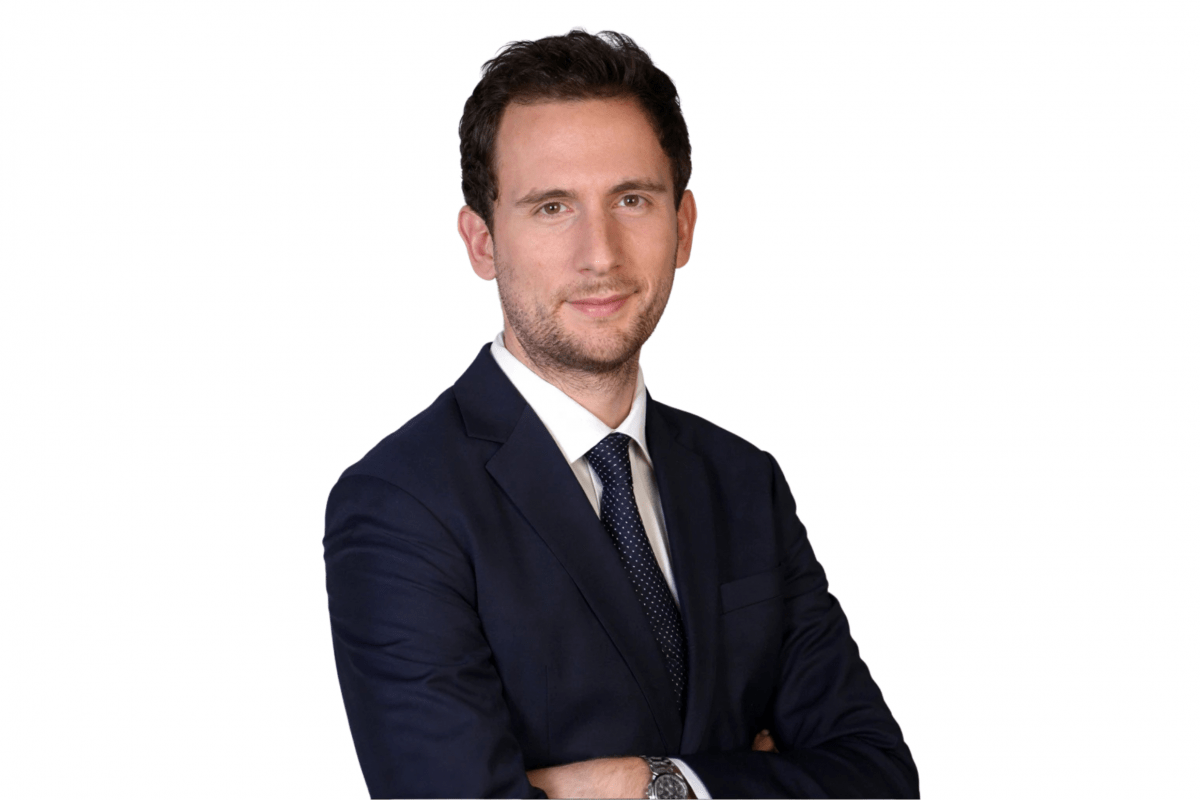
Private wealth clients are operating in a more complex investment environment. Passive strategies have changed the economics of fund selection, alternatives have moved further into mainstream portfolios, and artificial intelligence is beginning to reshape both research and advisory workflows.
For Adrien Lalau, Head of Investment Funds Advisory, Asia at BNP Paribas Wealth Management, these shifts make client understanding, portfolio construction and disciplined diversification more important than ever, he explained in an exclusive interview with Hubbis. The bank’s proposition is built around identifying what clients are trying to achieve, and selecting the investment solutions that fit those objectives.
That approach is becoming increasingly relevant as investors move between public markets, private assets, passive building blocks, discretionary portfolio management, managed funds, liquid alternatives and more sophisticated advisory tools. The task for wealth managers is to make that wider opportunity set coherent, usable and aligned with each client’s actual needs.
Key Takeaways
BNP Paribas Wealth Management starts with client goals: Adrien says the bank’s investment process is designed around understanding what clients need, then identifying the solutions that fit those objectives, risk profiles and wider portfolios.
Segmentation supports more tailored engagement: The bank works across different client segments, from core clients to key strategic relationships, and adapts its approach according to assets under management (AUM), client profile and objectives.
Relationship management remains central: Adrien says private banking remains a relationship business, with trust built through conversation, understanding and long-term engagement.
Culture matters in Asia growth: BNP Paribas Wealth Management is expanding across Singapore, Hong Kong, Thailand and Taiwan, but Adrien says the priority is hiring relationship managers (RMs) who fit the bank’s client-focused culture.
Passive investing has changed fund selection: The rise of exchange-traded funds (ETFs), trackers and other passive strategies has put pressure on active management, especially where performance has struggled to justify fees.
Alternatives are becoming more accessible: Private equity, private credit, hedge funds and liquid alternatives have moved from highly exclusive offerings towards more practical portfolio diversifiers for private clients.
Managed solutions are a growing priority: Adrien sees discretionary portfolio management (DPM) and Chief Investment Office (CIO)-led strategies as ways to combine selected building blocks into portfolios aligned with client needs.
Diversification should come before volatility returns: After several strong years in markets, Adrien says investors should not wait for risk to materialise before building more balanced portfolios.
Artificial intelligence will support, not replace, advice: Adrien expects artificial intelligence (AI) to improve research, fund selection and portfolio construction, while leaving the human relationship at the centre of private banking.
Client Goals First
Adrien says BNP Paribas Wealth Management serves a broad range of clients across Asia, from entrepreneurs and family business owners to family offices and transactionally oriented investors. While the bank segments clients by AUM and profile, he says the more important task is understanding what each client is actually trying to achieve.
That requires relationship depth. Some clients arrive with clearly defined objectives. Others begin with one stated priority, such as wealth transmission, and discover through conversation that they also need financing, investment restructuring or broader portfolio advice.
“The key thing for us is to understand our clients,” Adrien says. “For that, we need to meet them, speak with them and have a relationship. We are really in the relationship business.”
For him, the distinction lies in how that relationship is translated into investment process. The objective is to identify where a solution genuinely fits the client’s goals, risk appetite and broader portfolio, rather than beginning with a predetermined investment idea.
This also explains why the bank maintains a broad platform. Adrien says the client base is too diverse for one or two annual investment themes to meet all needs. Entrepreneurs, family offices, business owners and next generation investors require different types of engagement, risk framing and investment solutions.
Asia Growth With Cultural Discipline
BNP Paribas Wealth Management continues to grow in Asia, with major locations in Singapore and Hong Kong, an onshore presence in Thailand, and an offshore Taiwan business that Adrien describes as more mature but currently seeing strong momentum.
The bank is also hiring, but he is clear that growth is not only about RM numbers. Cultural fit matters.
“We are constantly hiring, but it is not really about the number,” he says. “It is also about the quality of the people.”
For Adrien, the right RM profile is one that can build relationships in the BNP Paribas Wealth Management style: long-term, client-focused and aligned with the bank’s advisory approach. That is also why retention matters. He says many RMs have remained with the bank for 15, 20 or even 25 years, having built durable relationships and a strong match between their clients’ needs and the bank’s proposition.
The culture, he says, is straightforward: client engagement first. The bank has investment ideas and solutions it believes are relevant for suitable clients, but enthusiasm for any given strategy does not override suitability.
“Our priority is really client engagement and client satisfaction,” he says.
Passive Investing and the Shift in Fund Selection
Adrien identifies two major changes in the investment funds landscape over the past 15 to 20 years.
The first is the rise of passive investing. Two decades ago, the asset management industry was heavily shaped by active managers, strong investment narratives and manager track records. That model still has relevance in selected areas, but ETFs and trackers have changed the competitive environment, particularly in the United States (US) equity market.
Passive strategies have become simple, liquid and cost-efficient building blocks. Their growth has challenged active managers that struggle to outperform consistently after fees, and has put pressure on margins across the industry.
“The value proposition of active management has been jeopardised in some areas,” Adrien says. “The emergence of ETFs and trackers has forced the whole industry to pivot.”
For BNP Paribas Wealth Management, the relevance of passive investing is not simply cost. Passive instruments can be used efficiently within broader strategies, with value shifting from single-product selection to asset allocation, due diligence, tactical positioning and portfolio construction.
Alternatives Move Further Into Portfolios
The second major trend is the broader availability of alternative investments.
Adrien says private equity, private credit and hedge funds were once highly exclusive offerings, often associated with large tickets, opacity, limited liquidity and scarce access. That has changed. Evergreen structures, private asset funds and liquid alternatives have made parts of the alternatives universe more accessible to private investors.
“We have seen a strong increase of private assets in our clients’ portfolios,” Adrien says.
That does not make alternatives simple or suitable for everyone. But it does mean private clients now have more tools to diversify risk, access private market growth and reduce reliance on traditional equity and bond exposure.
The same applies to public market hedge fund strategies and liquid alternatives. Adrien points to the growth of daily liquid solutions that can give clients access to differentiated return drivers within a more usable structure.
DPM, CIO Strategies and Asset Allocation
The rise of passive investing has also changed the wealth management model. Adrien sees DPM as a natural response, because it allows the bank to combine selected building blocks into portfolios designed around specific client needs.
Rather than relying on individual active managers or strategies that may be more difficult to access, BNP Paribas Wealth Management can use passive and active instruments within managed mandates and CIO-led strategies. The value comes from selection, due diligence, asset allocation and ongoing management.
Adrien says the bank has also launched its own CIO strategy fund, applying a similar logic with a tactical element.
“If you look at returns over time, asset allocation is really what drives returns much more than individual product selection,” he says.
This is particularly important for clients who are heavily concentrated in one or two preferred asset classes. Some investors are naturally transactional. Others remain heavily exposed to equity derivatives, sometimes with leverage. In strong markets, that can appear effective. But when volatility returns, concentration becomes more visible.
For Adrien, the private bank’s role is to raise that conversation before markets turn.
“Diversification comes while you are doing well,” he says. “Not later, when it is too late.”
Key Priorities
BNP Paribas Wealth Management’s agenda for the next six to 12 months is shaped by three main priorities:
Growing Managed Solutions and Diversified Portfolio Adoption: Adrien says the bank’s top priority is to continue growing its managed mandate and managed solutions business. Many clients remain transactionally oriented, and BNP Paribas Wealth Management has strong execution capabilities to serve them. But the bank also wants clients to understand the role of diversified portfolios, mandates and funds as protection against volatility, concentration and late-cycle risk.
Deepening Client Education Around Risk and Allocation: Adrien says education is critical because investors often become most aware of diversification only after volatility has already materialised. The bank is therefore engaging clients through events, asset management partners, internal specialists and portfolio education programmes to explain why risk management matters before markets turn.
Building Next Generation Investment Understanding: BNP Paribas Wealth Management is running next generation programmes in Singapore, Hong Kong and Bangkok. These bring younger family members and emerging decision-makers into direct conversations with investment and funds specialists. Some are already sophisticated and involved in family businesses; others are at the start of their investment journey. Adrien sees early education as one of the most effective ways to shape future portfolio behaviour.
Into The Future
Adrien sees AI as the most obvious force shaping the future of investment funds advisory and private wealth management.
The first impact is internal productivity. AI can help specialists access, compile and compare data more efficiently across large fund universes. It can also automate parts of day-to-day workflow, freeing bankers and specialists to focus on higher-value client engagement and portfolio thinking.
The second impact is the investment landscape itself. Adrien expects AI to influence how certain systematic, quantitative and hedge fund strategies make investment decisions. Some alternative managers are already experimenting with AI-driven research and portfolio construction, although he says private wealth managers should remain cautious when adopting new strategies for clients.
“We do not pretend to be the leader or the risk taker in adopting these strategies,” he says. “We like to test, watch and see.”
For Adrien, AI is powerful but still uncertain. It will change how banks operate, how funds are selected, and how advisers construct portfolios. But it is still too early to know exactly what the private bank of the future will look like.
“It is exciting and scary at the same time,” he says. “But it is going in the right direction from the client’s perspective, because there is more power serving their interests.”
He does not believe AI removes the relationship element from private banking. Clients may become better informed and advisory processes may become more data-driven, but trust remains human.
“Trust does not come from an engine,” he says. “It comes from you and I talking.”
That distinction matters. A private bank is not simply a platform. AI may make RMs and investment specialists more effective, but Adrien believes it will support the relationship rather than replace it.
Getting Personal with Adrien Lalau
Adrien has spent 17 years with BNP Paribas in Singapore, but his move to Asia began during the global financial crisis.
He started his career in Paris in a trading room in 2007, just as the financial system was entering one of its most difficult periods. The atmosphere around the Lehman Brothers collapse made an immediate impression and shaped his early understanding of markets, risk and the importance of opportunity in a changing financial industry.
He then had the chance to join BNP Paribas and take up an overseas internship, a move that ultimately brought him to Singapore.
That brought him to Singapore, where he has remained ever since. His now-wife was in Hong Kong when he first moved to Asia, so he spent his early years commuting frequently between Singapore and Hong Kong. But professionally, Singapore became his base.
Adrien studied in Reims, the historic home of Champagne. He says he spent four years there studying, while also enjoying the region’s most famous product on the side.
After 17 years in Asia, what continues to stand out is the travel, both professionally and personally. His role covers the region, giving him regular exposure to markets including Thailand, while personal travel has taken him from New Zealand to Nepal.
“You can meet and see people in very different environments,” he says. “After 17 years, I am still excited and very happy to be here.”
Nepal made a particular impression. As a Frenchman used to the Alps, Adrien thought he understood mountains. The Himalayas changed that perspective.
“You think the Alps are big and impressive,” he says. “Then you go to Nepal and realise everything you saw before was pretty small in comparison.”
For Adrien, that same openness to perspective applies to funds advisory: the future is not about choosing between active and passive, public and private, or human advice and artificial intelligence, but about using each tool appropriately, with client goals, diversification and long-term trust at the centre.